
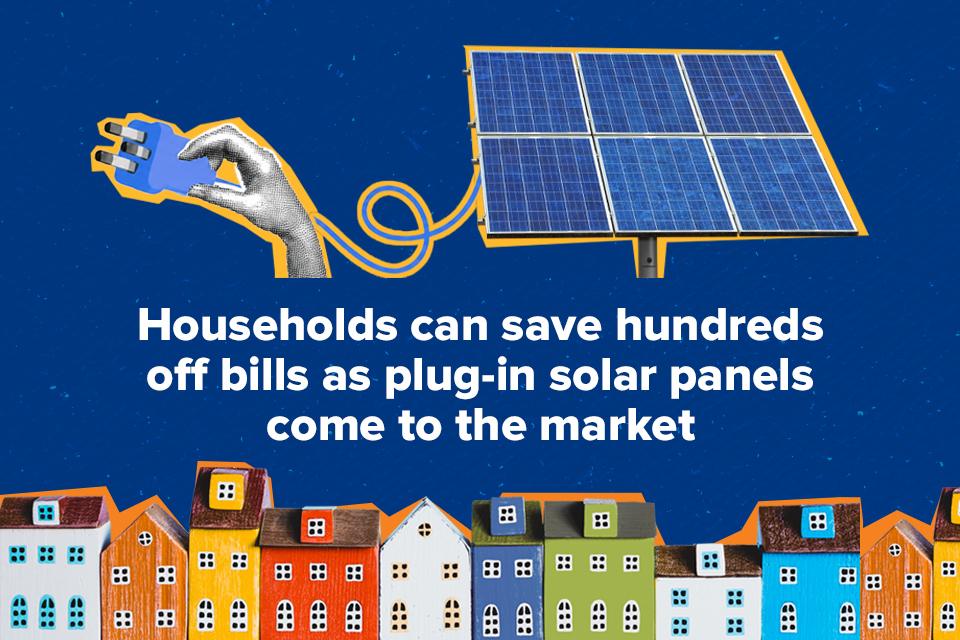
Households across Great Britain can now benefit from plug-in solar panels, which have recently been made legal for purchase and use. As of 27 August, these user-friendly panels can help families save an estimated £110 annually on their energy bills by harnessing clean, locally-generated solar power.
Each plug-in solar kit is capable of producing up to 800W of electricity, which can account for approximately 20% of an average household’s energy consumption. This output is sufficient to power several essential devices simultaneously, including a fridge, television, Wi-Fi router, laptop, phone charger, and an Xbox Series S, all while the sun shines.
Notably, these panels require no installation costs and do not draw electricity from the national grid. The legalisation follows comprehensive independent safety evaluations that confirm the compliance and safety of these panels with UK electrical standards, which are more rigorous than those in Germany, where similar technology is already prevalent.
Empowering Households with Clean Energy
The development of plug-in solar panels aligns with the government’s commitment to enhancing energy security for the nation while providing financial relief for families and businesses. Energy Secretary Miatta Fahnbulleh highlighted the importance of this initiative, stating that it offers households an immediate opportunity to manage their energy expenses more effectively.
Major retailers including Currys, B&Q, Screwfix, and Amazon are collaborating with the government to ensure that these solar panels are readily available both in-store and online. The affordable nature of these panels allows them to be installed in various outdoor locations or even on balconies. However, prospective buyers are advised to verify whether any permissions are necessary before installation, which could include consent from landlords or building owners and planning permissions.
The government encourages landlords and local councils to assess requests for permissions on a case-by-case basis, recognising the individual circumstances involved.
Government Support for Energy Costs
This initiative is part of a broader effort by the government to provide households with financial relief regarding energy bills. In July, the Prime Minister announced a reduction in VAT on energy bills, which adds to previous measures such as the £150 deduction from energy costs outlined in last year’s Budget and the expansion of the £150 Warm Home Discount, benefiting around six million households.
Retailers like Amazon and Argos are committed to making plug-in solar panels accessible to consumers, providing practical solutions for energy management. John Boumphrey, Amazon’s UK & Ireland Country Manager, emphasised the importance of this development in helping households generate their own power and contribute to the UK’s net-zero objectives.
Industry and Retailer Perspectives
Graham Biggart, Managing Director of Argos, expressed enthusiasm for the new product, noting its potential to empower customers by offering innovative energy solutions. Similarly, Michelle Gorringe-Smith from Currys acknowledged the significant support plug-in solar products provide to consumers looking to reduce their energy bills.
David Wood, Chief Executive of Wickes, highlighted how this technology simplifies access to clean energy for a broader range of households, particularly in a country where many homes are not energy efficient. The emphasis on making energy-saving technologies more accessible is seen as vital for reducing energy costs and facilitating a transition to a lower-carbon future.
Expanding Access to Clean Energy
The introduction of plug-in solar panels marks a significant advancement in the accessibility of clean energy for UK households. Joanna O’Loan, Knowledge Manager at the Energy Saving Trust, pointed out that while savings may vary, the availability of these panels will empower more people to manage their energy consumption effectively.
Chris Hewitt, CEO of Solar Energy UK, praised the collaborative efforts of industry and government to expedite this initiative, underscoring the potential for substantial cost reductions in energy bills through solar technology. This sentiment was echoed by Gary Booker from British Gas, who noted that plug-in solar panels democratise access to solar energy, enabling more households to generate their own electricity.
Trevor Hutchings, CEO of the Renewable Energy Association, remarked on the significance of this development for the UK’s energy landscape, asserting that it represents a crucial step towards making renewable energy accessible to all. He highlighted the potential for savings of up to £100 a year and emphasised the importance of this benefit extending to renters and flat-owners.
Record Demand for Solar Power
With ongoing volatility in global energy markets, innovations such as plug-in solar panels are expected to help stabilise electricity prices and enhance the UK’s energy independence. David Boyer, Director of Electricity Systems at the Energy Networks Association, noted that the safe integration of micro-generation into the UK’s energy grid is a pivotal step forward.
Recent figures reveal a surge in interest in solar energy, with nearly 150,000 solar panel installations certified in the first six months of 2026, marking a 17% increase compared to the previous record. Battery installations have also seen a significant rise, almost doubling from the same period last year, with 36,000 certified installations.
Legalising plug-in solar panels complements existing savings opportunities for homeowners, potentially enhancing the benefits of rooftop solar installations that can yield savings of up to £480 annually. This move aims to empower a wider array of property types to generate their own clean electricity and alleviate energy costs.
For those considering plug-in solar panels, it is advisable to consult comprehensive guidance regarding installation and any necessary permissions specific to their property.


More Stories
Martyn Oliver Delivers Keynote Address at Confederation of School Trusts Annual Conference 2023
Prime Minister’s Inspiring Speech in Scotland on 16 October 2026: Key Highlights and Impacts
Applications Now Open for In-Depth Inquest Training Course