
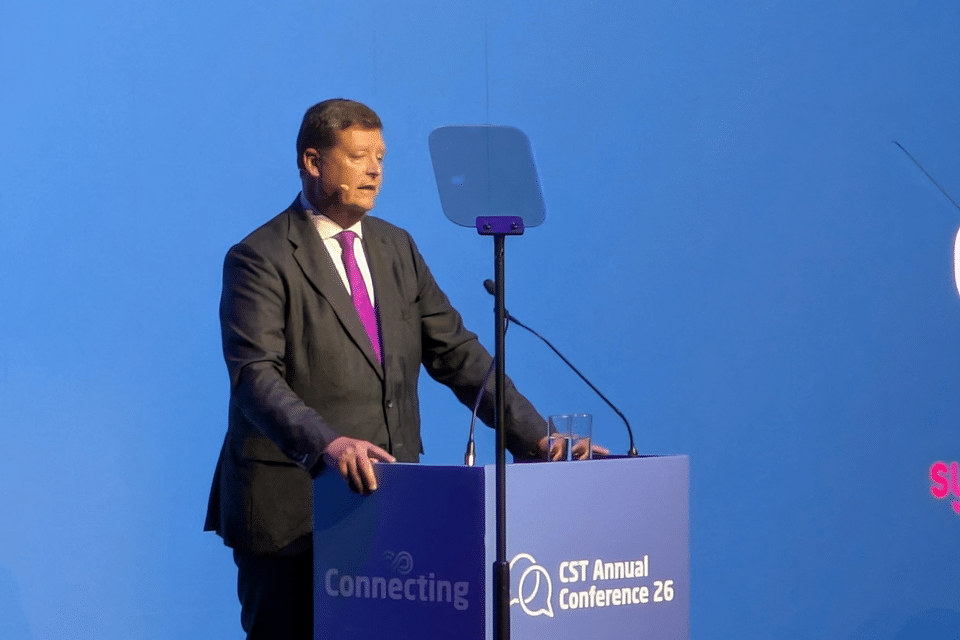
Hello, everyone. It is a pleasure to be here in Birmingham, and I would like to extend my gratitude for the warm welcome at the CST conference once again.
Last night was particularly enjoyable as I had the opportunity to reconnect with so many familiar faces. It is always a privilege to be among colleagues who dedicate their professional lives to enhancing the prospects of children.
Almost precisely a year ago, I addressed you at a similar occasion, just before we launched our renewed education inspection framework. With a year now behind us, it feels like an appropriate time for reflection.
In recent weeks, I have taken the time to remind myself of the experiences of headteachers and trust leaders, while also listening closely to the challenges you currently face—especially those of you working in some of the most disadvantaged areas of the country.
We engage in this work because we understand that it is where we can make the most significant impact on children’s lives. However, that does not necessarily make the daily challenges any easier.
Concerns about accommodating the increasing needs of students with special educational needs and disabilities (SEND) are ever-present, particularly in an environment where resources seem to be diminishing. Many of you are grappling with an insufficient number of specialist staff and support, which your students rightfully deserve. Additionally, falling enrolments pose a challenge, as does the anxiety surrounding Ofsted inspections, often compounded by the fear of unfair treatment on the day of the inspection.
I empathise with these challenges deeply. I have experienced them firsthand and understand the weight of leading a school through inspections while navigating these difficulties.
Understanding the Context of School Inspections
In disadvantaged areas, it is disheartening to see schools in more affluent regions praised as exemplars, often by individuals who have never set foot in the communities where you operate. What you need is for inspectors to grasp your context fully—to comprehend the lives of the children and families you serve and the efforts you are making to provide them with the best education possible.
Your role is undoubtedly challenging, and you require assurance that Ofsted will evaluate your schools fairly, without imposing undue pressure. I heard similar sentiments expressed by Leora yesterday.
Today, I am announcing a significant change as part of our ongoing efforts, and it certainly won’t be the last improvement we implement. We are working closely with the Department for Education on a series of changes that we will discuss with you in the weeks and months ahead.
Improvements to the Complaints System
After receiving extensive feedback regarding our complaints system, I am pleased to announce that we will be piloting an independent complaints review service. This marks the latest significant modification to our complaints process since I became Her Majesty’s Chief Inspector (HMCI). Previously, we have introduced a helpline for providers to voice their concerns during inspections, established a national hub to ensure complaints are managed outside their originating regions, and created new complaints panels that include union and sector representatives who regularly review recently closed complaints.
With this pilot, schools will have the opportunity to request a review of how Ofsted has managed their complaint. For the first time, this review can encompass the outcome of the complaint, including aspects related to inspection findings. The review will be carried out by an independent body through a contract held by the Department for Education, which will operate independently of Ofsted.
The reviewing organisation will be a full member of the Ombudsman Association and will adhere strictly to their high standards for case management and impartiality. The reviewer will have the authority to recommend that Ofsted reassess a complaint, and if the review pertains to grading, I will have the discretion to set aside a published report card and arrange for a new inspection.
You may wonder why the independent reviewer cannot directly make these decisions; the answer lies in legislation. Under current law, only Her Majesty’s Chief Inspector, through our inspectors, is empowered to determine grading decisions. However, a recommendation from the reviewer to reconsider grading will carry significant weight with me.
We will evaluate the success of this pilot meticulously, and I commit to seeking feedback from the CST and trade unions before determining the next steps post-pilot. We will continue to operate openly and transparently, sharing both successes and challenges as we move forward.
Data Insights and Contextual Analysis
On that note, I would like to discuss some data regarding context that we have published today. When I embarked on the mission to elevate Ofsted to a world-class inspectorate and regulator, I was determined to share evidence of our performance.
The analysis published today examines how our inspectors assessed achievement within context, comparing grades assigned last year to the new similar schools measure, which was unavailable to inspectors at the time. I invite you to draw your own conclusions, but I believe the data is compelling and demonstrates that inspectors take context seriously.
This analysis also illustrates how we are now employing the similar schools measure during inspections and in our quality assurance processes, as part of our commitment to continuous improvement and self-challenge.
However, I recognise that there is still more to be done. I wish to hear your perspectives on context, which is why I have instructed all my regional directors to engage with you in the coming months.
Reflecting on Recent Inspections
Now, let us take a moment to reflect on the past year. We have conducted just over 4,000 full school inspections. From the published report cards, we continue to observe a range of grades across schools and within trusts, which aligns with our expectations.
The purpose of our report cards is to capture this nuance, highlighting various strengths and areas for improvement. The ‘expected standard’ has been the most frequently awarded grade, indicating that schools are fulfilling the fundamental requirements to provide a solid and supportive education for their pupils.
In the area of ‘inclusion’, 90% of grades are at ‘expected standard’ or above, with even higher figures in the ‘personal development and wellbeing’ category. This success can be attributed to strong ‘leadership and governance’, where more than 80% of grades meet or exceed the expected standard.
We acknowledge concerns regarding poor attendance potentially affecting the ‘attendance and behaviour’ grade, which may hinder overall performance, even when pupils exhibit commendable behaviour. Nevertheless, I am pleased to report that over 80% of grades in this evaluation area are at ‘expected standard’ and above.
In the ‘curriculum and learning’ evaluation area, nearly 80% of grades meet or exceed the expected standard, with a similar trend in ‘achievement’ grades. Some concerns have been raised regarding the perception that any school below average would be classified as ‘needs attention’ or worse—this is simply not the case!
This emphasis on data and evidence is crucial, but I wish to return to the human aspect behind these figures. I recently perused the inspection report for Oastlers School in Bradford, part of the Exceed Academies Trust, and was profoundly moved by a student’s remark to inspectors: ‘I have learned to want more from life.’
This statement encapsulates the essence of the work you do and the purpose behind the trust sector.
Embracing the Trust Sector’s Moral Purpose
The trust sector is fundamentally rooted in a belief in enacting positive change. Trusts were established with a profound moral imperative—to uplift struggling schools and ensure that the pupils within them receive a quality education and a chance at a better life. Leora eloquently articulated this ‘animating spirit’ of the trust sector—a spirit that refuses to accept substandard conditions for children in disadvantaged areas, advocating for a system that serves all children.
I have witnessed this spirit firsthand, repeatedly. I have observed teachers, teaching assistants, and leaders rallying together to do everything within their power for the children who need it most. Each of you has your own stories that resonate deeply.
Every child is most directly affected by the teachers and staff who welcome them through the school gates daily, guiding their lessons and providing essential pastoral support. However, the most effective trusts cultivate the wider context—the climate and culture that enables their staff to perform at their best for the children.
If schools represent the vibrant heart of local communities—buzzing with pupils, parents, teachers, carers, joy, learning, and enrichment—then trusts are the gardens that nourish them. They foster cross-pollination that helps entire communities thrive.
Together, the trusts represented in this room are responsible for the education of millions of children. That is a significant responsibility!
The Impact of Trust Leadership
As leaders of trusts, you make critical educational, professional, staffing, and financial decisions that shape the daily experiences of all pupils, staff, and parents within your schools. Your work matters to pupils and parents, even if they are unaware of the extensive efforts occurring at the trust level.
We all understand that transforming a school into an academy or integrating it into a multi-academy trust (MAT) is not a simple solution. It requires time and commitment. It involves not only taking possession of a building but also embracing a community and determining how best to serve that community. Identifying improvements and building on strengths are essential components of this process.
The impact of your decisions, particularly when helping a school transition from poor outcomes to positive ones, creates ripples



More Stories
Prime Minister’s Inspiring Speech in Scotland on 16 October 2026: Key Highlights and Impacts
Applications Now Open for In-Depth Inquest Training Course
Anglian Water Hit with £1.6 Million Fine for Polluting Essex River