
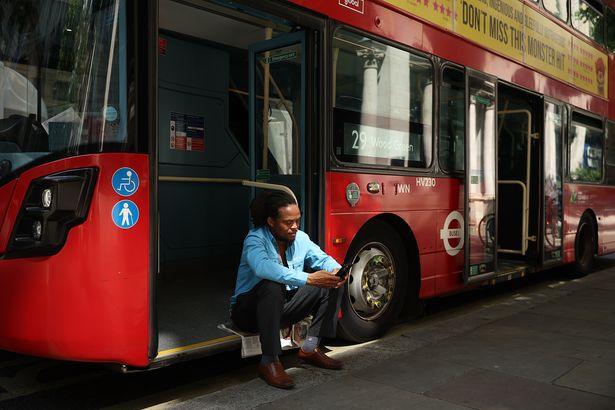
Fatigue resulting from prolonged and demanding shifts is causing bus drivers to experience significant health issues, as highlighted in recent discussions with Transport for London (TfL). With limited breaks due to heavy traffic, uncomfortable working conditions, and a culture of working consecutive days, many drivers are feeling overwhelmed and on the verge of resignation. A survey conducted by Unite earlier this year revealed alarming statistics, indicating that 36 per cent of drivers reported feeling drowsy while driving two to three times a week, and nearly half—48 per cent—had experienced a ‘close call’ due to fatigue within the last twelve months.
Challenging Working Conditions
TfL has expressed its commitment to collaborating with bus operators to ensure that drivers benefit from reasonable schedules and adequate rest breaks. However, in a recent interview, bus drivers have candidly shared their experiences regarding the challenging conditions they endure while transporting passengers across London’s bustling roads. “I’ve never been as unwell as I have since becoming a bus driver; my immune system has deteriorated significantly due to the fatigue,” stated Antonia Pugh-Thomas. The 50-year-old driver, who resigned from her position last month after nearly two years, cited unbearable conditions, particularly during recent heatwaves, as her reason for leaving. She has since advocated for improved circumstances for her former colleagues.
Ms Pugh-Thomas described a typical week for bus drivers, highlighting that they often receive only one 40-minute break during shifts that can last between nine to twelve hours. This break may be further reduced depending on traffic conditions. “That is your only opportunity to eat at the end of each route,” she explained. “I might only have five to ten minutes to check in with my supervisor, use the restroom, grab a snack, and then head back out. There have been instances where I arrived 15 minutes late and had to leave immediately—there’s no time for anything, not even the chance to step out of the cab.” She emphasised the mental strain of navigating congested traffic, which requires constant focus and attention.
Concerns Over Work Hours
Ms Pugh-Thomas further noted that she was never informed about the expectation to work multiple consecutive days before receiving a day off. “It’s commonplace for drivers to endure up to 13 consecutive working days,” she remarked. “Naturally, fatigue sets in when breaks are as short as 40 minutes, and there appears to be a lack of recognition that this creates an inherently unsafe system.” She expressed confusion as to why this concept seems difficult for TfL and bus operators to comprehend. “It feels as though we are being treated like machines, with an emphasis on the profits made by private bus operating companies, rather than the wellbeing of the drivers.” Currently, it is permissible for bus drivers on local routes—those under 50 km—to work ten-hour shifts without a weekly or bi-weekly limit, aside from one day off every two weeks. They are also allowed to work 130 hours over a fortnight, with only a 30-minute break after five and a half hours of driving.
Calls for Systemic Change
Dylan Carroll, who established the London Bus Forums in 2023 to advocate for improved working conditions, pointed out that the time between returning home from one shift and the start of the next can be as short as nine hours. “This can continue for up to 13 days in a row. It’s an unrelenting cycle,” he lamented. In June, TfL faced criticism from Unite, which described a £500,000 expenditure on various wellbeing initiatives as “insulting.” This funding followed a 2019 study by Loughborough University that investigated fatigue among London bus drivers. However, the union argued that the measures taken, including the introduction of sleep pods, have had minimal impact on addressing fatigue.
TfL has proposed various strategies to identify and mitigate driver fatigue, including plans to implement sensors or cameras that can detect signs of fatigue based on eye movements, blinking rates, and head positions by next year. However, Mr Carroll contended that the network is failing to address the underlying causes of fatigue and is merely focused on managing the symptoms. “Drivers feel that these cameras exist to penalise them; they worry about being sanctioned for yawning. Our priority should be to ensure that drivers are not fatigued before they even begin their shifts,” he stated.
Commitment to Driver Wellbeing
Lorna Murphy, TfL’s Director of Buses, acknowledged the critical role bus drivers play in maintaining the flow of London’s transport system, asserting that addressing fatigue is vital for the safety and welfare of both drivers and passengers. “We rightfully expect operators to uphold high welfare standards, and we are dedicated to ensuring that all staff receive fair work schedules, safe vehicles, and access to necessary rest facilities,” she remarked. Murphy added that TfL is committed to working alongside operators and Unite to trial innovative approaches to combat fatigue. This includes testing advanced technology on buses that can alert drivers when fatigue is detected, along with improved data collection and analysis to better understand fatigue patterns and implement evidence-based strategies to enhance driver health and wellbeing.
If you are a London bus driver and wish to share your experiences, please reach out via email at kumail.jaffer@reachplc.com or luke.donnelly@reachplc.com.




More Stories
Meet Britain’s Strongest Schoolgirl: The Edgware Weightlifter Breaking Stereotypes
Two London Bakers Eliminate Each Other in Great British Bake Off’s Thrilling Bread Week
City Leaders Alert: Healey Bank Tax Increase Could Force Businesses to Leave the UK