
Once regarded with caution, the term “London Fields” now graces lists of London’s most sought-after neighbourhoods. This transformation, however, tells a more nuanced tale than mere trendy cafés and skyrocketing property prices might suggest. Over the past two decades, London has undergone a remarkable evolution, with its population swelling and various areas experiencing profound changes. Notable examples include Walthamstow and Peckham, both of which have been subject to gentrification. Of particular interest is Hackney, and more specifically, London Fields.
In the past, Hackney was often described as a place to avoid, particularly during the 1980s, 1990s, and early 2000s, when it was labelled as dangerous. Fast forward to today, it has emerged as one of the most desirable locations in the capital. Recent data highlights Hackney as the second most popular area for home seekers, trailing only the Docklands, with London Fields often regarded as the crown jewel. The local park, along with Broadway Market, featuring a vibrant array of cafés and restaurants, has transformed the area into a trendy hotspot for newcomers to London. It has even been affectionately nicknamed ‘the new Australia’, as many Australians have shifted their allegiances from the traditional enclave of Clapham to London Fields.
Local Perspectives on Change
Tanya Reynolds, a long-time resident of East London, moved to London Fields 15 years ago from nearby Stepney Green. Having grown up in Tower Hamlets, she recalls the warnings of her youth: “Don’t venture into the badlands of Hackney.” Reflecting on the changes, she remarked, “People used to portray Hackney as a different world, something to fear. The upscale establishments we see now were unimaginable 15 years ago.” Tanya noted a distinct shift in the community, observing an influx of residents with American accents and a notable presence of Australians, while the elderly population seems to have diminished. Her son, Parris, added to the sentiment, recalling how even in Tower Hamlets, the area was previously deemed off-limits. “The vibrant community that once thrived here could still afford to stay, but now, they find themselves priced out,” he said. “There’s a sense of nostalgia for the past, yet it was undeniably rough. Change is inevitable. Would we have wanted to preserve a time when there was little to offer? Unfortunately, this is the price of progress, and while there is resentment towards new wealth, many factors are at play.”
Statistics reveal that the average property price in London Fields reached £718,636 over the past year, with flats averaging £576,810. Terraced homes commanded an average of £1,239,611, while semi-detached properties fetched an impressive £1,940,000. These figures starkly contrast with the area’s former reputation as a ‘no-go’ zone, and the high prices reflect a significant departure from the lived experiences of long-time residents. A few years ago, the community was shaken by a shooting in Grand Union Crescent. Levi, a park-goer who frequently works out at the pull-up bars, commented, “Everyone in East London knew London Fields was once considered unsafe, particularly after dark. While gentrification has its pros and cons, it has undeniably contributed to making the area much safer and more appealing. It’s no surprise that it has become one of the most coveted locations, yet this also alienates some long-term residents. We, the community, drive trends, creating viable spaces for growth, but with high demand comes rising prices, which can push out those who have lived here for years.”
New Beginnings Amidst Old Memories
On a typical weekday, establishments like Planet Organic and Aesop stand out prominently alongside numerous cafés and eateries that line the streets, marking the area’s transformation. During weekends, Broadway Market buzzes with life as stalls and independent vendors take centre stage, reinforcing the sense of community that has emerged. A recurring theme from those we spoke to was the newfound sense of safety. Levi Palmer, who relocated from Texas two decades ago, shared his observations, “It’s fascinating to see how in demand the area has become. The canals that now form part of London Fields were once unwelcoming. From 2008 to 2010, walking along them felt unsafe, particularly at night. Now, it feels incredibly secure. While I would love to own a place here, the prices are quite daunting.” He noted a transient nature among new arrivals, with many moving in and out after a few years, which he described as a form of ‘class-tourism’.
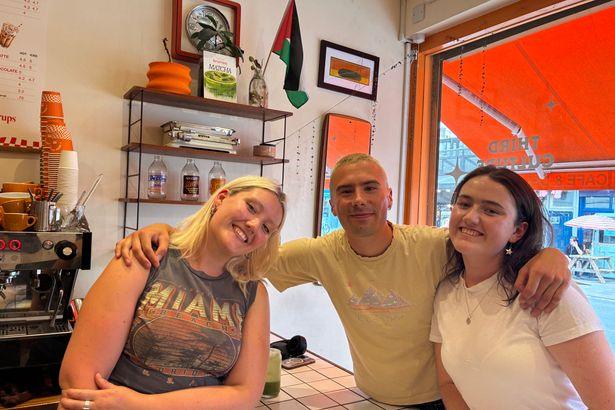
Among the new demographic are young Australians like Alex, 24, and Billie, 20, who were spotted at Third Culture Deli. They have witnessed the area’s popularity soar, with celebrities moving in and contributing to its ‘cool’ factor, all the while prices continue to rise. Nevertheless, they regard it as one of the best places to be in London. Tilen, 27, added, “Everyone looking to experience a different side of London seems to gravitate here. It feels safe, and Broadway Market has a village-like quality at its heart, which draws people in. Long-term residents coexist with newcomers, fostering a sense of community. This truly feels like a new Australia.” Alex chimed in, “Everything has become pricier, even the coffee. Yet, the area remains lovely, and the park is a popular spot in the summer. It’s nice to be near a body of water, even if swimming isn’t an option, the view is delightful.”
For those keen to stay updated on the latest news from East London, the MyEastLondon newsletter offers a convenient subscription for daily updates and more insights into this ever-evolving area.



More Stories
Meet Britain’s Strongest Schoolgirl: The Edgware Weightlifter Breaking Stereotypes
Two London Bakers Eliminate Each Other in Great British Bake Off’s Thrilling Bread Week
City Leaders Alert: Healey Bank Tax Increase Could Force Businesses to Leave the UK