
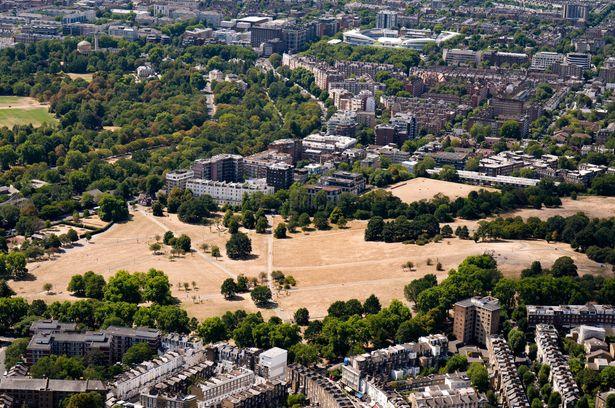
The impact of the recent heatwave on London’s iconic parks is strikingly illustrated through a series of dramatic photographs that reveal the severe consequences of this summer’s extreme temperatures. Once vibrant green spaces have transformed into patches of brown, as the prolonged periods of heat have taken a toll on the lush landscapes that Londoners cherish.
Scorched Landscapes Across the Capital
Notable parks such as Primrose Hill, Kensington Gardens, and Hyde Park now display stark contrasts to their former verdant glory. Aerial views capture the extensive damage, where grass has all but disappeared, leaving behind a desolate expanse of dried earth surrounded by trees. This alarming transformation underscores the severity of the weather conditions experienced in recent months.
As half of England and all of Wales officially enter a state of drought, the implications for water resources are becoming increasingly critical. The Met Office has indicated that the summer of 2026 is on track to be the driest July on record, a situation exacerbated by a series of intense heatwaves.
Record Low Rainfall and Its Consequences
Statistics released indicate that only a meagre 5.6mm of rainfall was recorded across England in July, significantly less than the previous record low of 13.4mm set in 1911. This extreme lack of precipitation, combined with the unrelenting heat, has resulted in an “exceptional combination of extreme heat, abundant sunshine, and an almost complete absence of rainfall,” according to meteorological experts.
The images illustrate not only the aesthetic impact on these beloved green spaces but also hint at the broader environmental challenges facing the city and the nation. Parks that once thrived are now struggling to maintain their vitality under the relentless sun.
The Human Element Amidst the Temperature Crisis
Despite the harsh conditions, Londoners continue to seek solace in their parks, with activities such as football practice and community runs still taking place. The resilience of the city’s inhabitants shines through as they navigate the heat, with popular spots like Primrose Hill remaining frequented for their scenic views, albeit now in a much drier state.
As the heatwave persists, the visual evidence of its effects on the city’s parks serves as a poignant reminder of the urgent need for sustainable water management and environmental resilience strategies to combat the growing challenges posed by climate change.
Reflections on Climate and Community
In Victoria Tower Gardens, the dry grass bears a striking resemblance to the stonework of the nearby Houses of Parliament, highlighting the stark realities of the current climate crisis. The juxtaposition of nature and architecture serves as a powerful metaphor for the changes taking place within the environment and the pressing need for action. As London grapples with the ramifications of this heatwave, the future of its cherished parks hangs in the balance.




More Stories
Meet Britain’s Strongest Schoolgirl: The Edgware Weightlifter Breaking Stereotypes
Two London Bakers Eliminate Each Other in Great British Bake Off’s Thrilling Bread Week
City Leaders Alert: Healey Bank Tax Increase Could Force Businesses to Leave the UK