
A short stroll from Euston Station towards Warren Street leads you to Drummond Street, a seemingly modest row of Victorian terraced houses that boasts a remarkable concentration of Indian and Bengali restaurants, rivaling even the famous Brick Lane. While it may lack the expansive vibrancy found in Tower Hamlets’ ‘Banglatown’, for many, this area represents London’s Little India. It was here that successive waves of South Asian families, arriving from post-Partition India, Pakistan, and Bangladesh, established businesses to recreate a taste of home, all while building new lives as Londoners. However, the successful integration of these communities is deeply intertwined with a history marked by strife and division, particularly in the face of racist violence.
Historical Context and Community Response
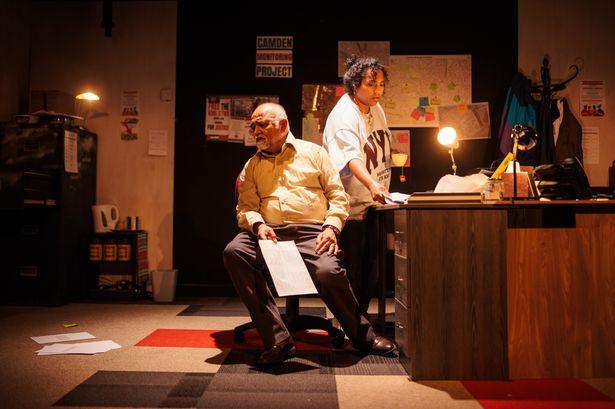
A little further along, towards Warren Street Tube station, one encounters a converted pub building that now houses the Camden People’s Theatre on Hampstead Road. This location also served as the birthplace of the Camden Monitoring Project, a volunteer initiative created to combat the racist abuse that often went unnoticed or underreported. It is almost poetic that the People’s Theatre is currently staging a new production aimed at illuminating a lesser-known chapter of the borough’s history. Titled Camdenwalla, this debut play by Jonny Khan tells the story of a volunteer-run group formed to ensure the safety of restaurant workers amid a surge of racist attacks perpetrated by the National Front and skinhead gangs.
Developed through extensive archival research and oral histories from Camden’s Bangladeshi community, Camdenwalla unfolds over a single night in 1994—a choice that is anything but arbitrary. This year marked the tragic murder of 15-year-old Richard Everitt, killed by a group of British Bangladeshis seeking revenge for an earlier incident involving a White boy. It is within this charged atmosphere that we meet the protagonist, Muhammad (portrayed by Bhasker Patel from Emmerdale), who concludes his restaurant shift and retreats to a dishevelled office. His night promises to be long and demanding, involving phone calls from individuals facing harassment or violence, arranging transport, monitoring police activity, and meticulously documenting incidents for potential submission to authorities.
Legacy of Activism and Community Development
This portrayal faithfully reflects the real Camden Monitoring Project, launched by Nasim ‘Nash’ Ali in the 1980s. Ali later made history as Camden Council’s first Muslim civic mayor and the borough’s first Muslim leader. He recounts the atmosphere of heightened tension, not only due to the National Front and skinhead activities but also pervasive police racism. Ali explains that he and his peers felt compelled to defend their community, drawing inspiration from groups like the Black Sisters and the Southall Monitoring Project. “We were the generation standing up for ourselves, ready to assist anyone in need,” he recalls.
Operating from the Camden Community Relations Office, Ali and his colleagues utilised a donated minibus to offer transport services. As the threat of far-right violence diminished, they shifted focus to fostering positive relationships between local youth and the authorities, even founding Camden United— a football team that brought together Bangladeshi, Black African Caribbean, and White players. Despite decades of advocacy for equality, Ali observes a troubling sentiment that the progress made is now at risk of being undone. “The historical prejudice and violence against minorities have seemingly vanished from contemporary discussions surrounding race and policing,” he asserts, reflecting on the era of two-tier policing that targeted Black and Asian individuals.
Generational Perspectives on Racism and Community
At the heart of Camdenwalla lies an exploration of the differing attitudes towards assimilation within the community, particularly across generations. This dynamic is vividly illustrated through the relationship between Muhammad and his spirited teenage niece, Alima (Nusrath Tapadar). Alima’s greater distrust of the police and her dismissal of her uncle’s meticulous record-keeping for them contrast sharply with Muhammad’s more stoic, bureaucratic approach to community safety, creating a compelling narrative tension between quiet survival and bold protest.
For Khan, both perspectives hold merit. “My generation is fortunate to inherit the legacy of our parents, allowing us to be more vocal and assertive,” he shares. He reflects on modern parallels, noting that while overt racist language may have evolved, the underlying prejudice persists. “You sense it rather than see it, and it is exacerbated by the current political climate, where blatant racist rhetoric is becoming more commonplace,” he adds. He points to the display of English flags outside his window during the World Cup, expressing his discomfort with the ambiguity of such symbolism. “While British pride can be beautiful, it can also feel intimidating for those perceived as not entirely British,” Mr Khan concludes.
Camdenwalla is currently being performed at the Camden People’s Theatre until Saturday, July 4. Stay informed about London’s most exciting events, the latest restaurant openings, and the best local deals by subscribing to our Going Out Out newsletter.



More Stories
Weddings by Anita: documentary-style wedding photography in London
Wedding photographers in London
Meet Britain’s Strongest Schoolgirl: The Edgware Weightlifter Breaking Stereotypes