
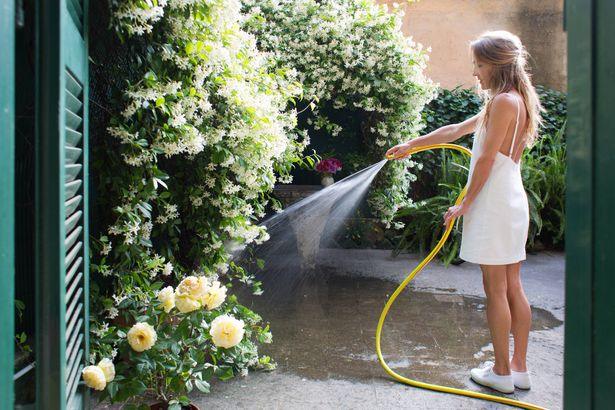
Residents of London are currently experiencing water restrictions due to extended periods of exceptionally high temperatures. A hosepipe ban has been implemented nationwide, prohibiting individuals from watering their gardens or filling paddling pools unless they qualify for specific exemptions, such as medical or business-related reasons.
Water Conservation Measures in Effect
Thames Water has explained the situation, stating, “We’ve had a very dry spring and record-breaking hot weather in May, June and July. This has meant people have been using more water than normal. A hosepipe ban is put in place to help preserve water and ensure there’s enough water to go around.” This initiative aims to safeguard the water supply amidst the increased demand triggered by the heatwave.
One concern raised by customers is whether water companies will be reducing bills as a result of these restrictions. However, Thames Water has made it clear that customers should not anticipate any reduction in their bills due to the hosepipe ban. The company elaborated, “Unmetered customers don’t have charges that relate to the use of hosepipes. So, there are no charges made in respect of prohibited uses that would reasonably need to be reduced. This is in line with the Flood and Water Management Act 2010 and section 76(6) of the Water Industry Act 1991.”
Impact on Billing for Metered and Unmetered Customers
Thames Water further noted that for metered customers, charges are based on actual water usage. Since hosepipes cannot be used during the restrictions, no charges would have been incurred for this usage. Consequently, there will be no reductions applied for metered customers either. Similarly, Anglian Water has confirmed that those without a water meter “won’t see a change to their charges.” However, it was added that “If you’re on a water meter, using less water could reduce your bill because you’ll only pay for the water you use.”
In England and Wales, households receive their water bills through either a fixed-rate charge or based on actual consumption as recorded by a water meter. Those without a water meter are subject to an unmeasured charge, which will remain unchanged due to the hosepipe ban. Citizens’ Advice has clarified that the unmeasured charge “is often made up of a standing charge and a charge that varies.” Water bills are calculated using a combination of factors, including a property’s flat rate charge, assessed volume charge, and the property’s rateable value.
Understanding Water Charges and Their Structure
Citizens’ Advice further explained that some water companies apply a flat rate for all customers, regardless of location or property type. The assessed volume charge typically depends on the size and type of property or the number of occupants. This charge may sometimes be offered instead of a meter if fitting one is not feasible at a particular property.
For those seeking further updates and information, subscribing to local newsletters can provide the latest insights and news pertinent to the London area.


More Stories
Weddings by Anita: documentary-style wedding photography in London
Wedding photographers in London
Meet Britain’s Strongest Schoolgirl: The Edgware Weightlifter Breaking Stereotypes