
Yasmin serves as an advisor within our Advanced Technologies and Fusion Strategy team, where she outlines the advantages of our newly implemented early engagement process and the pivotal role of the Environment Agency in regulating the fusion industry.
The Environment Agency, in collaboration with the Health and Safety Executive, acts as the regulatory body for fusion research sites and will jointly oversee future commercial fusion facilities. Our collective efforts are aimed at fostering the growth of the fusion sector while maintaining stringent standards of safety, security, and environmental protection.
The Significance of Fusion Energy
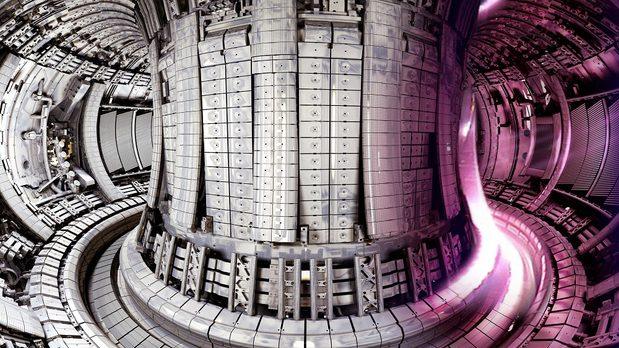
The fusion of light nuclei, particularly hydrogen, is the process that fuels the Sun and other stars. A fusion reactor harnesses this reaction by fusing two different isotopes of hydrogen—tritium and deuterium. During fusion, these light nuclei merge to create a heavier nucleus, releasing energy that can be converted into electricity.
To generate energy from fusion on Earth, deuterium and tritium must be heated to extraordinarily high temperatures, approximately ten times hotter than the Sun’s core. Such temperatures cause electrons to detach from atoms, forming a gas of charged particles known as plasma. This process not only results in the production of helium but also releases a significant amount of energy.
Commercialising fusion has posed numerous challenges, primarily due to the extreme temperatures necessary for the reaction to occur. Nevertheless, fusion energy holds the potential to play a vital role in the UK’s future energy landscape as a low-carbon and safe power source.
Facilitating Commercial Fusion through Regulatory Support
The UK Government has committed £2.5 billion over the next five years to facilitate the transition from research to commercial grid deployment. As research progresses towards commercialisation, it is crucial for regulators to ensure that this growth occurs with due regard for public safety and environmental protection.
One of the methods we are employing to achieve this is by minimising uncertainty for potential developers. We have recently issued guidance on early engagement, aimed at fusion companies intending to develop and construct facilities in the UK. While participation in this process is optional, it can prove beneficial for designers and prospective operators by enabling them to:
- Gain insights into the technology to be deployed
- Clarify regulatory expectations
- Outline development plans and timelines
- Establish effective working methods
Investments in fusion are already yielding results, with various technologies emerging that have applications across other sectors. These include the production of medical isotopes, innovations in targeted cancer therapies, and the development of high-temperature superconducting materials—illustrating just a few examples of the advancements stemming from fusion research.
Building Expertise and Collaborating Internationally
As the field of fusion continues to develop, it is imperative that we adapt accordingly. We are forging international partnerships to ensure that regulators are well-informed, prepared, and aligned with global standards and regulations as the industry evolves.
Our collaboration with the Department for Energy Security and Net Zero is focused on enhancing our expertise in fusion technologies, ensuring that our regulatory practices remain proportionate and evidence-based. Additionally, we are cultivating relationships and sharing insights with regulators in the USA, Canada, and Japan to promote harmonisation wherever feasible.
Our engagement with the International Atomic Energy Agency (IAEA) involves participation in international working groups and contributions to technical discussions and guidance documents, which help shape regulatory approaches on a global scale. Recently, we visited the ITER international project in France to gain insights into its regulatory framework, providing valuable lessons from this advanced initiative.
Andy Mayall, our Deputy Director, emphasised that proportionate regulation is fundamental to unlocking the potential of this clean energy technology during his address at the annual conference of the US Nuclear Regulatory Commission.
Promoting Sustainable Growth and Fostering Innovation
The rapid advancement of fusion technology is being propelled by a mix of public and private investment worldwide. The STEP Fusion project represents the UK’s prototype for fusion energy, currently under development in West Burton, Nottinghamshire. We are offering pre-application advice to mitigate risks associated with the project, which aims to demonstrate a viable path towards commercialisation.
We will continue to collaborate with partners across the industry to ensure that the safeguarding of public welfare and environmental integrity remains central to this exciting scientific frontier.
Further Information
For more details, please visit our webpage or consult the new early engagement guidance designed for fusion companies. Should you have any inquiries, do not hesitate to reach out via email at fusion@environment-agency.gov.uk.



More Stories
Reviving the River Rib: A Sustainable Restoration of Hertfordshire’s Chalk Stream
Understanding Skeeter Syndrome: When Mosquito Bites Cause More Than Just Itching
Discover 5 Incredible Health Benefits of Bees You Never Knew About