
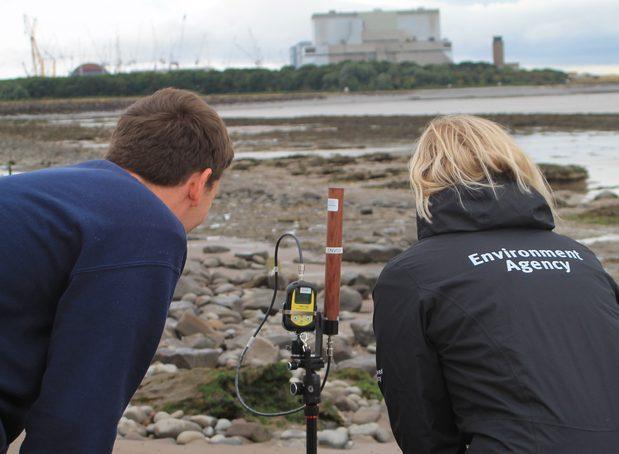
The annual report detailing radioactivity in food and the environment, known as RIFE 31, has been released, summarising the monitoring conducted throughout 2025. This report encapsulates the findings of rigorous assessments aimed at ensuring public safety regarding exposure to radiation.
Key Findings from the Monitoring Report
The report confirms that the levels of radioactivity present in food and the environment remain safe. Throughout the period from 2024 to 2025, there were no significant alterations in the radioactivity levels measured, and public exposure to radiation from facilities regulated by the Environment Agency was consistently below the established legal thresholds.
Overview of the Radiological Monitoring Team
The Environment Agency’s radiological monitoring team operates remotely across various regions of England. This team oversees multiple monitoring programmes designed to assess radioactivity in the environment, contributing to the annual RIFE report. Additionally, they provide expert advice on radiological assessments to safeguard both the environment and public health against the effects of radioactive discharges.
Independent Monitoring Initiatives
In England and Wales, several independent programmes are in place to monitor radioactivity, detached from the nuclear industry’s influence. These programmes encompass a diverse range of samples, including air, rainwater, drinking water sources, grass, and seaweed. Furthermore, partnership organisations are tasked with monitoring various food products, such as milk.
The outcomes from these monitoring initiatives are compiled and presented annually in the RIFE report. The programmes serve multiple purposes, including:
- Verifying the monitoring conducted by operators of nuclear sites.
- Providing assurance that the radiological impact of discharges remains at acceptable levels.
- Establishing baseline levels of radioactivity in the environment.
- Offering a long-term overview of environmental conditions and tracking changes over time.
- Enabling independent evaluations of the impacts on local wildlife.
This year’s RIFE report features over 10,000 analyses and measurements conducted in specialised laboratories.
Understanding Artificial Radioactivity Sources
Radioactivity is an omnipresent phenomenon, existing naturally within the Earth’s crust and permeating our homes, food, water, and air. In addition to these natural sources, individuals are also exposed to artificial radioactivity originating from medical applications, nuclear power stations, and the residual effects of nuclear weapons testing and historical incidents.
It is mandated by law that the exposure to artificial radioactivity from discharges is maintained within safe parameters. The Environmental Permitting (England and Wales) Regulations 2016 (as amended) detail the stipulations for regulating public exposure to radioactive waste disposal, aligning with the Basic Safety Standard Directive’s requirements.
Any entity in England wishing to utilise radioactive substances, be it a nuclear power station, university research facility, or hospital, must obtain a permit from the Environment Agency, which includes stringent conditions that must be adhered to. We impose specific limits on permissible releases during various activities.
Prior to issuing a permit, a comprehensive assessment is conducted to evaluate the potential impact of radioactive discharges on humans, flora, and fauna across terrestrial and aquatic environments.
Regulatory inspections ensure that operators adhere to the established release limits specified in their permits. It is important to highlight that, as depicted in the accompanying diagram, artificial radioactivity constitutes only a minor fraction of all environmental radioactivity, the majority of which is naturally occurring.
Assessing Radiation Exposure
Our monitoring programmes are essential for understanding radioactivity levels in food and the environment. We conduct habit surveys to evaluate the lifestyles and diets of individuals residing near nuclear facilities, which helps assess their radiation exposure. Experts engage with community members to identify those most likely to be exposed, and this information is combined with environmental monitoring data to estimate radiation doses. These estimates are included in the annual RIFE report.
This year, habit surveys were conducted in Sellafield (Cumbria), Barrow (Cumbria), and Sizewell (Suffolk).
Further Information and Community Engagement
Details from our monitoring programmes are published each autumn.
We are committed to sharing these results with local communities, representatives, and environmental organisations in proximity to nuclear sites. Stakeholders can review our reports or participate in ‘meet the regulator’ gatherings held in select areas.




More Stories
Spotting the Subtle Signs of Pancreatic Cancer You Might Overlook
Unveiling PFAS: Insights from the Environment Agency’s Research on Persistent “Forever Chemicals”
Understanding Ferritin Face: Is It a Sign of Low Iron Levels or a Viral Skin Trend?