
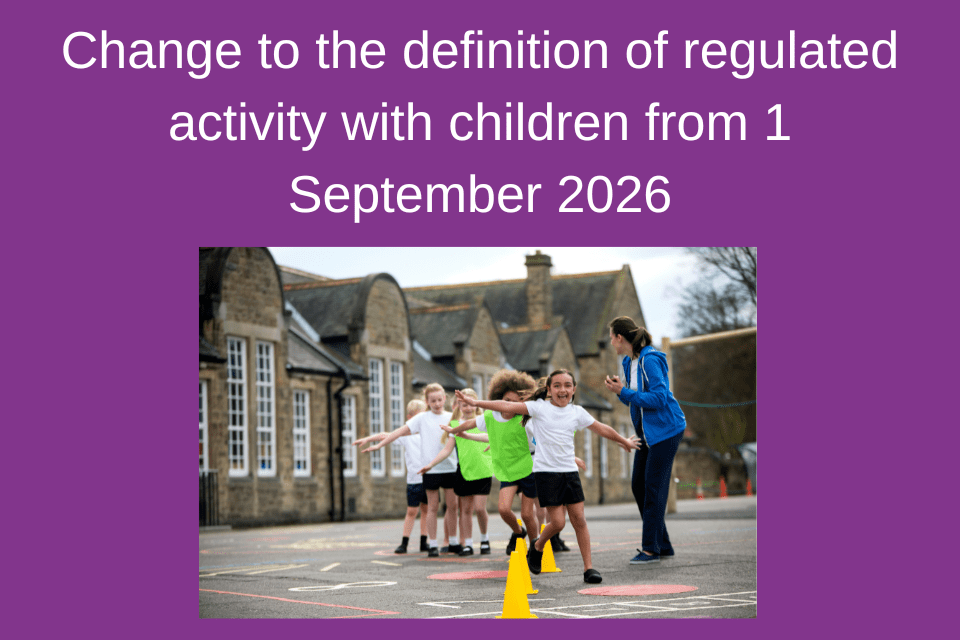
Significant changes to the law governing regulated activities involving children in England and Wales will take effect from 1 September 2026. The current stipulation regarding the supervision of paid staff and volunteers engaging in certain activities with children will be removed from the legal framework. Similar amendments are also anticipated in Northern Ireland, and further details can be found on the Department of Justice’s official website.
This alteration implies that individuals who previously did not qualify as engaging in regulated activities due to adequate supervision will now be classified as such from 1 September 2026. Specifically, this applies to those who perform their roles frequently or overnight.
Understanding Regulated Activity
Regulated activity encompasses roles that barred individuals are prohibited from undertaking. The law explicitly forbids:
- Any barred individual from participating in regulated activity.
- Any person from permitting a barred individual to engage in regulated activity.
It is essential to note that these legislative changes will exclusively pertain to regulated activities involving children; definitions concerning regulated activities with adults will remain unchanged.
Impact on Organisations and Volunteers
These forthcoming changes will have implications for any organisation across England, Wales, and Northern Ireland that employs paid staff or engages volunteers in roles involving the education, training, care, or supervision of children. This particularly affects individuals who were previously deemed not to be in regulated activity solely because they were supervised by someone who was. Examples include:
- Volunteers assisting in schools, such as reading helpers overseen by a teacher.
- Coaches at children’s sports clubs, where assistant coaches are supervised by a head coach.
- Workers or volunteers in outdoor activity centres, youth groups, or community organisations supervised by an individual engaged in regulated activity.
Changes to the Supervision Rule
Prior to the changes effective from 1 September 2026, individuals who frequently teach, train, instruct, care for, or supervise children were not classified as engaging in regulated activity if they were under sufficient supervision by someone else in regulated activity. Consequently, organisations could request an Enhanced DBS check for the child workforce without access to the Children’s Barred List for that supervised position.
Post-1 September 2026, this supervision provision will become obsolete. If an individual teaches, trains, instructs, cares for, or supervises children regularly or overnight, they will be considered to be in regulated activity, regardless of supervision. As a result, organisations will be able to request an Enhanced DBS check with a Children’s Barred List check for such roles.
Examples Illustrating the Changes
To clarify the implications of this new legislation, consider the following examples:
Weekly School Reading Volunteer: A parent who volunteers every Monday morning at a primary school to assist children with reading is supervised by a teacher. Under the current law, the parent is not in regulated activity due to this supervision. However, from 1 September 2026, they will fall under regulated activity and will be eligible for an Enhanced DBS check that includes a Children’s Barred List check.
Monthly School Art Volunteer: Another parent volunteers once a month to help with art activities and is also supervised by a teacher. Since this role does not occur frequently enough, it remains outside the definition of regulated activity.
Music Club Volunteer: A volunteer at a community music club assisting twice a week will be considered in regulated activity from 1 September 2026, as they supervise or instruct children often enough, necessitating an Enhanced DBS check with a Children’s Barred List check.
Outdoor Activity Centre Instructor: A paid instructor leading outdoor activities four days a week will transition into regulated activity as well, requiring a similar DBS check adjustment.
Preparing for the Changes
Organisations must proactively prepare for these changes. Key actions include:
- Identifying roles involving the teaching, training, instructing, caring for, or supervising of children that currently rely on supervision from another regulated individual.
- Assessing whether the activities are conducted frequently or overnight.
- Verifying if the individual’s current DBS certificate includes a Children’s Barred List check.
- Determining if a new Enhanced DBS check with Children’s Barred List information is warranted in accordance with sector-specific guidance.
- Updating recruitment, volunteering, and safeguarding protocols to incorporate the upcoming changes.
Should an individual’s role or the nature of the role evolve, organisations must re-evaluate DBS eligibility accordingly.
Further Resources and Information
For additional insights regarding the removal of the supervision exemption, organisations can refer to official resources outlining common misconceptions and guidance on working or volunteering in regulated activities involving children.




More Stories
10,000 Young People to Kickstart Careers in Britain’s Tech Sector with Nationwide Work Placements
UK Drivers Set to Save £300 on Home EV Charger Installations as Government Eases Regulations
DVLA Unveils Ambitious Business Plan for 2026-2027: Key Insights and Strategies