
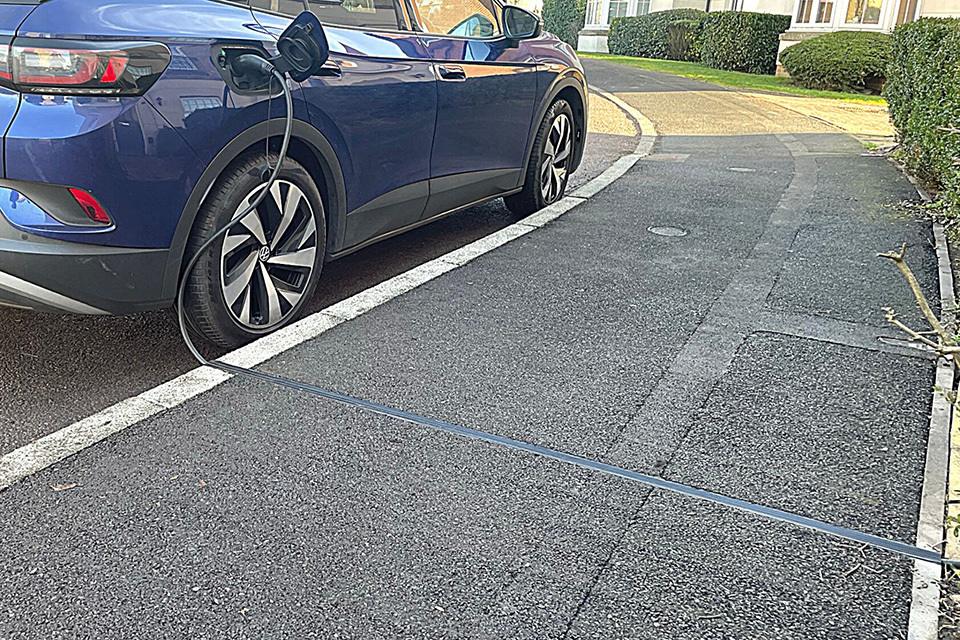
As of today, 21 October 2026, individuals can enjoy savings of up to £300 on home charging installations, even without a driveway, thanks to the government’s efforts to reduce bureaucratic obstacles. This initiative aims to make the process of setting up charging points more affordable, straightforward, and efficient.
The removal of planning permission requirements for cross-pavement chargers, which facilitate connections from residential properties to vehicles parked on the street, represents a significant shift. This change not only allows drivers to save on installation costs but also enables them to charge their electric vehicles (EVs) at a rate as low as 2p per mile. This initiative is part of a broader government strategy to implement ‘everyday fixes’ that alleviate the financial pressures faced by households.
Record Sales of Electric Vehicles
September 2026 marked another milestone for the UK electric vehicle market, with sales surging by 36% compared to the previous year. Nearly 100,000 electric cars were sold in a single month, a testament to the growing popularity of EVs. The surge in sales has been bolstered by the government’s Electric Car Grant (ECG), which has enabled over 190,000 drivers to save up to £3,750 when purchasing a new electric vehicle.
In a statement, Buses and Local Transport Minister Simon Lightwood remarked, “We’re saving drivers up to £300 off the cost of installing home charging by cutting unnecessary red tape. The EV transition is in full swing – sales are up 36% on last year, and over 190,000 have saved thousands making the switch in the last year alone.” He highlighted that cross-pavement charging provides residents without off-street parking the opportunity to benefit from lower domestic electricity rates, potentially saving them up to £1,750 in running costs.
Impact on Electric Vehicle Accessibility
Vicky Edmonds, CEO of EVA England, commented on the significance of this regulatory change. She stated, “This might look like a small planning change, but for someone without a driveway, it could make the difference between being able to afford an electric car and ruling one out altogether.” The removal of planning permission for cross-pavement charging is seen as a pivotal step towards a more equitable transition to electric vehicles.
Research indicates that 60% of petrol and diesel vehicle owners without off-street parking would not consider switching to an electric vehicle. The ability to connect a car parked on the street to cheaper home electricity could significantly alter this perception. Edmonds added that it is now up to local authorities and landlords to facilitate access to these solutions.
Enhancing Charging Infrastructure
According to Dickson Abegunde, Director of Strategic Partnerships at Zoopla, the availability of charging options is a critical consideration for prospective electric vehicle buyers when selecting a home. Zoopla has taken the initiative to assist buyers in identifying nearby on-street charging facilities and searching for properties equipped with EV charging options.
Abegunde expressed optimism regarding the government’s decision to eliminate planning permission requirements for qualifying cross-pavement charging solutions, viewing it as a positive move towards making electric vehicle ownership more attainable, particularly for those residing in homes without off-street parking.
Future Initiatives for Home Charging
In addition, the government has initiated two consultations aimed at simplifying home charging processes and ensuring that new buildings are equipped with charging infrastructure for ease of access. These consultations will examine potential amendments to building regulations concerning electric vehicle charging infrastructure and explore ways to expand access for tenants and leaseholders.
As part of these efforts, tenants and leaseholders may benefit from clearer and more consistent procedures for installing charging points, supported by guidance for landlords on how to manage such requests. Additionally, the government is contemplating mandatory requirements for landlords and freeholders to streamline the approval process for renters’ applications.
Proposed updates to building regulations could also mandate that charging points be installed in newly constructed and refurbished covered car parks, further enhancing the accessibility of electric vehicle charging solutions.
Individuals are encouraged to participate in the government consultations, which will be open for responses until 16 December 2026, to help shape the future of electric vehicle charging infrastructure.



More Stories
DVLA Unveils Ambitious Business Plan for 2026-2027: Key Insights and Strategies
UK Armed Forces and NHS Collaborate to Test Battlefield Injury Response with International Allies
Joint Statement from the Seventh Meeting of the UK and EEA EFTA States Separation Agreement Committee