
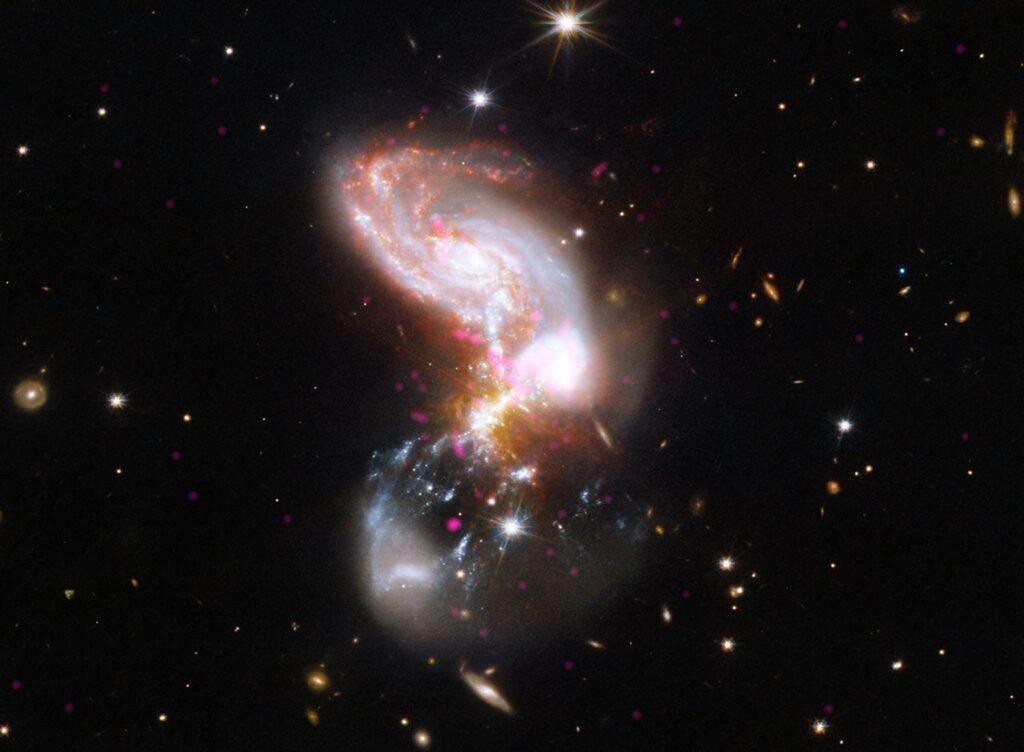
A spectacular merger of two galaxies is captured in a stunning image of the II Zw 096 system, taken on 25th August 2026. This remarkable photograph, alongside several others showcasing visually and scientifically significant galaxies, has been made available by NASA’s Chandra X-ray Observatory in collaboration with various other telescopes.
Unveiling the Dynamics of Galaxy Collisions
The Chandra X-ray data, represented in striking magenta, reveals intense black hole activity and the presence of hot gas within the galaxies. Complementing this, optical data depicted in blue and white from NASA’s Hubble Space Telescope, as well as infrared observations from the James Webb Space Telescope, expose the vast stellar nurseries that lie concealed behind layers of interstellar dust. Observations of systems such as II Zw 096 provide invaluable insights into the cataclysmic events of galaxy collisions that have significantly shaped the evolution of the early universe.
Exploring the Cosmos Through Advanced Technology
The integration of data across various wavelengths allows astronomers to obtain a comprehensive understanding of these cosmic phenomena. The synergy between X-ray, optical, and infrared imaging technologies enriches our knowledge of the intricate processes involved in galactic formations and interactions. The merging of galaxies not only presents a captivating visual spectacle but also serves as a fundamental element in the ongoing study of cosmic evolution.
For those intrigued by the wonders of the universe, a wealth of additional galaxy photographs from Chandra is available, showcasing the beauty and complexity of these celestial structures.



More Stories
Enhance Space Telescope Data Analysis with the Innovative Artifact InSPECtor Tool
NASA and SpaceX Crew-12 to Share Insights on Space Station Mission and Anticipated Return
NASA Welcomes Media to Djibouti for Historic Signing Ceremony of Artemis Accords