
Public Confidence in AI Weather Forecasts
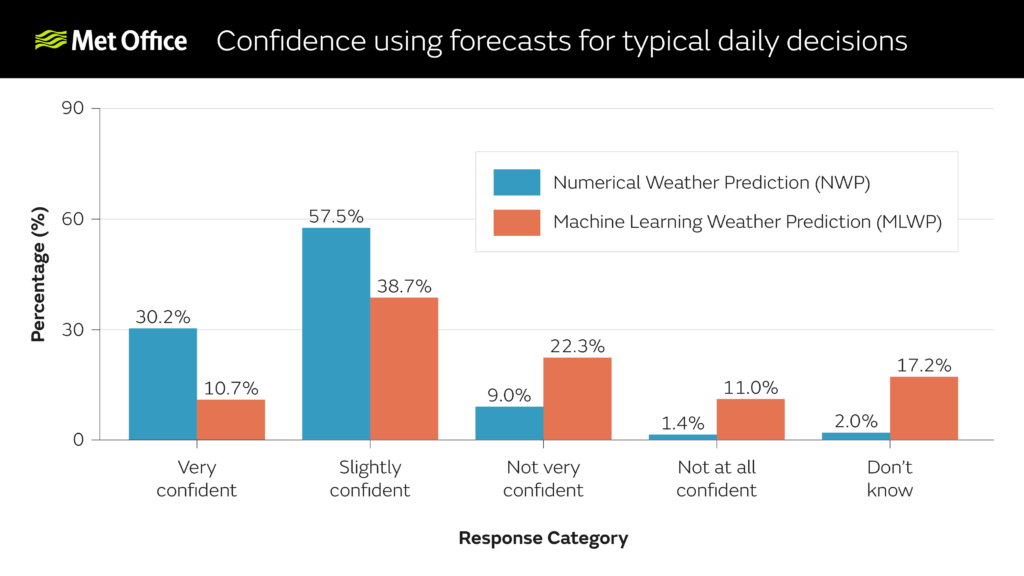
Recent research conducted by the Met Office reveals a notable disparity in public confidence between traditional weather forecasting methods and emerging artificial intelligence (AI) techniques. This pioneering study sheds light on how the public perceives the accuracy of AI-driven forecasts and underscores the necessity for greater engagement to harness the potential advantages of AI-enhanced weather predictions.
The study, published in the journal Artificial Intelligence for the Earth Systems, examines the views of over 6,000 adults in the UK regarding their trust in various forecasting methods for both everyday and high-stakes decisions. The findings indicate that while physics-based modelling remains the preferred choice for most individuals, there is a significant lack of confidence in forecasts generated by AI.
Survey Findings on Confidence Levels
The survey results reveal a stark contrast in confidence levels when it comes to making weather-related decisions. Approximately 80% of respondents expressed confidence in using physics-based forecasts for both daily and critical events. In comparison, only around 40% demonstrated similar confidence in potential AI-generated forecasts.
This gap in public trust is further highlighted by perceptions of accuracy. An impressive 78% of participants rated physics-based models as accurate for daily and severe weather forecasts, whereas only about 45% felt the same about forecasts that could result from AI methodologies in the future.
Dr Edward Pope, a Science Fellow at the Met Office and the lead author of the study, emphasised the importance of understanding these public perceptions as the field approaches a pivotal moment in integrating AI-based models with traditional physic-based methods. Pope noted that this research presents a unique chance to compare the public’s views on established and emerging forecasting techniques.
Importance of Trust in Weather Forecasting
The trust placed in weather forecasts is critical, especially evident during recent heatwaves. Following the issuance of a Red Extreme Heat warning in June, post-event surveys indicated that 96% of individuals were aware of the warning, and a remarkable 97% took precautionary measures as a result.
Effective decision-making hinges on the confidence individuals have in the forecasts they receive, which is intrinsically linked to the perceived accuracy of those forecasts. The new research delves deeply into these aspects to better understand the factors that influence public trust.
Advancements in Forecasting Techniques
As the UK’s national meteorological service, the Met Office is committed to ensuring that improvements in forecasting methodologies, including the integration of AI and machine learning (ML), are implemented in a safe and reliable manner. Although the Met Office currently relies on physics-based models, it has long incorporated machine learning techniques into its forecasting processes. The benefits of innovative AI approaches are increasingly being recognised within the scientific community.
Professor Kirstine Dale, Chief AI Officer at the Met Office, stated, “We are investigating ways to merge physics-based and AI modelling to deliver the forecasts that the public depend on. We will rigorously evaluate and validate any changes to our forecasting methods before they are implemented.”
Future Directions for Public Engagement
The ongoing need to cultivate public confidence in weather forecasting remains paramount. The insights garnered from this study will inform future strategies aimed at fostering trust in AI-driven forecasts. The Met Office plans to conduct similar surveys in the coming years to monitor shifts in public perception and to guide advancements in weather prediction capabilities.
Ultimately, the goal is to empower individuals to make informed decisions based on reliable weather forecasts, ensuring that as many people as possible can effectively navigate the challenges posed by changing weather conditions.




More Stories
Unpredictable Weather Ahead: Expect Wind, Rain, and Sunshine This Week
UK’s Early Spring: Discover How Nature Is Adapting to Rising Temperatures
UK Records Joint-Fourth Hottest September Ever