
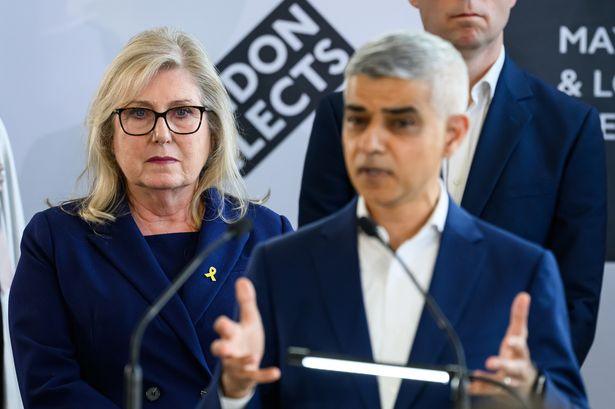
The Conservative Party faces a critical juncture as it prepares for the 2028 London Mayoral election, with new polling indicating the necessity of presenting a “fresh” candidate who possesses strong credentials in crime and policing. The party has struggled in the previous three elections since Boris Johnson stepped down as Mayor, failing to make significant inroads against Sir Sadiq Khan, who has successfully secured victory on each occasion. Candidates such as Zac Goldsmith, Shaun Bailey, and Susan Hall have all fallen short of unseating the incumbent mayor, highlighting the need for a strategic shift.
Emerging Candidates and the Need for Change
With the prospect of a multi-party election on the horizon, several prominent figures, including former Cabinet Minister James Cleverly, are reportedly considering candidacy. There are suggestions that Sir Sadiq Khan may not mount a campaign for a fourth term, which could open the field for new contenders. However, recent polling conducted by Opinium suggests that the Conservative Party should prioritise candidates with a “fresh political profile,” steering away from those with prior experience in Westminster.
The research, which surveyed 2,021 adults in London in July, indicates that while Labour is likely to retain control of City Hall, there remains a viable path for the Conservatives to secure victory. Notably, 27 per cent of respondents expressed that a candidate with a history in the previous Conservative government would deter them from voting for the party, contrasted with just 23 per cent who viewed such a background positively. Conversely, 28 per cent of voters indicated they would be more inclined to support a candidate without ministerial experience, compared to 20 per cent who would be less enthusiastic.
Crime and Policing: The Core Concerns of Voters
The poll further underscored the significance of crime and policing as pivotal issues for Londoners when selecting their Mayor. It emerged as the primary concern that voters believe the Greater London Authority (GLA) can effectively address. The findings suggest that a candidate’s experience in managing crime and policing is far more crucial than merely their political background. Over half of the respondents indicated that a candidate’s proven capabilities in this area would enhance their likelihood of receiving their vote.
The analysis posits that the most compelling electoral strategy involves not just selecting someone who was not part of the last Conservative government but finding a candidate with a distinct profile that includes credible experience in addressing crime and policing, a successful career outside Westminster, and the ability to present themselves as a novel option. This approach appears significantly more appealing than choosing a candidate primarily defined by their lack of association with the previous administration.
Public Priorities for the Next Mayor
Londoners have articulated clear priorities for the next Mayor regarding policing and crime, with an emphasis on increasing the number of police officers on the streets, implementing tougher sentences for offenders, and addressing the root causes of crime. In terms of housing, the public’s top three concerns include repurposing empty homes, increasing overall housing supply, and making renting more affordable. When it comes to transport, voters are keen on keeping public transport fares low, enhancing reliability within the network, and repairing potholes on the city’s roads.
The 2028 London Mayoral election will revert to a supplementary vote system, allowing voters to express both a first and second choice, which will introduce a new dynamic to the electoral arithmetic. Party officials must ensure that their candidate secures a position among the top two for ‘first preferences’ to progress to the final round. This election cycle is set to be more complex than previous contests, with the involvement of multiple parties, including the Green Party and Reform UK, marking a departure from the traditional Labour-Conservative duopoly seen since 2008.
Potential Candidate Profiles and Party Strategy
Initial polling indicates that Labour is projected to receive 32 per cent of first-choice votes, with the Green Party at 18 per cent, while both the Conservatives and Reform UK stand at 17 per cent. Interestingly, a fifth of Labour voters have indicated a willingness to consider voting for a Conservative candidate, suggesting the potential for significant shifts in voter sentiment depending on the candidate chosen by the Conservatives.
A party source noted that the polling tested various candidate profiles, revealing that Londoners are more inclined to support a Conservative candidate who combines policing experience, business acumen, and an innovative profile, rather than one anchored solely in previous Westminster experience. This aligns with Kemi Badenoch’s assertion regarding the necessity for the Conservative Party to rejuvenate itself by selecting candidates capable of restoring public trust.
In addition to Mr Cleverly, former Olympic athlete Lord Sebastian Coe is also believed to be in contention for the Conservative nomination. A spokesperson for the Conservative Party confirmed that a candidate would be selected in due course, as the party prepares for this pivotal election.




More Stories
Weddings by Anita: documentary-style wedding photography in London
Wedding photographers in London
Meet Britain’s Strongest Schoolgirl: The Edgware Weightlifter Breaking Stereotypes