
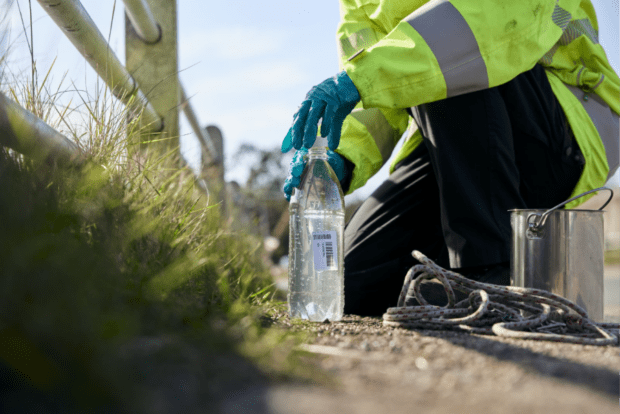
Each time the latest assessment of England’s water quality is released under the Water Environment (Water Framework Directive) Regulation, a familiar narrative emerges: only a small fraction of rivers, lakes, and estuaries meet the standard of “good” overall status. This statistic prompts a straightforward interpretation: that progress is “too slow”, that investment “hasn’t yielded results”, and that the condition of the water environment is either stagnant or deteriorating. While these concerns are valid, they do not encapsulate the complete picture.
Understanding the 2025 Classifications
The classifications for 2025 provide a comprehensive overview of England’s water environment and serve as a vital indicator for where intervention is most necessary. The striking statistic reveals that only 14.3% of water bodies are deemed to be at Good Ecological Status. To fully grasp the implications of this figure, it is essential to look beyond the surface and comprehend how the classification system operates.
The framework for classification is intentionally rigorous. The “one out, all out” principle dictates that the overall status of a water body is determined by its poorest-performing element. In this system, every individual element must achieve a passing grade for a water body to be classified as good. This approach ensures that no significant ecological issues are overlooked, yet it also means that tangible improvements can go unrecognised in the overall statistics. Approximately one-third of those water bodies that did not achieve good status this time did so due to just a single element. Thus, while these headline figures lay the groundwork for action, they do not tell the entire story.
Encouraging Insights Beneath the Surface
Delving deeper into the data reveals some more positive trends. A remarkable 82% of individual ecological indicators are now classified as Good or High status, indicating that many aspects of waterway health are improving, even if the overall classifications have not significantly changed. Ammonia levels, historically one of the most critical threats to freshwater ecosystems, now boast a commendable 92.9% good status, showcasing genuine, sustained progress in certain areas.
However, certain persistent pressures remain that cannot be swiftly addressed. All surface waters continue to fail in chemical status, largely due to the presence of long-lasting legacy pollutants such as brominated flame retardants, mercury, and PFOS, which will require decades to diminish.
Comparative Analysis of Previous Assessments
It is worth noting that the figure reported in 2019 stood at 16.3%. While it may be tempting to interpret this difference as a decline, the two datasets are not directly comparable. Enhancements in assessment methodologies, monitoring practices, and the evidence available have all progressed significantly. The automation of assessments for Heavily Modified Water Bodies, along with the updating of baselines and the removal of historical “expert judgement” classifications, has increased transparency but also makes comparisons with earlier assessments challenging.
This shift does not indicate a weakening of the system; rather, it reflects a more stringent and consistent approach. Today, a water body may be classified at a lower status not because its condition has deteriorated, but rather because our understanding of its condition has improved. Further information about these changes can be explored through the Water Data Explorer from the Environment Agency.
The Role of Enhanced Monitoring and Climate Factors
While further investigation is required to fully ascertain the causes behind the results, factors such as climate change, historical underinvestment, and improved monitoring are likely contributors. Enhanced monitoring unveils issues that were previously obscured, providing a more solid foundation for informed decision-making, even if the immediate outlook appears daunting.
This challenge is not one that England faces in isolation. The European Environment Agency reported last year that the situation across Europe remains equally challenging, with several regions reporting less than 10% Good Ecological Status according to the latest statistics from 2021.
Path Forward: Collaborative Action Plans
What lies ahead? The classifications represent a robust dataset that will inform evidence-led action through River Basin Management Plans, slated for publication over the winter. These plans will see collaboration among communities, farmers, and water companies to instigate improvements. Funded predominantly by water companies, the latest funding cycle has allocated £22.1 billion for water environment enhancements by 2030. The government’s Water White Paper, alongside the Environment Agency’s EA2030 strategy, reinforces this trajectory with a stronger focus on data, partnerships, and environmental outcomes.
This investment is already being actioned. It is financing upgrades to 2,350 storm overflows, anticipated to reduce sewage spills by approximately 85,000 incidents annually. It is also decreasing phosphorus inputs at over 800 sewage treatment facilities and minimising water abstraction from rivers and groundwater, thereby retaining an estimated 60 million litres in the environment each day. These are not vague commitments; they represent specific, measurable interventions that will become evident in future classifications.
Real-World Outcomes: A Case Study
The River Roch in Greater Manchester exemplifies how classification-driven action can yield tangible results. Phosphate levels, known to be detrimental to river wildlife, have improved from poor in 2019 to good in 2025. Investigations traced earlier declines downstream to water company assets, resulting in a catchment permit that mandated several sewage treatment works upstream of the Manchester Ship Canal to remove phosphate from their discharges for the first time. The outcome has been cleaner water, with improvements reversing the degradation of the Ship Canal and benefitting connected rivers—demonstrating how targeted action grounded in solid evidence can deliver meaningful results.
Commitment to Long-Term Improvement
It is vital to acknowledge that investment takes time, and the environment requires even longer to recuperate. The public desires quicker progress, yet advancements may not always be apparent in a single headline metric. The 2025 classifications should thus be interpreted not as a judgement of success or failure, but as a valuable tool for improvement. They highlight problem areas, assist in focusing efforts, and provide the necessary evidence to hold ourselves and others accountable.
The improvement of our waters hinges on collective action from regulators, policymakers, water companies, land managers, communities, and citizen scientists, both locally and nationally. These results should be perceived as a starting point, not an endpoint, offering a clearer common evidence base for comprehending the condition of England’s waters, identifying the most pressing pressures, and determining where actions can yield the greatest impact.
The Environment Agency will now intensify efforts at the local level to understand the intricate causes behind the classifications assigned to each water body, enabling us to plan investments and interventions for future planning cycles. We will continuously refine our monitoring practices to cultivate a more rigorous understanding of which interventions produce the most significant outcomes.
Enhanced evidence is only effective when coupled with the capability to act. Our capacity to address water pollution has significantly expanded, with increased staffing, improved data, and strengthened powers. Last year alone, over 10,000 inspections of water company assets were conducted, and there are plans to escalate farm inspections to 6,000 annually over the next three years. Since 2015, more than 70 prosecutions against water and sewerage companies have been concluded, resulting in fines exceeding £158 million. The Water (Special Measures) Act equips us better than ever to drive the improvements the public rightly expects.
The path ahead involves collaboratively following the evidence and transforming shared insights into tangible, enduring improvements for England’s water environment. For more information on the classifications, access to data, and insights into the science and methods behind these results, please visit our Engagement HQ pages.


More Stories
Transforming Flood Defences: Building Resilience and Confidence in a Changing Climate
Optimal Meat Consumption: How Much Should You Really Be Eating?
Understanding the New Five-Day Limit: How Long Should You Safely Use a Decongestant Nasal Spray?