
Behind England’s flood defences lies a dedicated team of engineers, inspectors, and specialists who work tirelessly, regardless of the weather, around the clock. As the Chief Engineer at the Environment Agency, I take pride in leading this vital effort. During Flood Action Week, we encourage everyone to assess their flood risk and understand the necessary actions to take should flooding occur. This is also an opportune moment to elaborate on how we maintain the tens of thousands of flood defences, structures, and systems that safeguard communities, mitigate coastal erosion, and manage water resources.
The Need for Continuous Adaptation
We acknowledge and are attentive to the concerns and frustrations expressed by communities. Many of our flood defences are ageing, and the increasing frequency and intensity of adverse weather conditions are placing additional strain on these structures. It is crucial to understand that a flood defence rated below the required standard does not automatically signify that it has failed or ceased to provide protection.
Nonetheless, we maintain a comprehensive understanding of the condition of the flood defences under our stewardship through regular inspections and monitoring, supplemented by insights from our local teams. We assess risk levels, prioritise necessary work, and implement additional checks or measures while repairs are underway.
In response to ongoing challenges, we have allocated more funding towards maintenance and targeted repairs. Consequently, the percentage of our most critical assets meeting the required condition has remained stable at around 92–93% through to December 2025.
The imperative is clear: as the climate evolves, so too must our approach to managing flood defences. Regular inspections and maintenance remain paramount. Enhanced information will further enable us to identify deterioration at an early stage and direct funding to areas where it can most effectively mitigate flood risk.
Enhancing Asset Performance Assessment
For over fifteen years, we have relied on condition checks as the primary method for evaluating the maintenance of flood defences, navigation structures, and water management assets. While these checks are crucial, they do not provide a complete picture. Therefore, we are developing a more comprehensive approach termed Asset Health, which will assess not only the condition of an asset but also its projected performance over time.
Asset Health will offer a clearer and more holistic view of the performance of each asset and its role in safeguarding broader areas. This approach will integrate findings from inspections and monitoring with insights into the ageing process of assets, potential failure causes, their impacts, and the reliability of our data. This proactive strategy will enable us to intervene sooner and allocate resources where they can have the most significant impact on homes, businesses, communities, and the environment.
By 2028, every asset under our management will have a designated health rating based on its function and the potential ramifications of its failure. This will facilitate more informed decisions regarding inspections, maintenance, repairs, or replacements, while also allowing us to communicate these decisions more transparently to the public.
Progress on Modernising Practices
We are already witnessing positive changes in our practices. Our standards have been updated, and in the coming years, we will increasingly employ technology that enables remote assessments of assets. This technological advancement will complement—not replace—the routine inspections conducted by our teams and aid in the early detection of changes.
For instance, laser surveys can accurately measure the shape and height of earth banks, while sensors can relay regular information without necessitating an on-site visit. These innovations will enhance the capabilities of our inspectors, whose expertise and judgement remain indispensable. Such tools will provide a more comprehensive understanding of how assets evolve over time and offer early warnings of potential issues.
Innovative Solutions for Real Challenges
We embrace innovation where there is clear evidence that it can address genuine issues more safely, swiftly, or affordably.
Targeted support has enabled Internal Drainage Boards—local public entities responsible for managing water levels in low-lying areas—to repair and upgrade essential equipment following the exceptionally wet winter of 2023–24. In Lincolnshire’s Black Sluice, funding facilitated the acquisition of mobile pumps and their associated equipment. When flooding struck in January 2025, the team mobilised the pumps swiftly, effectively reducing the risk to homes, businesses, and agricultural land.
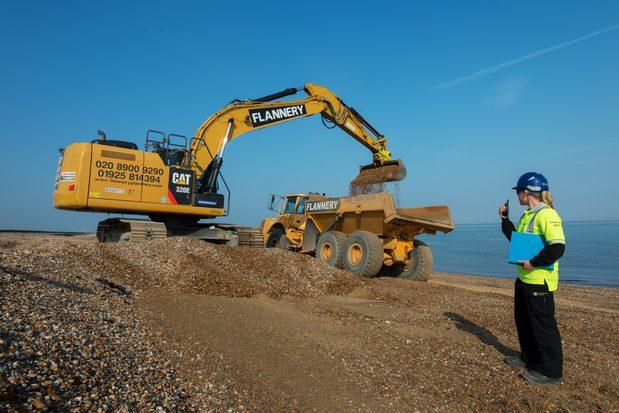
In the Rother Tidal Walls East project, our innovation fund supported the deployment of a specialist excavator capable of operating safely on steep or challenging terrain. This approach reduced project costs by approximately 40% and potential carbon emissions by around 90%. It exemplifies how tested new methodologies can save costs, lower carbon footprints, and maintain flood protection.
Collaboration and Learning for Effective Flood Management
The Environment Agency is one of numerous organisations involved in flood risk management. In England, drainage boards, local councils, and landowners also play crucial roles in maintaining flood defences, making collaboration essential. We share practical knowledge with partners both domestically and internationally—such as best practices for maintaining movable barriers and the use of specific grasses that can strengthen earth banks while promoting biodiversity.
The exchange of evidence and experience enables us to enhance our performance, validate our assumptions, and adopt strategies that have proven successful elsewhere.
With the increasing threat of flood risk due to climate change and the ageing infrastructure we depend on, we recognise the challenge and are committed to addressing it. We have a clear understanding of the condition of our assets and are improving our comprehension of their ageing processes. This data informs our decisions on when and where to take action. Through ongoing maintenance, focused repairs, improved monitoring, and strong partnerships, we will continue to manage these assets effectively to minimise flood risk for communities in the future.
There will always be more to accomplish, and no flood defence can eliminate every risk entirely. Managing flood risk is a collective responsibility. Throughout Flood Action Week, our teams will remain dedicated to inspecting, maintaining, and enhancing defences. Everyone can contribute by assessing their own flood risk, signing up for available alerts, and knowing how to respond in the event of flooding.
To discover more about protecting your home or business during Flood Action Week, please visit Flood Action Online.


More Stories
Optimal Meat Consumption: How Much Should You Really Be Eating?
Understanding the New Five-Day Limit: How Long Should You Safely Use a Decongestant Nasal Spray?
Discover How Pilates Can Soothe Your Nervous System: Try These 3 Easy Moves