
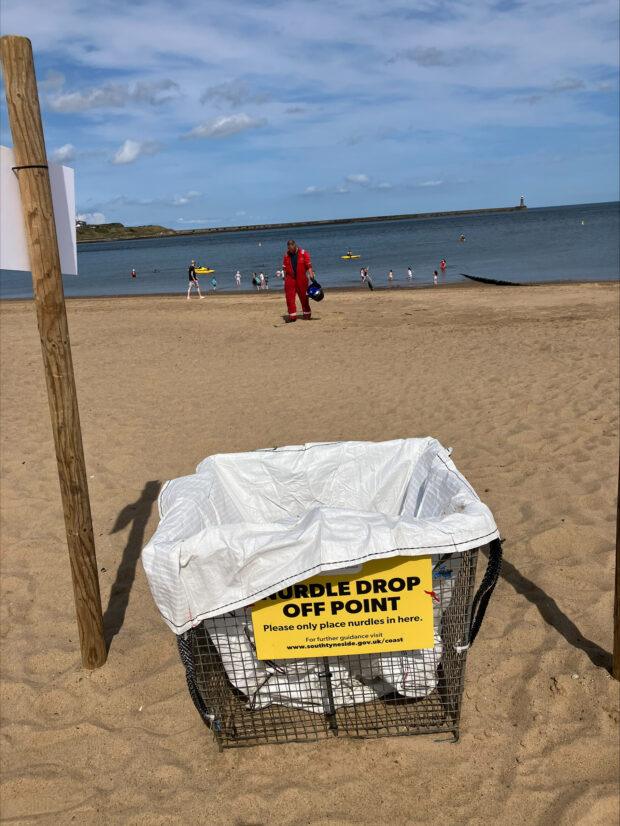
In times of crisis, sound decision-making relies heavily on robust scientific insight. This principle is particularly relevant to the ongoing recovery efforts along the North East coast of England, following a maritime incident that resulted in the release of small plastic pellets, commonly known as nurdles, into the Tyne estuary and adjacent beaches. The repercussions of this spill have been profound, as local communities grapple with the distressing sight of their cherished beaches tainted by pollution, while dedicating countless hours to safeguard and restore their coastline.
Collaborative Scientific Response
Operational teams, alongside various partners, are actively engaged in assessing and managing the pollution on site. Building on the exemplary advice provided in the immediate aftermath of the incident, the Scientific and Technical Advice Committee—comprising scientists from within and beyond the Department for Environment, Food & Rural Affairs (Defra)—is furnishing critical evidence that supports every facet of the recovery operation.
As the chair of this committee, I have witnessed the pivotal role that scientific collaboration plays during periods of uncertainty and rapid developments. From modelling the movement and potential risks associated with nurdles to recommending effective clean-up strategies, our team leverages a diverse range of expertise. This collaborative effort allows us to evaluate the best available science and provide guidance to those overseeing the recovery, ensuring that decisions made will safeguard natural ecosystems, wildlife, and coastal communities.
Understanding Nurdles and Their Impact
Nurdles are small plastic pellets utilised as raw materials in the production of various plastic products. Following the maritime incident, these pellets, along with other debris, infiltrated the estuary and marine environment, subsequently washing up along the coastline. Although they may appear innocuous due to their size, nurdles can pose significant environmental threats if they persist in large quantities within the ecosystem.
Tracking Nurdle Movement
A major challenge faced by the committee is determining the current location and potential future movements of the nurdles. We are integrating modelling, monitoring, and expert judgement to construct the clearest possible narrative regarding their dispersion. Initial observations have already identified nurdles travelling upstream, leading to industry-funded initiatives aimed at further investigating the estuary’s dynamics.
This scientific evidence aids responders in anticipating where nurdles may be present in the environment, allowing for focused attention on specific habitats or locations as the situation evolves.
Assessing Environmental Risks
One of the crucial roles of science amidst such incidents is identifying areas of greatest risk. While research into the environmental impacts of nurdles is ongoing, our committee is working diligently to highlight potential vulnerabilities as the situation progresses. Scientists are particularly concerned about the susceptibility of protected coastal habitats, such as saltmarshes, mudflats, seagrass, and vegetated shingle. These vital ecosystems support internationally significant wildlife and can be especially challenging to restore once plastic materials become entrenched.
We are also examining the implications for seabirds, marine mammals, fisheries, and other coastal species. Beyond the immediate consequences of the pollution, the committee is advising on the appropriate timing to cease clean-up operations, recognising that extensive excavation could further jeopardise the habitats we aim to protect. Our recommendations help responders weigh the benefits of recovery against the potential for additional environmental damage.
Transforming Evidence into Actionable Recommendations
Throughout the recovery process, the scientific committee is committed to providing evidence-based recommendations concerning the monitoring of materials in the marine environment, safeguarding particularly sensitive habitats, and prioritising clean-up activities. This guidance also extends to the Recovery Coordination Group, advising on how to delineate the parameters of the recovery process, thus enabling confident planning for the next phases of restoration.
I have observed a remarkable amount of effort being invested behind the scenes, with numerous experts volunteering their time and knowledge to address various facets of this challenge. When communicated effectively, this information plays a crucial role in supporting operational responders and decision-makers.
Harnessing Expertise Across Disciplines
No single organisation possesses all the scientific knowledge and expertise required during a complex environmental incident such as this. Consequently, the scientific committee draws upon a wealth of expertise from government agencies, environmental regulators, public health specialists, and marine scientists. I am collaborating closely with colleagues from local groups and governmental organisations, including Natural England, Cefas, the Marine Management Organisation, the Maritime and Coastguard Agency, and the UK Health Security Agency, as well as academic experts from the universities of Newcastle, Portsmouth, and Lancaster, ensuring a comprehensive array of scientific disciplines are represented.
This collaborative approach guarantees that decisions are informed by the most reliable evidence, whether the focus is on wildlife conservation, fisheries, public health, or marine pollution. It also ensures that the guidance provided to local authorities and others leading the response is consistent, actionable, and dependable.
The Importance of Scientific Collaboration
On a daily basis, scientists from the Environment Agency and partner organisations join forces to tackle a broad spectrum of environmental challenges, ranging from water quality and flood risk to emerging pollutants and incident response. By integrating evidence, expert judgement, and multi-agency collaboration, we can enhance our understanding of environmental risks, make well-informed decisions, and ultimately protect both people and the environment.
While science may not completely eliminate uncertainty, it provides the most reliable foundation for making balanced and informed decisions when they matter most. I extend my gratitude to everyone involved in making this crucial work a reality in the North East.


More Stories
Transforming Flood Defences: Building Resilience and Confidence in a Changing Climate
Optimal Meat Consumption: How Much Should You Really Be Eating?
Understanding the New Five-Day Limit: How Long Should You Safely Use a Decongestant Nasal Spray?