
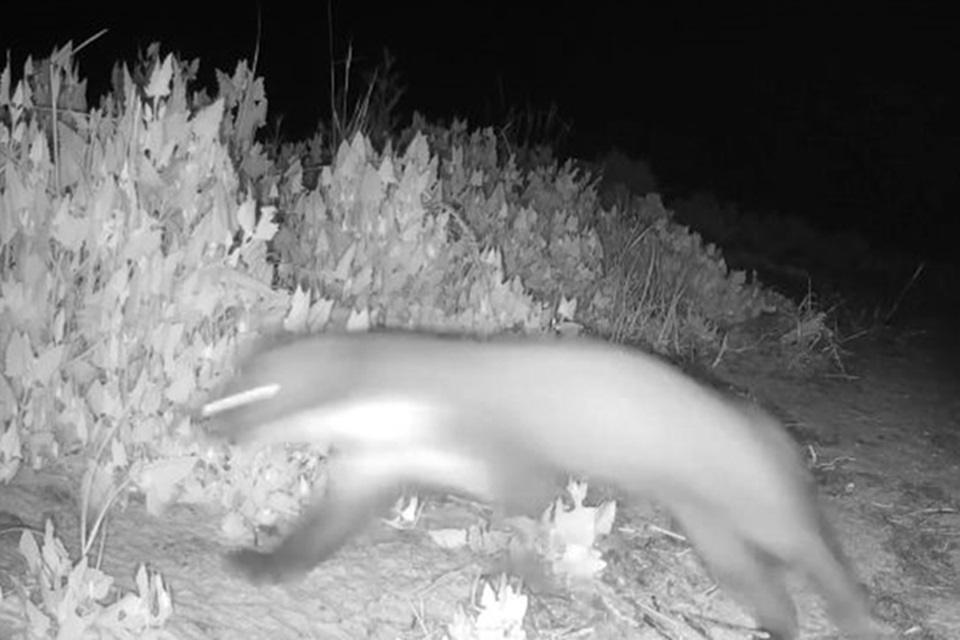
First Recorded Sighting of Pine Marten in Suffolk
A remarkable event has unfolded at Benacre National Nature Reserve, situated near Lowestoft in Suffolk, where what is believed to be a live pine marten has been captured on camera for the first time. This rare footage was obtained using a camera trap set up to monitor predator activity and disturbances impacting local bird populations.
Adam Burrows, the senior reserve manager for Natural England, expressed his excitement, stating, “This fantastic find is a real thrill for everyone who works on this reserve. Observing what we think is a pine marten in Suffolk for the first time underscores the uniqueness of this landscape.”
Understanding Pine Martens and Their Ecosystem Role
Pine martens, primarily nocturnal creatures, are notoriously difficult to spot. However, their distinctive light-coloured bib and bushy tail distinguish them from other members of the mustelid family. Their presence at Benacre National Nature Reserve signifies a healthy ecosystem, where predators and prey thrive in a delicate balance.
Managed by Natural England, this reserve is not only a sanctuary for rare flora but also a crucial habitat for both breeding and migratory bird species. The sighting of the pine marten is a positive indication of the ecological health of the area.
Historical Context and Conservation Efforts
Once widely distributed across Britain, pine martens have seen their numbers dwindle dramatically due to habitat destruction and past persecution. Today, they are rare in England, with significant populations primarily found in Scotland and certain regions of Wales. The closest previous sighting to Benacre occurred in Heacham, Norfolk, back in 2024.
The camera traps deployed at the reserve will continue to play a vital role in monitoring both predators and disturbances, thereby aiding in the protection of vulnerable ground-nesting birds such as little terns and avocets during their critical breeding seasons. This initiative will enhance understanding of how these species interact within their broader habitat.
The Importance of Benacre National Nature Reserve
Benacre National Nature Reserve, overseen by Natural England, is integral to the conservation of the Suffolk coast, providing protected habitats for a variety of breeding and migratory birds. It is home to over 100 breeding bird species, including marsh harriers, bearded reedlings, and bitterns. Additionally, its shingle shoreline supports unique plant species such as yellow horned poppy and sea holly. This rich biodiversity is a testament to Natural England’s commitment to fostering interconnected habitats that enable nature’s recovery, benefiting both wildlife and local communities.
National Nature Reserves play a crucial role in safeguarding England’s most significant habitats, species, and geological features, promoting nature recovery on a landscape scale. In line with this mission, Natural England is advancing the King’s Series of National Nature Reserves, which aims to establish or expand 25 National Nature Reserves by 2027, ensuring a lasting legacy for both people and nature.
Further Information and Media Access
Images of Benacre National Nature Reserve and the brief video footage of the pine marten are available for download from WeTransfer for a limited time of three days, or can be obtained directly through the Natural England press office.
It is worth noting that there is a possibility that the species could also be a beech marten, which bears a striking resemblance to the pine marten. For more details about Benacre National Nature Reserve, additional resources can be found on the official government website.
For media inquiries, journalists may reach out to the provided contact details, while the public can direct their questions to Natural England through the designated email or phone number.




More Stories
Chancellor Affirms Commitment to Safeguard UK Economy Resilience with Upcoming Budget Amid Global Challenges
Tactical Power Challenge: Empowering the Future of Military Forces
UK Urges Libyan Parties to Uphold Promises for Security, Economic Prosperity, and Democratic Freedom at UN Security Council