
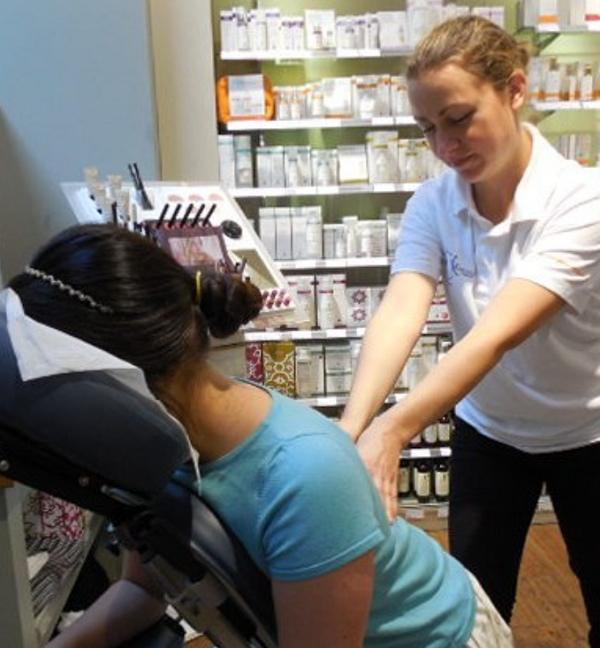
Katoka Massage Therapy is a mobile massage company specialising in onsite wellbeing at work, with a particular focus on fully clothed acupressure chair massage delivered directly in offices and other workplaces. The treatment is performed by a trained massage therapist using their hands; the specialist chair simply supports the employee in a comfortable seated position and is not a mechanical or automated massage chair. Operating mainly across London, the company works with businesses seeking to incorporate massage and other wellbeing activities into their employee programmes without requiring staff to leave their place of work.
The core of the service is seated acupressure massage. Treatments take place in a specially designed massage chair brought to the workplace by the therapist, require no oils and are carried out while the employee remains fully clothed. Sessions can be organised in 20, 30, 45 or 60-minute slots and focus on areas including the head, neck, shoulders, back and arms. Head massage can also be incorporated, offering an option particularly suited to people experiencing headaches or seeking mental relaxation.
Katoka Massage Therapy works across much of London and can also coordinate workplace massage services in other parts of the country. Its London coverage includes the City of London, London Bridge, Canary Wharf, central London and Greenwich, while the company states that appointments further afield can also be arranged, potentially subject to additional costs.
Wellbeing brought directly into the workplace
Katoka Massage Therapy has developed its service around taking massage into the working environment rather than requiring employees to travel to a treatment room.
The company brings the specialist chair and all necessary equipment directly to its clients’ offices or event venues. The chair itself does not provide the massage: it is ergonomic equipment used by the therapist to position and support the employee while the treatment is performed manually. A quiet meeting room or similar area can be used, with approximately three by three metres of space required for each therapist and chair to ensure a comfortable setup.
This format allows companies to incorporate individual massage appointments into the working day. Employees remain dressed throughout the session and no oils are used, reducing the preparation required before returning to work.
The chair massage itself is based on acupressure and Shiatsu techniques. Katoka describes it as a highly structured, Shiatsu-based form of massage in which the therapist applies pressure by hand to areas of the upper body.
The pressure can also be adapted to the person receiving the massage. When firmer pressure is applied, the treatment can provide an experience closer to deep tissue massage and focus more strongly on areas of aches, pains and muscular tension. With lighter pressure, the same seated format can instead provide a gentler and more relaxing massage.
This flexibility enables the therapist to respond to different preferences while retaining the practical structure of a workplace chair massage.

A focus on aches, pains and the effects of office work
Katoka Massage Therapy was established with workplace wellbeing at the centre of its activity.
The company describes its work as particularly concerned with daily tension, aches and pains associated with working habits and office environments. Its onsite treatments concentrate on the upper body, including areas that can become uncomfortable during sedentary working routines.
The company’s website states that acupressure chair massage is intended to release muscle tension and reduce the symptomatic effects of stress. It also associates its treatments with relaxation, circulation, focus and concentration.
The format provides an opportunity to work on specific areas without requiring the employee to change clothes or use oils. Depending on the level of pressure requested, a session may concentrate more closely on muscular aches and tension or take a lighter approach centred on relaxation. A head massage may also be included, particularly for employees seeking relief from headaches or a greater sense of mental relaxation.
This makes the same workplace service suitable for employees whose expectations from a massage may differ.
Regular workplace massage programmes
Katoka Massage Therapy offers companies the option of arranging chair massage as a recurring element of their workplace wellbeing provision.
Regular massage visits can be scheduled weekly, fortnightly, monthly or quarterly. Businesses can therefore decide how frequently they want therapists to attend their workplace according to their own wellbeing programme and the requirements of their employees.
The company also provides ad hoc onsite chair massage sessions where a regular programme is not required.
This structure means a business can introduce the service for a particular occasion before deciding whether to establish a recurring arrangement, or use chair massage periodically as part of its wider employee wellbeing activities.
Katoka describes its role as helping companies deliver wellbeing support directly to employees in the office.
Different ways for employers to organise the service
Companies can also choose between different arrangements for funding workplace massage.
Katoka Massage Therapy offers a full subsidy model in which the employer covers the complete cost of the treatment. A partial subsidy arrangement allows the cost to be divided equally between employer and employee, while another option enables employees to pay for their own treatments while the employer provides the workplace space and helps coordinate dates.
These different arrangements allow businesses to introduce workplace massage according to the structure of their existing employee benefits and wellbeing programmes.
For scheduled onsite services, Katoka requires a minimum booking of two hours. The company can organise more than one massage therapist when demand and available space require it, while the maximum scheduled massage time for an individual therapist is six hours per day, excluding breaks.
Employees may also use an online booking system where this has been agreed with the company. Alternatively, appointments can be coordinated between Katoka’s therapists and a nominated contact within the workplace.
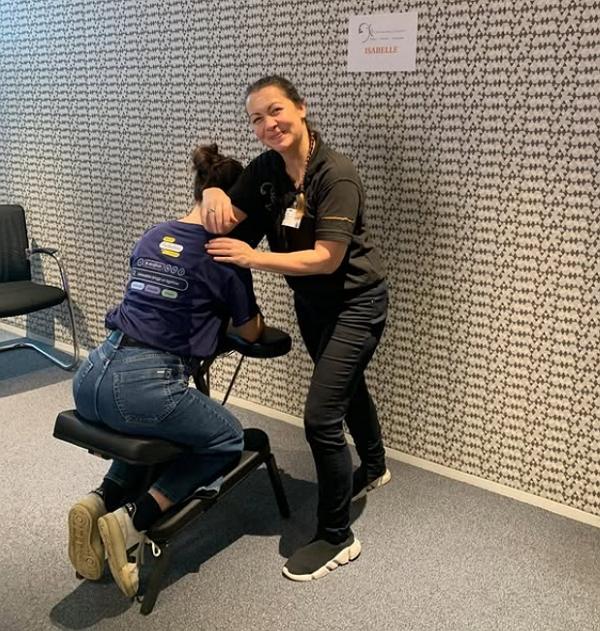
Additional workplace wellbeing activities
Alongside acupressure chair massage, Katoka Massage Therapy can incorporate a wider range of activities and treatments into workplace wellbeing programmes and events. These include dynamic meditation, Qigong or Tai Chi and gong baths.
The company can also provide head massages, facial massages and treatments focused on the hands, arms and shoulders. This allows employers to create a more varied wellbeing session or select an activity suited to the format and aims of a particular workplace occasion.
Workplace events and one-off occasions
Alongside regular employee wellbeing programmes, Katoka Massage Therapy provides chair massage and other wellbeing activities for workplace events and one-off occasions.
Its services include wellbeing days, team-building activities, conferences, trade fairs, charity events, Christmas parties and end-of-project morale-boosting events.
The company also lists bespoke and special events as part of its service, allowing chair massage or another available wellbeing activity to be incorporated into occasions that do not require an ongoing workplace programme.
Trade fairs are another setting in which Katoka provides onsite massage. For these events, the company can bring its specialist chairs to an exhibition venue and offer demonstration massages in 10 or 15-minute slots, each performed by a massage therapist.
Although these shorter sessions can be useful as an introduction, Katoka recommends longer appointments in offices, as 10 or 15-minute treatments may feel somewhat rushed. Demonstration massages can nevertheless give HR and wellbeing managers, or employers more generally, an opportunity to gauge employees’ interest before considering a more regular workplace wellbeing programme.
This event-based work operates alongside the company’s principal activity of providing wellbeing services directly within offices and workplaces.
From the financial sector to workplace massage
Katoka Massage Therapy is owned by Isabelle le Goaëc, whose professional background before establishing the business was in the financial industry.
Le Goaëc explains that she spent 12 years working days of between 10 and 15 hours while organising events and financial roadshows. She subsequently left that working environment to retrain in massage therapy, which she describes as a childhood passion.
Her previous experience contributed directly to the focus of Katoka Massage Therapy.
The business was developed around supporting people working in sedentary office environments who may find it difficult to make time to address aches and pains or to mentally switch off from a busy schedule.
Rather than establishing a service centred primarily on clients travelling to a traditional massage practice, Katoka’s model brings therapists into the type of working environment with which its founder was already familiar.
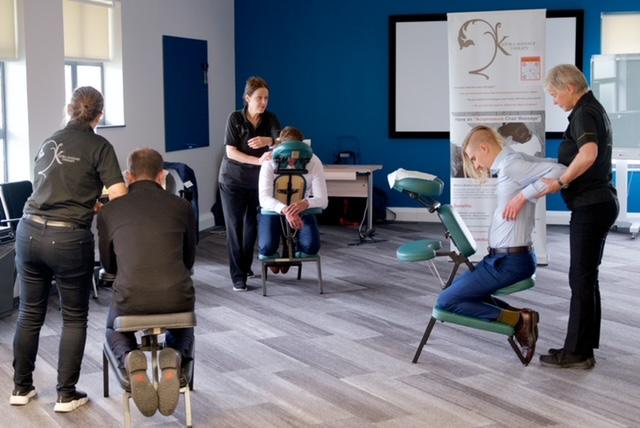
A team of trained massage therapists
Katoka Massage Therapy works with a team of therapists to provide its workplace services.
According to the company, practitioners are trained through organisations including the TouchPro UK School or the Academy of On-Site Massage, or through other recognised training providers. Their qualifications are recognised by the Complementary Therapists Association (CThA) and the Federation of Holistic Therapists (FHT).
The company states that its therapists are registered with one of these professional bodies and maintain their own public liability and professional liability cover.
When attending a workplace, therapists bring their own massage chair together with the equipment required for the treatment. The portable chair provides the physical support needed for the seated treatment, while the therapist performs the massage manually.
This enables Katoka to organise individual therapists or larger teams depending on the number of employees involved and the space available at the client’s premises.
Serving businesses across London and beyond
Katoka Massage Therapy operates mainly around the City of London, London Bridge, Canary Wharf, central London and Greenwich. Its stated coverage also includes locations such as Aldgate, Tower Hill, Monument, Cannon Street, St Paul’s, Bank, Tottenham Court Road, Soho, Oxford Street, Old Street and Whitechapel.
The company is not limited exclusively to these areas. Its mobile structure allows services to be arranged elsewhere in London, while Katoka can also coordinate workplace massage in other parts of the country.
This geographical flexibility is particularly relevant for organisations operating from several offices or planning wellbeing initiatives involving employees outside the capital.
The service remains based on the same practical model regardless of location: therapists travel to the client’s workplace, set up the specialist chair and personally provide individual, fully clothed acupressure massages on site.
Workplace wellbeing as the centre of the business
Although Katoka Massage Therapy provides chair massage and other activities at events and trade fairs, workplace wellbeing remains at the centre of its activity.
Its services are structured around companies and their employees, ranging from occasional wellbeing days to weekly, fortnightly, monthly or quarterly massage programmes. Treatments are designed to fit within the working environment and can be adapted through both the duration of the appointment and the amount of pressure applied. Employers can also complement massage sessions with options such as dynamic meditation, Qigong or Tai Chi and gong baths.
The fully clothed format, absence of oils and portable specialist chair allow sessions to take place directly at an office or place of work. Each massage is performed manually by a therapist, while the choice between firmer and lighter pressure and the option to incorporate head massage give employees different ways of approaching the treatment.
Founded by Isabelle le Goaëc following her own career in the financial sector, Katoka Massage Therapy has developed a mobile service focused specifically on bringing massage and related wellbeing activities into the workplace. From its principal coverage across London, the company can also coordinate services elsewhere in the country, providing businesses with a way to incorporate onsite chair massage into regular employee wellbeing programmes, individual workplace events or occasional initiatives.




More Stories
Essential Guide to Understanding Young-Onset Dementia: Key Facts and Insights
Harnessing Science to Tackle the Tyne Nurdle Pollution Crisis
Understanding Exfoliation: Its Importance for Healthy Skin Explained