
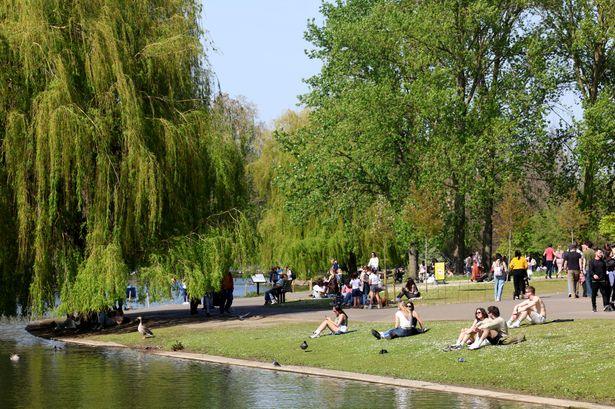
As 2026 progresses, it has already set records as an exceptionally dry year. The combination of recurring heatwaves and a significant deficit in rainfall has led to widespread wildfires and the imposition of hosepipe bans affecting millions across the country. London finds itself amid these challenging conditions, with the hot weather impacting numerous picturesque locations throughout the city. Currently, half of England and all of Wales are officially experiencing drought.
While the effects of the drought may not be immediately apparent in everyday life, a recent comparison of photographs shared on a social media platform has sparked concern among residents. A user posted two images of Regent’s Park taken just weeks apart, highlighting the stark contrast in the landscape. The first photograph, captured on 7th June, depicted lush, vibrant greenery, with the grass and trees flourishing. In contrast, the image taken on 2nd August presented a desolate scene: the once green grass now appeared brown and parched, while the trees and shrubs drooped, victims of the prolonged dry spell.
Public Reactions to the Drought
The images prompted a wave of reactions from viewers, many expressing their dismay at the rapid deterioration of the park’s natural beauty. One commenter lamented, “Damn, we really need a good splash of rain to help our natural environment.” Another person, who had recently visited the open-air theatre within the park, noted, “Huge parts of it aren’t even dry grass anymore; it’s all been worn away and now it’s just dust.” A feeling of nostalgia was evident as one user remarked, “I miss the rain,” to which the original poster replied, “Never thought we’d be saying that in London.”
The severity of the situation was underscored by the Environment Agency, which declared a “flash drought” for London on 29th July, attributed to extremely low rainfall and soaring temperatures. This year has already seen the region endure its fourth heatwave, and the implications of the drought extend beyond the capital. Areas including East Anglia, Hertfordshire, Thames Valley, Hampshire, the Isle of Wight, Devon, Cornwall, the West Midlands, and Wessex—covering Dorset, Somerset, Wiltshire, and Gloucestershire—are also affected.
Impact on Water Resources and Restrictions
This marks the third drought to be declared in just five years, with previous declarations occurring in 2022 and 2025. The current drought has resulted in declining water levels in reservoirs, exacerbated by increased consumption due to the heat. Consequently, a hosepipe ban has been instituted throughout most of London, prohibiting the use of hosepipes for watering plants or gardens. The repercussions of this ban are visibly evident in parks such as Regent’s Park, where the effects of the extreme weather and lack of precipitation have dramatically altered the landscape.



More Stories
Meet Britain’s Strongest Schoolgirl: The Edgware Weightlifter Breaking Stereotypes
Two London Bakers Eliminate Each Other in Great British Bake Off’s Thrilling Bread Week
City Leaders Alert: Healey Bank Tax Increase Could Force Businesses to Leave the UK