
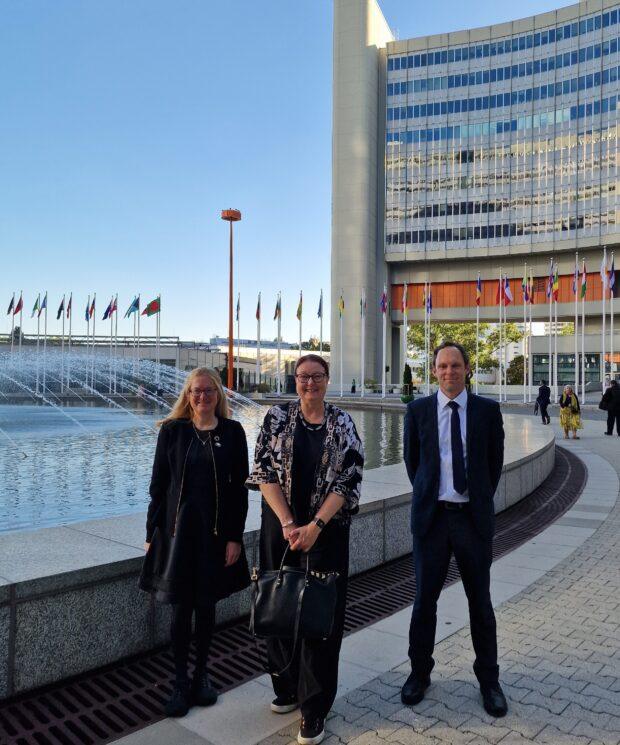
Last week, delegates from the 181 Member States of the International Atomic Energy Agency (IAEA) convened in Vienna for the Agency’s 70th General Conference. During discussions surrounding the future of nuclear energy, a recurring theme emerged: How can regulation foster innovation, investment, and growth while assuring public confidence and maintaining rigorous safety standards?
Nuclear’s Role in the UK’s Energy Landscape
This discourse held particular significance for the UK, where nuclear energy is poised to play a crucial role in ensuring energy security, driving economic growth, and achieving net-zero targets. Effective regulation is essential to realise these ambitions. At the Environment Agency, we are committed to ushering in a new era of nuclear-enabled growth through reliable, science-driven regulation that instills confidence in developers, investors, and communities alike. This approach empowers them to deploy new technologies, tackle legacy issues, and provide clean energy while safeguarding people, places, and the environment.
The Government’s response to the Nuclear Regulatory Taskforce Review (NRTF) acknowledged the necessity for regulation to evolve in tandem with a rapidly changing sector. Recently, we published a letter from our Chief Executive, Philip Duffy, outlining the Environment Agency’s response, which includes the integration of our nuclear strategy and regulatory functions into a unified directorate.
I am proud to lead this directorate as the Director of Nuclear, where my focus is on enhancing the pace, predictability, and proportionality of our regulatory processes while ensuring the environmental integrity and fostering public confidence.
Accelerating Regulatory Transformation
One of our key initiatives has been the establishment of the Nuclear Transformation Programme, designed to coordinate the implementation of the Review’s recommendations. This programme prioritises organisational effectiveness, cultural development, proportionality, and regulatory coordination.
By consolidating our nuclear strategy and regulatory functions under a single leadership structure, we create clear accountability for driving change. This structure facilitates quicker decision-making and more effective escalation of significant national issues, enabling us to eliminate unnecessary barriers and adapt more responsively to sector changes.
We are also modernising our permitting services, enhancing digital pathways, and simplifying our processes to ensure greater consistency, certainty, and efficiency for applicants. This streamlining allows for a reduction in time spent navigating regulatory processes without compromising the environmental protections that are central to our mission. While these changes may not always be immediately visible, they are crucial for keeping pace with the UK’s nuclear ambitions.
Prioritising Meaningful Outcomes
The Review emphasises the importance of proportionality in regulation. Effective regulation should be assessed by the outcomes it achieves rather than the volume of processes involved.
Proportionality empowers our staff to concentrate on the most significant risks, applying their professional judgement and gathering sufficient evidence to facilitate quicker decisions. This also involves leveraging data, digital tools, and artificial intelligence to enhance our evidence base and target regulatory efforts more efficiently.
For instance, enabling the reuse of 17,000 tonnes of concrete from the decommissioning of Sizewell A in the construction of Sizewell C exemplifies this principle. This approach reduces carbon emissions, cuts costs, and diminishes the need for new aggregate, all while maintaining stringent environmental controls. This is a practical demonstration of proportionality, and it embodies the kind of outcomes I aim to see more frequently.
Enhancing Collaboration Among Regulators
The Taskforce also encouraged regulators to collaborate more effectively. I firmly believe that improved coordination, coupled with clear independent decision-making, will be a key indicator of future success.
We are fostering the development of the Lead Nuclear Regulator model, which aims to create a more coordinated regulatory framework. This model ensures that leadership is provided by the organisation with the relevant expertise at each stage of the nuclear lifecycle.
Complementarily, the Lead Environmental Regulator pilot at Sizewell C is aligned with these objectives, facilitating early collaboration among regulators, effectively addressing issues, and providing greater clarity, all while preserving the independence that is fundamental to public trust. The insights gained from this pilot will inform future Lead Nuclear Regulator arrangements across the sector.
Ultimately, this enhanced collaboration will enable us to identify issues sooner, reduce duplication, and create a more predictable experience for those investing in the UK’s nuclear future.
Fostering a Culture of Innovation and Openness
A successful regulatory framework hinges on the right organisational culture. Reform necessitates a willingness to embrace challenges and collaborate to solve problems, a principle that applies to regulators, government, and industry alike.
The Environment Agency is dedicated to facilitating this cultural shift by bolstering capabilities, supporting professional judgement, and empowering our personnel to make timely, evidence-based decisions. Achieving the necessary pace of reform within the sector will require deep nuclear expertise, and we are intentionally cultivating this through initiatives such as secondments with organisations like Great British Energy Nuclear and Sizewell C, which enhance capacity on both sides and strengthen the collaborative relationships essential for effective regulation.
Investment in nuclear energy has the potential to deliver cleaner energy, create skilled jobs, stimulate economic growth, and strengthen communities, and our role is to establish the conditions necessary for that investment to thrive sustainably.
Looking Ahead: The Future of Nuclear Regulation
One salient observation from my recent discussions at the IAEA conference in Vienna was the international attention focused on the UK’s nuclear regulatory journey. Globally, regulators are grappling with analogous challenges: how to adopt a proportionate approach to risk while fostering a culture that supports innovation without compromising high safety standards.
These conversations have reinforced my conviction that regulation must be dynamic. As new technologies emerge and expectations evolve, regulators must be ready to adapt while maintaining an unwavering commitment to safety and environmental protection. I am eager to continue driving this change alongside colleagues and partners throughout the sector.




More Stories
Discover Ashwagandha: Health Benefits, Uses, and Potential Side Effects Explained
Is Your Weight a True Indicator of Your Health? Discover the Facts!
Top Rosacea Triggers to Avoid for Flawless Skin: Essential Tips and Strategies