
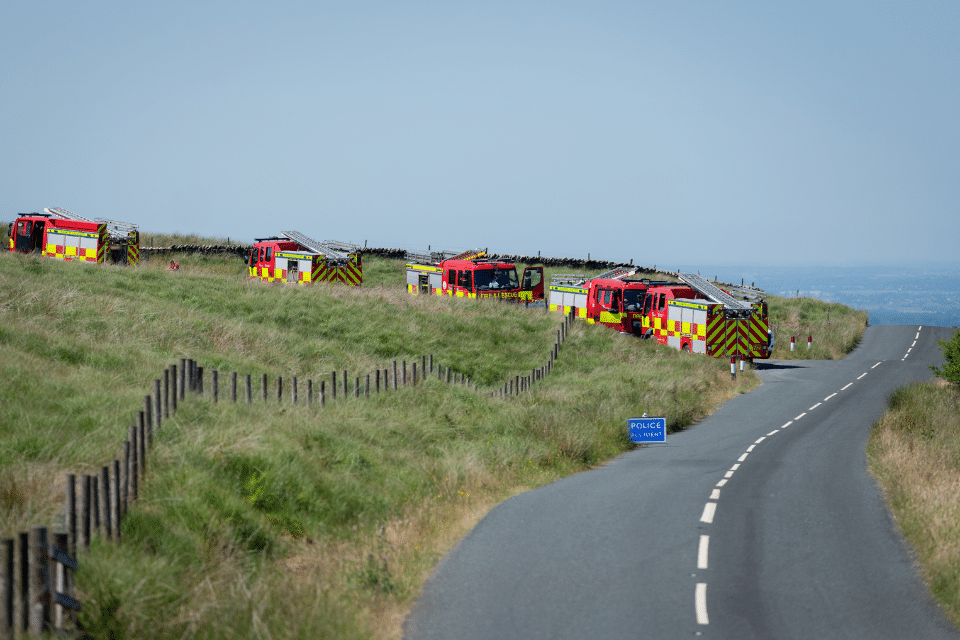
The Royal Air Force’s Chinook helicopters and A400M aircraft are set to be outfitted with specialised firefighting capabilities, ready to assist crews across the UK in combating wildfires in remote moorland, steep hills, and other challenging terrains when requested. This initiative aims to bolster the resources available to frontline firefighters during periods of heightened fire risk.
Firefighters in England will receive enhanced support through the introduction of additional specialist wildfire teams and advanced, lightweight personal protective equipment tailored specifically for wildfire scenarios. With an investment of up to £45 million, this new equipment will ensure that those dedicated to safeguarding communities can do so with improved safety. Unlike the current gear, which is mainly designed for structural fires and not suitable for prolonged use, the new kit will be both lighter and more breathable, allowing firefighters to operate more effectively during extended wildfire engagements.
Strengthening Fire Prevention Efforts
In a proactive move to prevent wildfires from occurring in the first place, the government plans to allocate further funds to enhance the resilience of landscapes. This includes £25 million dedicated to the restoration of parched peatlands in England, enabling them to retain more water and serve as natural firebreaks. Additionally, financial assistance will be provided to farmers for fireproofing their land, which may involve creating ponds and removing combustible materials from high-risk areas.
Furthermore, the government is considering implementing stricter local restrictions or product bans to reduce the likelihood of fire outbreaks during periods of high risk. This comprehensive strategy is part of a broader package of measures announced in advance of a summit where the Prime Minister is set to engage with fire chiefs, local leaders, and experts to prevent a recurrence of this summer’s devastating fire episodes.
A Call to Action from Leadership
The Prime Minister reflected on the devastating impact of recent wildfires, stating that witnessing families in Stourbridge lose everything was an experience he would not forget. He emphasised the heroism of firefighters but asserted that they should not be hindered in their efforts. With the new equipment and military aircraft on standby, he expressed a commitment to ensuring that communities are not subjected to another summer marked by such destruction.
Communities Secretary Angela Rayner echoed these sentiments, highlighting the relentless nature of the wildfires faced this year and their destructive consequences for communities and the countryside. She acknowledged the urgent calls for action from communities, experts, and emergency services, reinforcing the government’s commitment to immediate action while collaborating across sectors to bolster national wildfire response capabilities.
Enhanced Military Support and Technological Integration
Defence Secretary Wes Streeting announced that, as the threat of wildfires continues to escalate in the UK, the military will enhance its support for emergency services and protect vital military training areas. The initiative will see the RAF’s Chinook helicopters and A400M aircraft outfitted with advanced firefighting equipment, enabling aerial firefighting capabilities for the first time.
Additional measures revealed include the establishment of a Wildfires AI Unit within the National Situation Centre, which will unite leading universities, technology firms, and government bodies to improve fire detection and response times. Collaboration with the Met Office is also set to improve wildfire forecasting and public awareness, while the development of England’s inaugural Wildfire Action Plan will focus on prevention, preparedness, response, and recovery efforts.
Collaborative Efforts for a Stronger Response
This summer marked the UK’s hottest on record, with the Met Office indicating that climate change has significantly increased the likelihood of extreme heat events. In light of this, businesses such as Airbus, Google, and VodafoneThree are participating in the summit, showcasing how technology—from satellite monitoring to connectivity—can enhance community preparedness and response to wildfires.
In addition to the summit, the government plans to hold an interministerial meeting to better coordinate wildfire responses across the UK. This initiative follows last month’s inaugural Climate and Nature Security Taskforce meeting, which aims to identify major climate risks and inform strategies to address these challenges effectively.
Expert Opinions on Climate Adaptation
First Secretary of State Louise Haigh highlighted the UK’s leading role in employing new technologies to combat wildfires. By integrating resources from the National Situation Centre with academic and international partnerships, the government aims to establish a centre of excellence to enhance national preparedness.
Dame Angela Eagle, Environment Secretary, underscored the urgent need to adapt to climate change, noting that healthy landscapes are crucial in preventing wildfires by retaining moisture. The commitment of £25 million for peatland restoration and support for farmers to implement natural fire safety measures reflects this understanding.
Minister for Climate Transition Katie White warned that climate change is an immediate concern, urging recognition of the current threats. She expressed that while it is impossible to prevent every wildfire, the focus should be on ensuring that Britain is adequately prepared. The summit is dedicated to equipping emergency services, protecting communities, and fortifying the nation against adverse weather conditions.
Investment in Future Resilience
Kata Escott, Managing Director of Airbus Defence and Space UK, acknowledged the significance of the Wildfire Summit in reinforcing wildfire preparedness. The company aims to contribute through aerial capabilities and digital advancements. Similarly, Nick Gliddon from VodafoneThree emphasised the importance of connectivity in national resilience, stating that effective communication is vital for communities during emergencies.
The investment initiated by the Prime Minister will allow the Ministry of Defence to establish an aerial firefighting capability permanently situated in the UK, ensuring robust support for civilian fire and rescue services. The new Peatland Restoration Grant Scheme, managed by Natural England, is anticipated to operate from April 2027 to April 2029, building on previous successful initiatives.
As the second-largest landowner in the UK, the Ministry of Defence recognises the necessity of aerial firefighting capabilities in response to the increasing wildfire risks facing the country.



More Stories
Households Urged to Embrace Easy Steps for Effective Emergency Preparedness
Defence Secretary Wes Streeting Unveils Telford Gun Hall: A New Era in Defence Innovation
New Subsea Cable Factory Boosts National Energy Security in the UK