
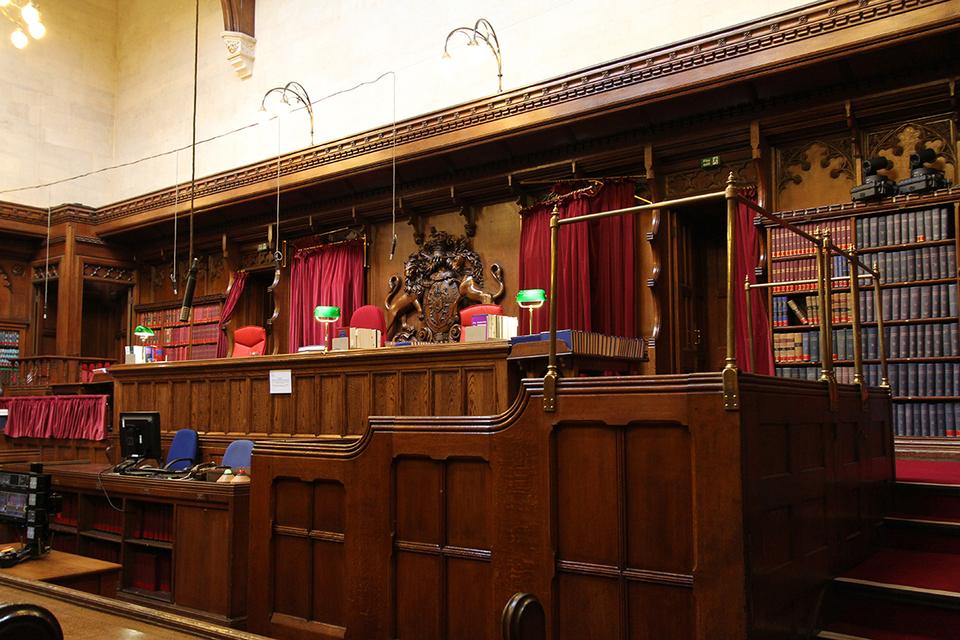
Plans to allow certain criminal trials to be conducted by a judge alone are set to be abandoned, ensuring that more serious cases will continue to be adjudicated by a jury, thereby reinforcing the fundamental principle of jury trials in British justice.
This shift will enable the Justice Secretary to concentrate fully on expediting broader reforms necessary to address the unprecedented number of cases awaiting resolution—an issue that has left numerous victims in a state of uncertainty as they await justice.
In a significant investment, millions will be allocated towards modernising court technology and eliminating inefficiencies. Judges will receive the necessary resources to expedite case hearings, while essential structural reforms aim to create a court system that meets the demands of the 21st century.
Empowering Magistrates and Streamlining Processes
The reforms will empower magistrates to impose longer sentences, facilitating quicker resolutions in the courts and enabling victims to attain justice in a more timely manner. Additionally, technical and complex fraud cases will be permitted to be tried by a judge alone, liberating jurors from the burdens associated with lengthy, intricate trials that can extend for months.
Courts will also retain the authority to determine the venue for cases, thereby preventing individuals accused of minor offences from attempting to manipulate the system by opting for a jury trial to evade custodial sentences.
Alex Norris, the Lord Chancellor and Secretary of State for Justice, stated, “This government inherited criminal courts on the brink of collapse, with victims waiting years for their day in court. I am steadfast in my commitment to reducing the backlog and delivering quicker justice for those who desperately need it. However, I have taken into account the strong sentiments regarding the increase of judge-alone trials in the Crown Court and resolved to alter our course.”
A Commitment to Structural Reform and Efficiency
Norris further emphasised the importance of efficiency in delivering justice, declaring, “Justice delayed is justice denied. I am dedicated to optimising our system alongside unprecedented investment. Structural reform is essential if we are to alleviate the backlog.”
The changes announced will be incorporated into the Courts and Tribunals Bill, which is set to return to Parliament later this month. Upon its return, the government will also commit to evaluating the effects of structural reforms on ethnic minorities and diverse communities, guided by an independent reviewer.
Sarah Sackman KC, Minister for Courts and Legal Services, echoed this sentiment, stating, “Justice delayed is justice denied. We must act decisively to reduce the backlog using every available resource. In our forthcoming response to Lord Leveson’s report, we will outline the measures we are implementing to enhance court efficiency.”
A Record Backlog and the Path Forward
She highlighted initiatives such as employing artificial intelligence to assist in case listings, expanding virtual hearings, and ensuring timely attendance of defendants in court as vital steps towards providing the swift justice that victims deserve.
This announcement follows the recent revelation that the backlog in the Crown Court has reached a historic peak, with nearly 81,000 cases currently awaiting resolution—of which almost a third have been pending for over a year.
It is acknowledged that no single action can remedy years of underfunding and a system that has struggled to adapt to changing demands. Consequently, the government is committed to pursuing comprehensive, long-term reforms, underpinned by essential efficiency measures and substantial investment to ensure victims receive fair and prompt justice.
In the coming weeks, the government will publish its comprehensive response to both segments of Lord Leveson’s review, with the Bill scheduled to return to the House of Commons on 13 October.




More Stories
Defence Ministers of the Joint Expeditionary Force Unite in Important Statement – 2nd October 2026
UK Military Transport Aircraft Availability Soars by 30% with New Agreement
UK Marks 80 Years of the International Whaling Commission with £150,000 Investment in Global Strandings Database and Firm Anti-Whaling Commitment