
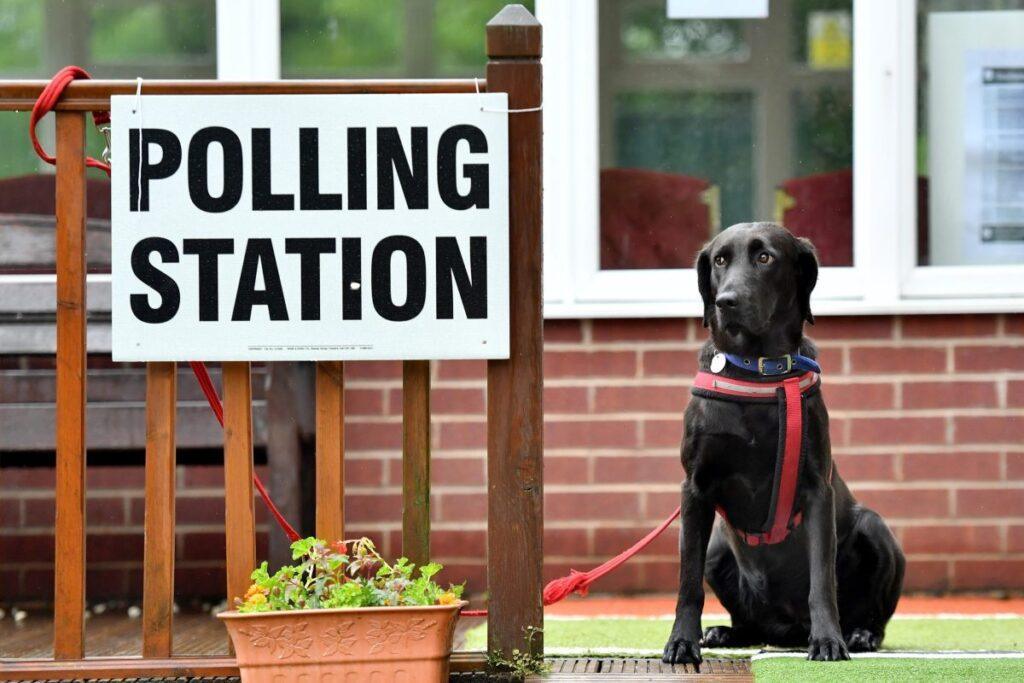
It may seem obvious that Labradors do not represent fascism, yet the Labour Party continues to engage in discussions that suggest otherwise, as noted by James Ford in his latest Notebook entry.
The Unlikely Association of Labradors and Politics
On a dreary election day, a black Labrador patiently waits beside a polling station sign, embodying the spirit of loyalty and companionship. This image starkly contrasts the political discourse that seems to draw unfounded parallels between such innocent creatures and extreme ideologies. The absurdity of linking a beloved pet to fascism highlights a growing trend in political rhetoric, wherein even the most benign symbols are scrutinised and misrepresented.
James Ford, a former adviser to Boris Johnson during his tenure as Mayor of London, has an extensive background in transport, environmental, and technology policy. His insights often bring a pragmatic lens to the discussion of contemporary political narratives. Following his role in local government, Ford has lent his expertise to various well-known organisations, such as London City Airport and the Ministry of Sound, as well as contributing to the London Chamber of Commerce & Industry. He is also a familiar voice on LBC and a regular contributor to Conservative Home.
Political Discourse and Its Distractions
Ford’s commentary reflects a growing frustration with how political parties, particularly Labour, engage in debates that seem disconnected from the everyday realities faced by citizens. By focusing on trivial associations, the party risks alienating voters who are concerned with pressing issues rather than the symbolic meanings of domestic pets. In an increasingly complex political landscape, it is vital for parties to concentrate on policies that resonate with the electorate, rather than getting sidetracked by absurd claims.
The juxtaposition of a Labrador with the serious implications of fascism serves as a reminder of the importance of clarity and rationality in political discussions. As parties navigate the challenges of modern governance, they must strive to uphold the dignity of their discourse, fostering an environment where ideas can be exchanged thoughtfully, without resorting to sensationalism.
Refocusing Political Conversations
To regain focus, political leaders should emphasise substantive issues that impact the lives of their constituents. This includes addressing economic concerns, healthcare, education, and climate change. By prioritising these areas, parties can build a platform that genuinely reflects the needs and desires of the populace, rather than indulging in frivolous debates over the symbolism of a dog.
In conclusion, the notion that Labradors could be misconstrued as a representation of fascism underscores the necessity for more grounded and meaningful conversations within the political arena. As highlighted by Ford, it is crucial for political parties to navigate their rhetoric with care and to remain committed to the principles of democratic engagement, ensuring that their discussions remain relevant and impactful for the electorate.




More Stories
Healey’s £1 Billion London Office Raid: A Threat to Economic Growth
Culture Secretary Lisa Nandy Considers Intervention in Sky’s Acquisition of ITV
Nvidia’s £250m Investment in UK AI Raises Concerns Over Foreign Dependence