
Engaging in Meaningful Consultation
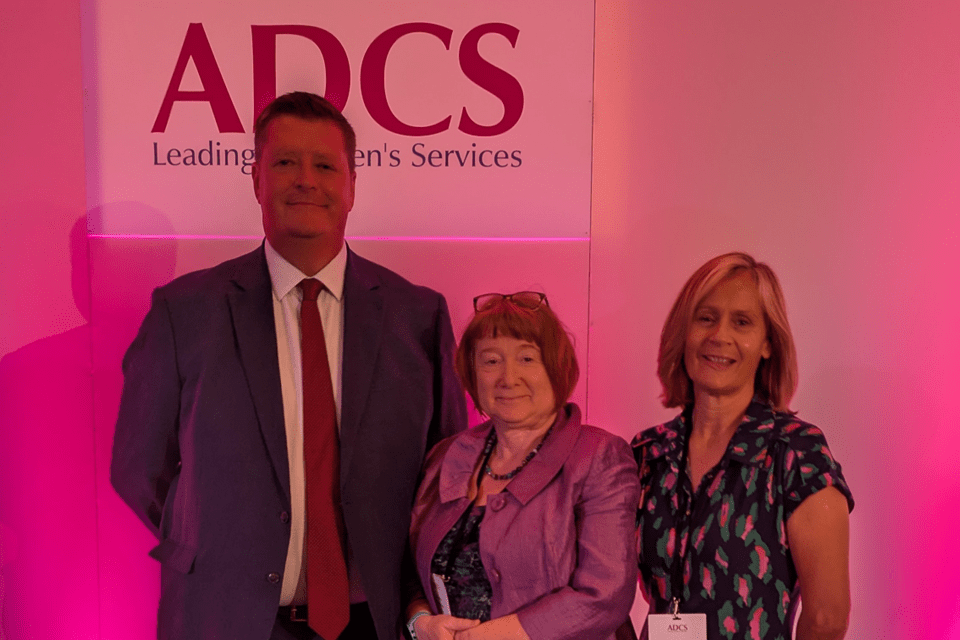
Thank you for the opportunity to join you today, alongside Yvette and Sally. It is always a pleasure to engage with the community in Manchester, particularly during such a significant event on the ADCS calendar.
On Tuesday, we initiated a new consultation aimed at enhancing the inspections of children’s social care. Our purpose here is to discuss the details of this consultation and invite your valuable insights as we seek to improve our systems.
From the outset, I want to emphasise that our efforts are focused on achieving the best possible outcomes for children, young people, parents, carers, and families. It is imperative that we collaborate to facilitate improvements for all children in need of support, protection, and care, especially those facing the most complex challenges. Our commitment to this cause is unwavering.
A Legacy of Listening
Our commitment to uplifting the most disadvantaged and vulnerable members of society began with the Big Listen consultation, which continues to shape every facet of Ofsted’s operations. Personally, this initiative is a cornerstone of my beliefs.
The Big Listen marked the beginning of the most extensive reform of our educational inspection processes. The insights gained from thousands of responses remain integral to our current consultation.
In the realm of education, I am pleased to report that the changes we have implemented have generally been well-received. However, change is never without its challenges. Given that 91% of schools are rated as ‘good’ or ‘outstanding,’ and an impressive 98% of early years settings achieving similar ratings, it is understandable that not everyone would welcome a shift towards a more detailed inspection framework.
Nonetheless, we are witnessing an increase in professionals sharing their positive experiences of inspections, describing the process as rigorous yet fair, collaborative, and reflective of their actual work. The diversity of grades emerging from inspections is providing parents and carers with more detailed insights into their children’s educational experiences.
We remain committed to listening to the voices of professionals in the education sector, and your involvement in these changes is crucial. Many of you have raised concerns about specific schools, particularly regarding safeguarding and inclusivity. I encourage you to communicate these concerns to us before inspections occur. Engaging in annual conversations will help us to gain a clearer understanding of the educational and care landscape in your communities.
Recognising Success Stories
Before delving deeper into our consultation, I would like to take a moment to acknowledge some of the remarkable achievements we have witnessed over the past year.
Earlier this year, I had the opportunity to visit North East Lincolnshire Council, which has successfully transformed its ‘inadequate’ ratings into ‘good’ with elements of ‘outstanding’ practice. I do not use the term ‘transformation’ lightly; under the leadership of Anne-Marie and her team, significant positive changes have been made.
The Council has established robust early help arrangements, conducted high-quality assessments of children’s needs, and ensured strong management oversight. This success is attributed to the recruitment and training of skilled, experienced staff capable of delivering impactful services, as well as fostering new collaborative relationships that promote shared accountability.
Crucially, they have rebuilt trust within the community, harnessing the power of local partnerships, such as their Fostering: Bright Futures initiative. It was a privilege to witness the progress made and the genuine difference it is making in the lives of families.
Recognising that each local authority begins from different starting points, it is encouraging to note that neighbouring North Lincolnshire has maintained ‘outstanding’ ratings in several areas for years. This region displays remarkable strength, as evidenced by nearby Hull, York, and North Yorkshire, which have also achieved high ratings. My enthusiasm for this region is rooted in my own upbringing in Lincolnshire!
Shaping Our Consultation Ambition
As we outline our ambitions for this consultation, it is essential to stress that our inspections should serve as a force for good. The primary objective is to encourage the highest quality of practice, enhance social care services, and ultimately secure the best outcomes for children, young people, parents, carers, and families.
To achieve this, we must centre the voices of those with lived experience of children’s social care within our inspection processes. We aim to engage these individuals, alongside all of you, in a meaningful way as we:
- Focus on what truly matters to children, young people, and families.
- Report our findings in a more nuanced and consistent manner.
- Enhance practice to ensure the safety and wellbeing of children.
This consultation seeks to build upon existing good practices. Your input is invaluable in defining these changes and implementing improvements for everyone, especially those with the most complex needs.
Aligning with Government Vision
Now, I would like to discuss how we propose to align our inspection frameworks more closely with the social care common inspection framework (SCCIF) as we have done consistently since the inception of ILACS.
The government has articulated a vision for a children’s social care system that prioritises supporting families, fostering strong multi-agency child protection efforts, developing kinship and fostering arrangements, and placing enduring relationships and family networks at the core of our work.
Our proposals aim to harmonise our inspection frameworks with these objectives, emphasising how services nurture and safeguard the connections children have with their significant relationships.
In this vein, we are proposing to retain the three existing graded evaluation areas while introducing a new area dedicated to assessing children’s enduring relationships. This change will allow us to evaluate these crucial aspects of care independently, without making an overall judgement on the experiences and progress of children.
The SCCIF has always been anchored in the experiences of children. Regrettably, many children, particularly those facing complex challenges, are let down by a fragmented care system. Ensuring that children in care and care leavers receive consistent and appropriate support close to home is fundamental to fostering the enduring, loving relationships they need to thrive.
Implementing a Nuanced Grading Scale
Next, I would like to address how we communicate our findings back to you, your teams, and local stakeholders. Our goal is to distill your achievements into a format that is accessible and meaningful.
We propose introducing a five-point grading scale across both ILACS and SCCIF, which many of you may recognise from our education sector reforms. The scale begins with an ‘expected standard,’ indicating that all legal requirements and regulatory standards are being met.
This is followed by a ‘strong standard,’ where criteria are consistently met, resulting in measurable improvements for children and families. The pinnacle of the scale, ‘exceptional,’ signifies practice that makes a significant and sustained impact, representing the best examples nationally, which we would encourage you to share with others.
Additionally, we propose employing a ‘secure fit’ approach to grading, ensuring consistency across inspections. Local authorities and social care providers will need to demonstrate how they meet the full set of evaluation criteria for each grade.
In instances where the ‘expected standard’ is not met, we will introduce two possible grades: ‘needs attention’ — indicating inconsistent services without widespread failures — and ‘urgent improvement’ — where immediate action is required to address serious or systemic failures. If urgent improvement is needed in any one judgement area, those local authorities will receive monitoring visits from Ofsted, and we are collaborating with the Department for Education to clarify future intervention and improvement strategies.
Addressing Sufficiency and Unregistered Homes
One area where we are keen to drive improvement is the sufficiency of provision and the issue of unregistered children’s homes. For too long, there has been a significant disconnection between the needs of children and the available provisions, a situation that you, your commissioning teams, and the children themselves experience weekly.
No Director of Children’s Services wishes to resort to such placements, and these decisions are never made lightly. Yet, the reality remains that many children are placed in unsuitable homes, often far removed from their families and support networks, compromising their wellbeing and hindering the development of enduring relationships. In the most severe cases, this raises genuine safety concerns.
We will encourage providers and commissioners to collaborate in ensuring that suitable homes are available for children in the right locations. Currently, the UK has over 15,000 places in registered children’s homes, while only 10,000 children are in care. The proportion of children’s homes has increased significantly, yet the number of children in residential care has seen only a modest rise.
The challenge lies not in the overall supply of placements but in the availability of appropriate homes in suitable locations, and ensuring that registered providers are offering places for those children who require care and support the most.
Through this consultation, we are urging you to prioritise the establishment of safe, registered homes in your local areas, rather than relying on unregistered options, which we all acknowledge is not ideal.
Ensuring Better Outcomes for Vulnerable Children
Everything we have discussed today is rooted in the pursuit of better, safer care. Our objective is to identify areas needing improvement swiftly to elevate standards across the board.
We propose conducting standard inspections for all local authorities as their inaugural inspection under the renewed ILACS framework,




More Stories
AAIB Dispatches Investigation Team to Stirling Following Incident
Ofsted Launches Pilot Scheme for New Independent Complaints Review Service
CMA Initiates Action to Enhance Choice in Business Software Solutions