
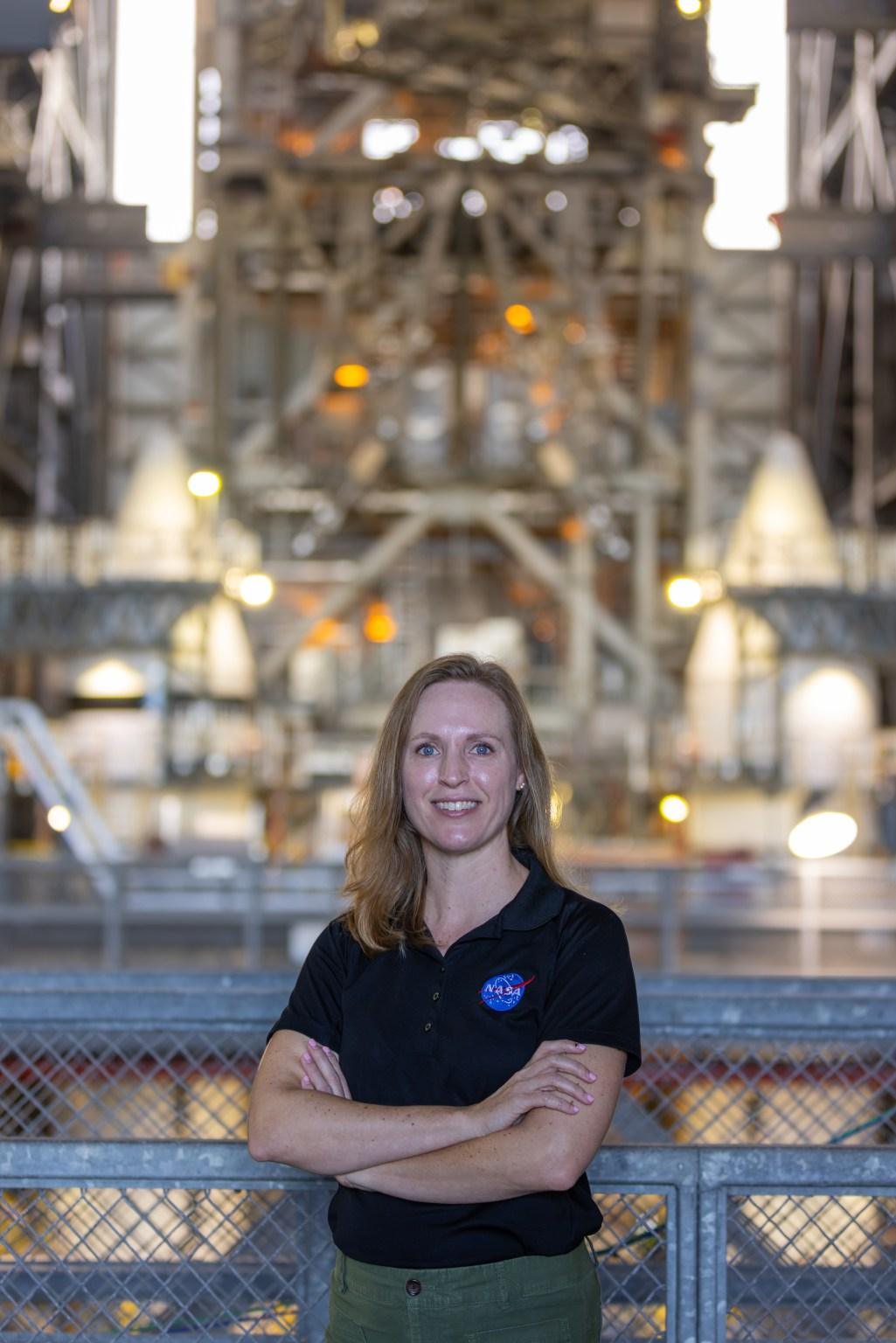
As the supercooled propellant surged into the core stage, NASA’s Space Launch System (SLS) rocket ignited with a thunderous roar, capturing the attention of Allison Mjoen and her family. This moment marked a significant milestone in space exploration, as the SLS is designed to propel missions deeper into space than ever before, paving the way for future lunar and Martian expeditions.
The SLS Rocket: A New Era of Space Travel
The SLS rocket stands as a testament to cutting-edge engineering and innovative technology. With its powerful configuration, it is capable of delivering a substantial payload into orbit, making it an indispensable part of NASA’s Artemis programme. This programme aims to return humans to the Moon, fostering a sustainable presence and preparing for future journeys to Mars. The SLS’s robust design is complemented by the Orion Multi-Purpose Crew Vehicle, which will transport astronauts safely to and from their destinations in deep space.
As the countdown reached its climax, excitement filled the air at the Kennedy Space Center. Mjoen, alongside her family, shared a moment that transcended generations, reconnecting them with humanity’s enduring quest to explore the cosmos. This event not only represented a leap for space technology but also served as a reminder of the collaborative efforts undertaken by scientists, engineers, and astronauts around the globe.
The Role of the International Space Station
While the SLS prepares for its ambitious missions, the International Space Station (ISS) continues to serve as a vital hub for scientific research and international cooperation. Orbiting the Earth, the ISS offers a unique laboratory for experiments that can only be conducted in microgravity. The knowledge gained from these experiments plays a crucial role in advancing our understanding of life in space and improving technologies that will support future exploration missions.
The ISS also acts as a training ground for astronauts, providing them with the experience needed to navigate the challenges of long-duration space flight. As the Artemis missions gain momentum, the lessons learned aboard the ISS will be invaluable in ensuring the safety and success of future crews venturing beyond low Earth orbit.
Community Engagement and Public Interest
The enthusiasm surrounding space exploration has sparked a renewed interest among the public. Events like the launch of the SLS serve as a rallying point for communities, inspiring a new generation of scientists, engineers, and space enthusiasts. Educational programmes and outreach initiatives are pivotal in engaging young minds, encouraging them to dream big and consider careers in STEM fields.
As families like the Mjoens gather to witness these historic launches, they become part of a larger narrative, one that celebrates human ingenuity and the relentless pursuit of knowledge. The era of Artemis represents not just a return to the Moon, but a stepping stone towards a future where humanity expands its reach into the solar system.




More Stories
Explore the Stunning 3D Imagery of Comet 67P on 17th October 2026
NASA Appoints Stephen Cash as Director of Marshall Space Flight Center
NASA Set to Reveal Secrets of Mars’ Moons in Exciting New Mission