
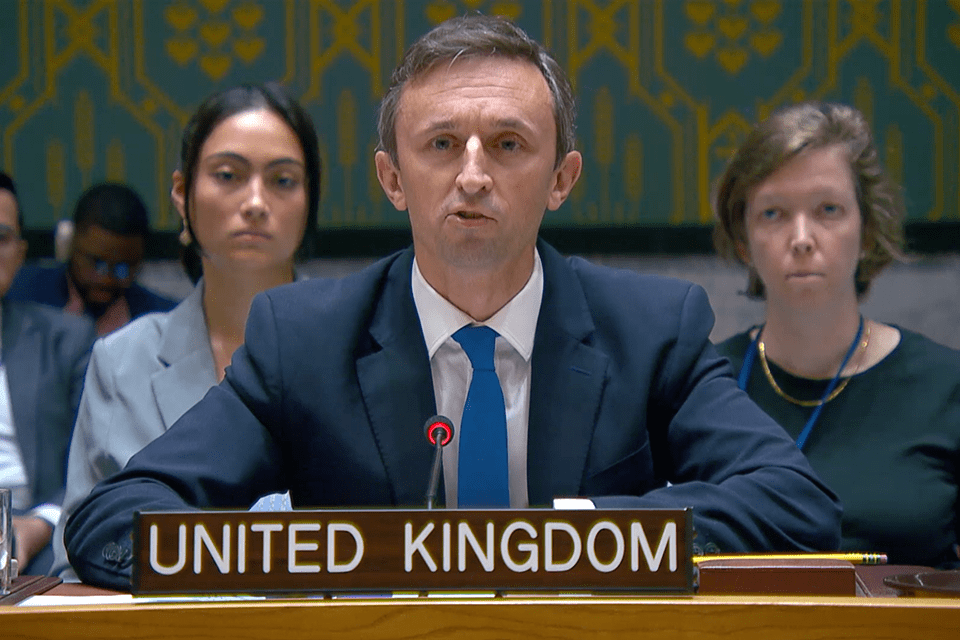
Gratitude is extended to Pakistan for its exemplary leadership on this matter, particularly following the unanimous adoption of resolution 2788 last year.
The challenges to international peace and security are increasingly pressing, encompassing Russia’s unlawful invasion of Ukraine, the ongoing conflict in Sudan, the situation in Gaza, and escalating tensions throughout the Middle East.
It is abundantly clear that the need for diplomacy and peaceful resolutions is paramount.
As highlighted by numerous speakers today, the UN Charter offers a comprehensive toolkit for peace. The United Nations and its Member States are encouraged to utilise the full spectrum of mechanisms enshrined within the Charter, including negotiation, mediation, judicial settlement, and regional arrangements, more frequently and consistently.
Principles of the UN Charter
The principles outlined within the Charter are unequivocal. There exists no justification for acts of unprovoked aggression against another State.
We once again call upon Russia to cease its unprovoked aggression towards Ukraine, to commit to a comprehensive ceasefire, and to engage in meaningful negotiations aimed at achieving a peaceful resolution.
In the context of Sudan, we urge the conflicting parties to swiftly reach an agreement for a humanitarian truce.
However, securing a peace agreement is merely the initial step, as evidenced by the situation in Gaza. All parties are urged to take immediate action to honour their commitments under the comprehensive plan designed to resolve the Gaza conflict, thereby fostering enduring peace for both Israelis and Palestinians.
The Importance of Sustaining Peace Agreements
Moreover, it is essential that peace agreements are upheld over time. The experience of Colombia illustrates the significance of sustained international support, including the role of the UN Verification Mission, in maintaining commitments and safeguarding hard-won progress.
UN peace operations hold a critical function in preventing escalation and ensuring peace, capitalising on the unique legitimacy, convening power, and impartiality of the UN.
A sustainable peace is inherently a just peace, grounded in adherence to international law and the principles of the UN Charter.
Furthermore, peace is reinforced when it is inclusive. Historical data reveals that peace agreements are 35 per cent more likely to endure for at least 15 years when women play a meaningful role in the negotiation processes.
Commitment to Upholding the UN Charter
In conclusion, Mr President, as my newly appointed Foreign Secretary stated yesterday, “in this era of international instability, we must go even further to defend the principles at the heart of the UN Charter.”
Esteemed colleagues, the Charter clearly delineates the pivotal role of this Council in embracing that responsibility.
The United Kingdom is poised to collaborate with all Member States to uphold the Charter, prevent further escalation, and advance peace through practical, principled multilateralism.




More Stories
Government’s Jobs Guarantee: Transforming Promises into Paycheques for Young People in the UK
Professor David Strain Takes the Helm as Chief Medical Advisor at the DWP
HM Land Registry Introduces Property Identifiers for Price Paid Data Starting 28th August