
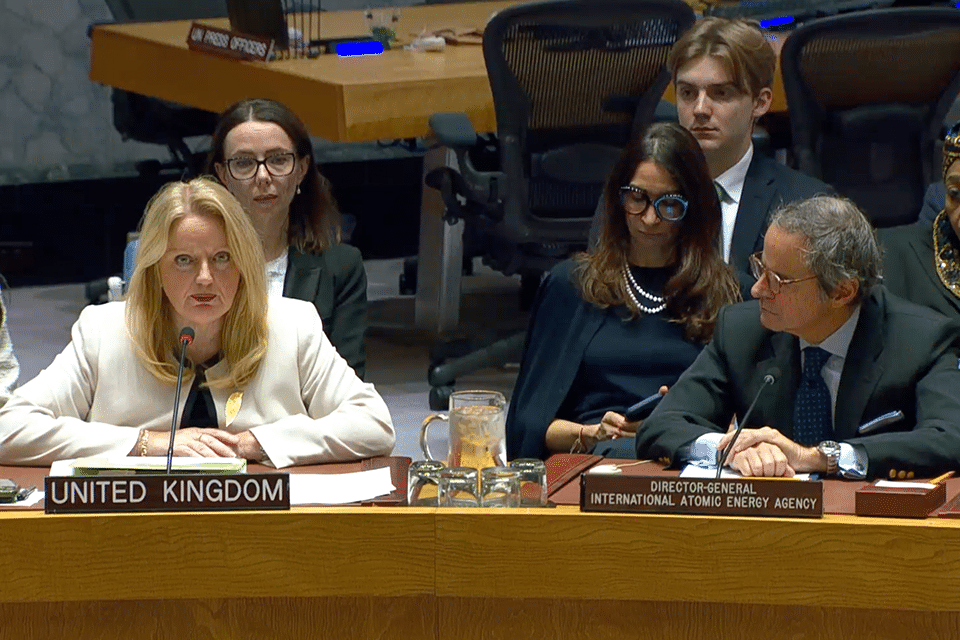
Last month, the Board of Governors of the International Atomic Energy Agency (IAEA) made a significant move by referring Iran to the United Nations Security Council due to its ongoing non-compliance with nuclear safeguards obligations. This marks the first such referral in two decades, underscoring the serious concerns that the international community has regarding Iran’s nuclear activities.
This referral was prompted by the Board’s determination in June 2025 that Iran had failed to adhere to its obligations under the Comprehensive Safeguards Agreement. Over the years, Iran has been afforded numerous opportunities to rectify its non-compliance, yet it has not done so.
Currently, Iran has accumulated a stockpile exceeding 400 kilograms of uranium enriched to 60%, a level of enrichment that is unprecedented for any state without nuclear weapons. There exists no credible civilian rationale for such enrichment levels, which raises alarm bells among global observers.
For over a year, the status of this High Enriched Uranium stockpile has remained uncertain, with the IAEA unable to account for its whereabouts. Additionally, Iran has restricted access to its most proliferation-sensitive nuclear sites, denying the IAEA the necessary inspections that are crucial for transparency and verification.
Concerns Over Continued Non-Compliance
The implications of Iran’s refusal to cooperate are significant. In June 2026, the IAEA reported that it could not reach a safeguards conclusion regarding the nuclear material in question, clearly indicating a proliferation concern. Despite numerous opportunities presented to Iran to change its trajectory, the country’s steadfast refusal to address its non-compliance has constrained the international community’s options.
Consequently, the Board felt it had no alternative but to report Iran to the Security Council, reflecting the urgency of the situation. There remains, however, a clear pathway forward.
Steps Towards Diplomatic Engagement
The IAEA has consistently reiterated, including in statements made by Director-General Grossi, its readiness to resume safeguards activities in Iran at short notice. A crucial first step in this process is for Iran to permit the return of IAEA inspectors to all its nuclear facilities.
Verification is paramount for restoring international confidence in the entirely peaceful nature of Iran’s nuclear programme. It is imperative that all Member States remain vigilant regarding the seriousness of Iran’s ongoing non-compliance and actively encourage Iran to fulfil its safeguards obligations while cooperating fully and in good faith with the IAEA.
The United Kingdom reaffirms its commitment to a durable and sustainable diplomatic resolution that guarantees Iran will not develop or acquire nuclear weapons. The path forward must prioritise dialogue and cooperation to ensure regional and global security.



More Stories
Joint Statement from UK and Germany: Strengthening Defence Cooperation for a Safer Future
UK Takes Charge of Multinational Military Training Exercise Aimed at Ensuring Peace in Ukraine
Care Workers, Women Re-entering the Workforce, and Builders to Acquire Essential AI Skills