
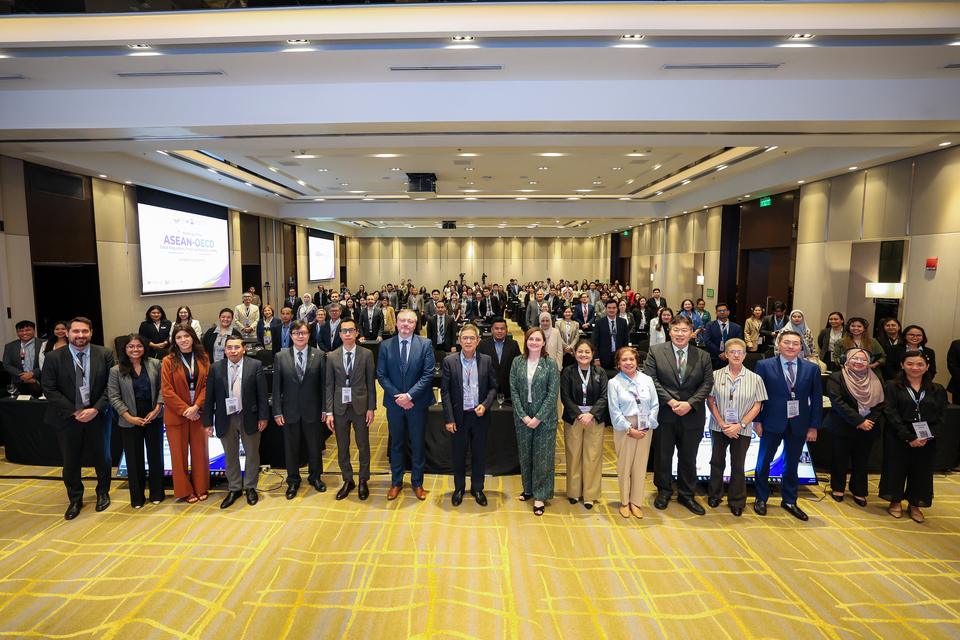
Over 200 policymakers, regulators, and experts from economies across the Association of Southeast Asian Nations (ASEAN) and the Organisation for Economic Co-operation and Development (OECD) convened in Manila from 21 to 23 October 2026. The gathering aimed to share experiences and explore effective methods for reducing unnecessary regulatory complexity, facilitated by the ASEAN-OECD Good Regulatory Practices Network (GRPN).
Exploring Regulatory Simplification
The 11th ASEAN-OECD GRPN Meeting was hosted by the Anti-Red Tape Authority (ARTA) of the Philippines and co-organised by the OECD alongside GRPN co-chairs from Thailand and the United Kingdom (UK). The theme of the event, “Complexity to Clarity: Advancing Simplification Together,” underscored the critical role that effective regulation plays in fostering economic growth, promoting investment, and encouraging innovation.
Discussions during the meeting were centred on enhancing regulatory simplification efforts aimed at alleviating regulatory and administrative burdens while ensuring robust public protection and oversight. Participants shared insights on improving regulatory implementation and review processes, harnessing digital technologies, and bolstering coordination among government institutions. The discourse also emphasised how sound regulatory practices can contribute to the delivery of more efficient and responsive public services.
Insights from Leaders in Regulatory Practices
A representative from the OECD remarked on the value of the practical experiences brought by ASEAN countries to the meeting, including initiatives such as one-stop shops and single windows for trade. The two-way exchange of knowledge is essential for both regions, striving for smarter regulation that does not compromise on protective measures. Sustainable reform necessitates coordination, reliable evidence, and engagement with those impacted by regulations.
The Deputy Trade Commissioner for Asia Pacific (Southeast Asia) highlighted that clearer and simpler regulations are instrumental in fostering business growth while ensuring the protection of citizens. The UK’s commitment to co-chairing the ASEAN-OECD Good Regulatory Practices Network with Thailand is part of a broader effort to share expertise and advance regulatory reform. By reducing unnecessary regulatory burdens while upholding high standards, governments can create an environment conducive to investment, innovation, and long-term economic growth.
Commitment to Good Regulatory Practices
Thailand, serving as co-chair of the ASEAN-OECD Good Regulatory Practices Network alongside the UK, expressed its dedication to enhancing regulatory efficiency amidst increasing complexity. Regulatory simplification transcends mere reduction of requirements; it is about creating regulations that are clearer, more effective, and easier for both citizens and businesses to navigate. Through collaboration within the Network, Thailand aims to work closely with ASEAN and OECD partners to promote good regulatory practices, strengthen regulatory cooperation, and support reforms that foster innovation, investment, and sustainable growth across the region.
Since its inception in 2015, the ASEAN-OECD GRPN has established itself as a premier platform for international regulatory cooperation, allowing policymakers to share practical experiences and advance good regulatory practices throughout the region. The 11th Meeting exemplifies the ongoing partnership between ASEAN, the OECD, and the UK in fostering regulatory excellence and simplification.
Supporting Economic Integration
As part of the ASEAN-UK Economic Integration Programme (EIP), the UK is committed to facilitating knowledge sharing, innovation, and international collaboration. This initiative assists governments in developing transparent, effective, and business-friendly regulatory systems that bolster growth, enhance competitiveness, and yield better outcomes for citizens.




More Stories
Join the Consultation on the Draft East Marine Plan: Have Your Say!
UK Enhances Security Assistance for British Overseas Territories
Students Acquire Essential Money Management Skills in Exciting Curriculum Revamp