
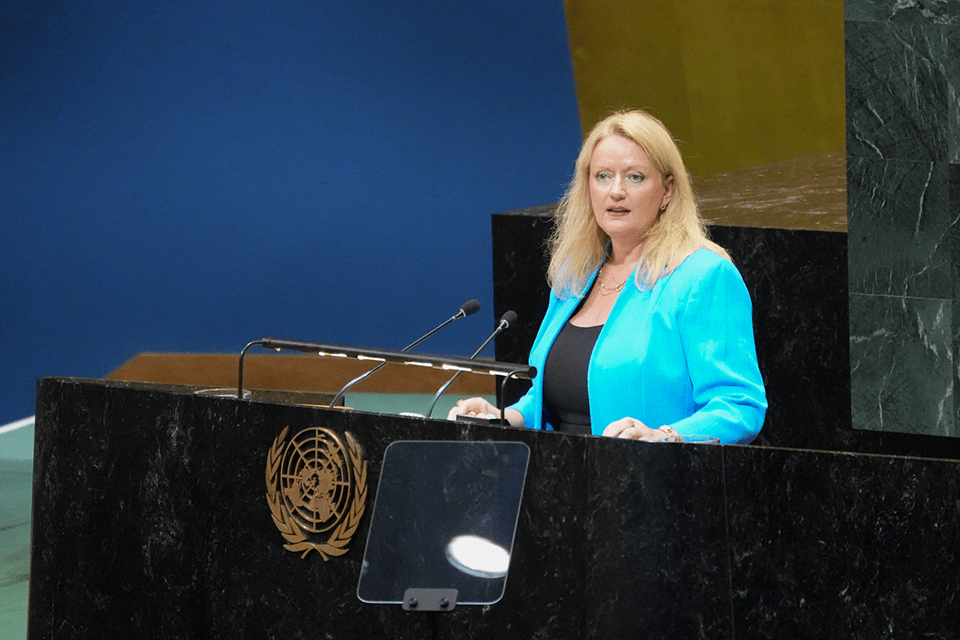
It has now been 1,651 days since Russia commenced its unlawful, full-scale invasion of Ukraine, and twelve years since the illegal annexation of Crimea. This ongoing conflict has seen an alarming escalation in Russian attacks, with at least 429 missiles launched into Ukraine in July alone—more than double the amount fired in the previous month. The consequences of this aggression are dire, disproportionately affecting innocent civilians.
Since the onset of the invasion in February 2022, nearly 17,000 Ukrainian civilians, including 820 children, have tragically lost their lives. Furthermore, over 51,000 civilians have sustained injuries, among them 3,000 children. The human cost of this conflict is staggering and continues to rise.
Impact on Global Food Security
Before Russia’s full-scale invasion in 2022, Ukraine contributed significantly to the global food supply, accounting for 12% of corn exports, 10% of wheat, and a remarkable 50% of sunflower oil. However, the situation has deteriorated as Russian strikes on Ukraine’s ports and civilian shipping have intensified. This has not only obstructed vital food supplies but has also exacerbated food prices worldwide, resulting in tragic losses of life among seafarers from various UN Member States across Africa and Asia.
As highlighted by various leaders, Russia’s war in Ukraine represents a blatant violation of the United Nations Charter, undermining Ukraine’s sovereignty and territorial integrity—principles that are fundamental to every Member State of the United Nations. Russia has aggressively invaded Crimea, as well as regions in Donetsk, Luhansk, Kherson, and Zaporizhzhia Oblasts, employing violence to entrench its control over these territories.
The Humanitarian Crisis Unfolding
The ramifications of Russia’s occupation and attempts at illegal annexation have imposed a severe toll on the Ukrainian populace residing in these contested areas. Families are being torn apart, children are forcibly deported and indoctrinated, and their identities are altered. Ukrainians are coerced into accepting Russian citizenship, while civic leaders face arbitrary detention and disappearances. Reports of torture, inhumane treatment, and the deprivation of basic necessities such as water and humanitarian aid are rampant. Additionally, Ukraine’s rich cultural heritage is under threat, with its language and identity facing systematic suppression.
Despite these harrowing developments, it is crucial to recognise that such actions do not alter Ukraine’s sovereignty or redraw its borders. Therefore, we urge all nations to uphold the principles enshrined in the UN Charter, to reject Russia’s unlawful claims, and to press for humanitarian access to those in need. Furthermore, we advocate for accountability measures to facilitate the return of Ukraine’s children and the release of its civilians.
Commitment to Ukraine’s Sovereignty
The United Kingdom remains resolute in its support for Ukraine as it asserts its lawful right to self-defence under Article 51 of the United Nations Charter. Our commitment extends not just to today but for as long as is necessary. We stand firm alongside Ukraine’s call for a complete, immediate, and unconditional ceasefire, paving the way for a just and lasting peace. We also urge Russia to make a similar commitment, recognising that peace is the only path forward.



More Stories
Government, Police, and Music Industry Collaborate to Combat Violence Against Women and Girls
Prime Minister Andy Burnham Responds to German Attribution: Key Insights and Implications
Prime Minister’s Address to the House of Commons on 1st September 2026