
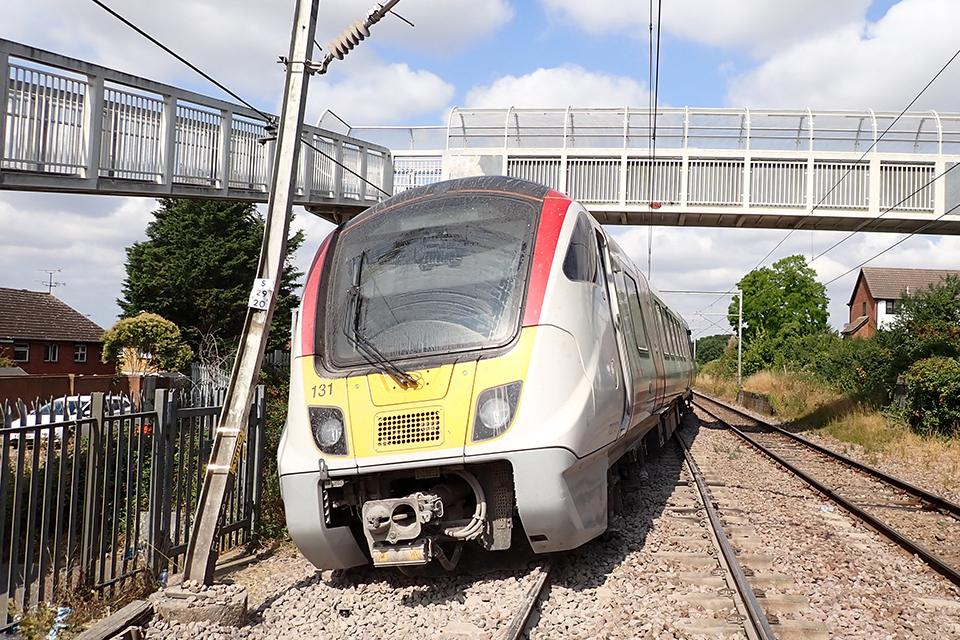
On 14 August 2026, at approximately 14:08, a passenger train derailed approximately 2.1 miles (3.4 kilometres) south-east of Wickford station while en route from Southend Victoria to London Liverpool Street.
The train, operated by Greater Anglia, comprised two class 720 electric multiple units, each consisting of five carriages. The incident occurred when the rearmost carriage derailed, causing its wheels to travel along the sleepers and ballast for around 1.5 miles (2.4 kilometres). Remarkably, the train remained upright throughout the ordeal, and there were no reported injuries among the estimated 62 passengers on board.
Investigation Findings from On-Board Data
Initial analysis of the data recorder, commonly known as ‘the black box’, retrieved from the front carriage revealed that the train was travelling at approximately 77 mph (124 km/h) at the time of the derailment. The driver noted a kink in the track that caused the driving cab to rock as the train passed over it. Forward-facing CCTV footage from the train corroborated the driver’s observation, showing a misalignment in the track at the point of derailment.
As the driver attempted to report the track condition to the signaller, an emergency call was received from an oncoming train travelling in the opposite direction, prompting the driver to apply the brakes.
Damage Assessment and Impact
The train involved in the derailment sustained notable damage, while the opposing train incurred minor damage from debris expelled during the incident. The track, signalling systems, and overhead electrification equipment suffered significant damage as a result of the derailment.
An extensive investigation is underway to scrutinise the events leading up to and during the incident. This inquiry will focus on several key areas:
- The actions of individuals involved and the factors that may have influenced their decisions.
- The condition of the track at the location and the maintenance protocols in place.
- The effectiveness of any measures implemented to mitigate risks associated with operating trains in high temperatures.
- The performance of the train during the derailment.
- Underlying management factors that may have contributed to the incident.
Commitment to Transparency and Safety Improvement
This investigation is being conducted independently of any assessments by the railway industry or its regulatory body, the Office of Rail and Road. Upon completion, findings will be published, including any recommendations for enhancing safety standards. The report will be made accessible on our website, and individuals can subscribe to automated notifications for updates on report publication.



More Stories
CMA Ensures Compensation for Customers Affected by Heating Oil Issues
Minister Takes Action to Preserve Iconic Rembrandt Masterpiece in the UK
Five Eyes Alliance Supports UK Initiative to Combat Global Fraud Networks