
Revolutionising Archaeology with Advanced Imaging Techniques
High within the central tower of the historic Cambodian temple of Angkor Wat, faded paintings showcasing horseback riders and a traditional musical ensemble go unnoticed by thousands of visitors each day. These images, obscured by time, were uncovered between 2010 and 2012, alongside approximately 200 other artworks throughout the complex. The discovery was made possible by an archaeologist employing a method originally developed at NASA’s Jet Propulsion Laboratory in Southern California.
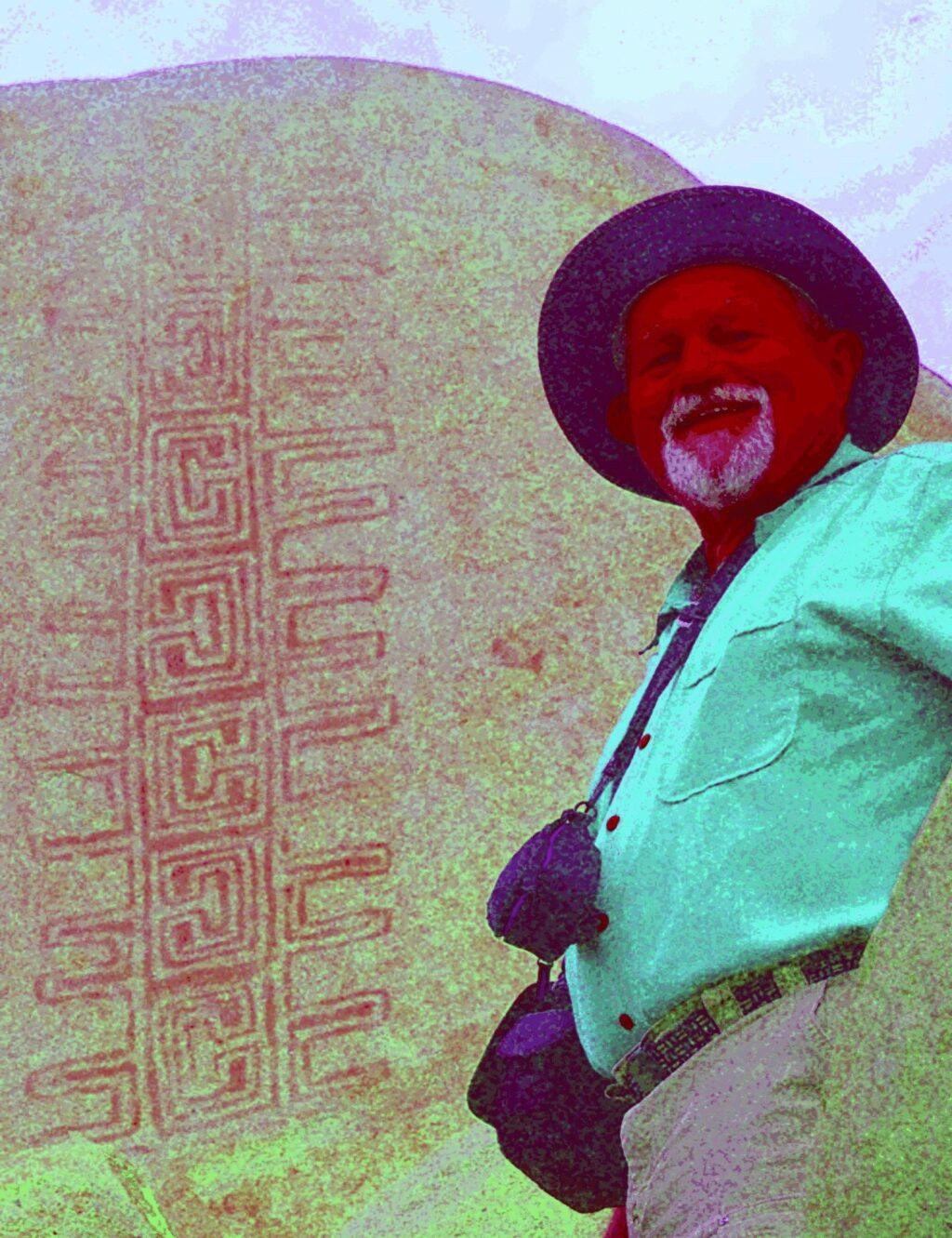
This innovative technique, referred to as decorrelation stretch, enhances the contrast in digital images, allowing previously hidden details to come to light. Its application has gained traction particularly in the realm of ancient rock art, thanks in part to a curious intersection of personal passion and professional expertise experienced by Jon Harman.
From Space Exploration to Ancient Art
Around 2005, Jon Harman, an ardent rock art enthusiast, came across NASA images illustrating the Martian landscape both with and without the decorrelation stretch technique. The remarkable clarity achieved through this method sparked Harman’s imagination about its potential for revealing ancient, faded images. With a background in medical imaging, he recognised the technique’s applicability beyond its original context.
Upon further investigation, Harman located a NASA paper detailing the algorithm, authored in 1996 by Ronald Alley, a JPL employee focusing on applications of the Advanced Spaceborne Thermal Emission and Reflection Radiometer (ASTER), a Japanese imaging device aboard NASA’s Terra satellite. Alley, who had collaborated with the coinventor of decorrelation stretch, identified its utility in extracting information from ASTER imagery.
Harman subsequently developed a plug-in for ImageJ, an open-source software created by the National Institutes of Health, to facilitate the application of this groundbreaking technique.
Transformative Discoveries in Rock Art
As Harman refined the Dstretch plug-in, he tested it on an image from the Cave of San Borjitas in Baja California, Mexico. The emergence of a yellow figure in the midst of the image confirmed to him the tool’s potential value. His dedication has resulted in around 200 requests for Dstretch each year, and in 2010, he also released smartphone applications that provide a simplified version of the decorrelation stretch technique. These apps have garnered thousands of downloads, and numerous scholarly articles have been published detailing Dstretch’s contributions to archaeology.
The technique has proven invaluable across various archaeological sites, including ancient cliff dwellings in Norway, Egyptian tombs, and parks in Canada, among others. It has facilitated the discovery of buried remnants of ancient Greek structures and aided in the examination of tattoos on mummified remains, showcasing its versatility beyond rock art.
Harman expressed his astonishment at the widespread adoption of Dstretch within the rock art community, remarking, “I’ve been surprised by a lot of the different applications people have found. So that’s been cool.” The blend of technology and archaeology continues to unlock the mysteries of the past, allowing us to appreciate and understand the rich tapestry of human history that often lies hidden in plain sight.




More Stories
Enhance Space Telescope Data Analysis with the Innovative Artifact InSPECtor Tool
NASA and SpaceX Crew-12 to Share Insights on Space Station Mission and Anticipated Return
NASA Welcomes Media to Djibouti for Historic Signing Ceremony of Artemis Accords