
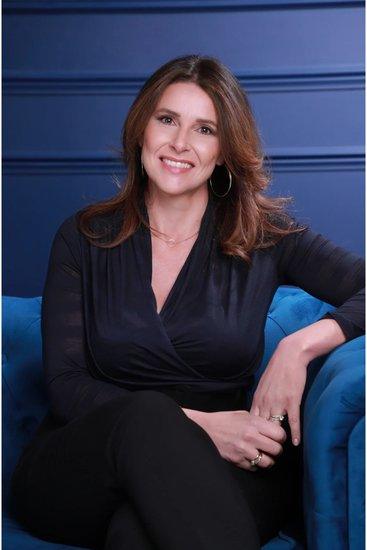
Julia Kalaydjian is a couple and individual psychodynamic counsellor and psychotherapist working with adults of all ages and backgrounds, in person in London and Kent and online. She has a particular interest in intercultural and interracial couples, and in the ways culture, identity, family and belonging enter intimate relationships. She trained at Tavistock Relationships in London, where she now works as a Visiting Clinician and Tutor.
In person in London and Kent, and online
In London, Julia Kalaydjian sees clients at Camden Therapy on Camden High Street and at the London Intercultural Couples Centre at the Child and Family Practice on Bloomsbury Street, and outside the capital she also works from Abbey Place Clinic, in The Chapel at Abbey Place in Faversham, Kent.
Her practice centres on couples psychotherapy, including issues surrounding intercultural relationships and interracial couples, and on individual relationship therapy, which focuses on the issues that affect intimate adult relationships.
Understanding the past, working in the present
Her approach is grounded in psychodynamic thinking, while paying close attention to what is happening in the present, within each person and between partners. The work is psychodynamic at its foundation, relational and active in its practice, and attentive to attachment, culture and the wider systems surrounding the couple.
Psychodynamic psychotherapy can help people understand why certain feelings, reactions and relationship patterns seem to return, particularly when they find themselves responding in ways that feel difficult to change, and the focus falls on repeating emotional patterns, attachment needs and fears, and how past relationships shape present reactions. The aim is not simply greater insight, nor to fix a relationship, but to help people recognise familiar patterns earlier, become less governed by automatic reactions and respond with greater awareness, emotional flexibility and relational choice. Her way of working is engaged and collaborative: she may invite someone to stay with a particular feeling, draw attention to a pattern as it emerges or help slow down a moment that has quickly become charged or defensive.
What couples and individuals bring
Couple therapy gives partners a confidential and non-judgemental space to bring the parts of their relationship that have become difficult to think or talk about together. Some find themselves having the same argument repeatedly, becoming defensive or withdrawn, or feeling that the other person does not quite understand.
In sessions, a difficult interaction may be slowed down and looked at together: what each partner intended, how it was experienced by the other, what the moment came to mean and why it became so emotionally charged. The aim is not to remove difference or disagreement, but to help partners understand one another’s experience and become more able to repair, communicate and make choices together.
The concerns she works with include a partner feeling unseen, misunderstood or emotionally alone, communication difficulties, the aftermath of an affair or infidelity, issues around intimacy and sex, and a rupture, transition or decision point. Nobody needs to arrive with a clearly defined problem, as uncertainty itself can be a meaningful starting place. Individual relationship therapy can be particularly helpful for someone dealing with a breakup, commitment issues or anxieties surrounding a relationship.
When love crosses cultures
Julia Kalaydjian is of Armenian and Danish heritage and was born and raised in Cyprus. Her experience of working across different cultural environments has shaped her interest in how cultural differences are experienced within intimate relationships.
When love crosses cultures, a conversation about family, religion, language, race or belonging may touch much older questions about loyalty, identity, acceptance or what it means to be loved. Cultural difference does not in itself create relationship difficulties; problems can arise when difference becomes difficult to speak about, emotionally unsafe to explore, or quickly interpreted as rejection, criticism or a lack of loyalty.
She attends both to the visible cultural expectations surrounding a couple and to the deeper, often unconscious narratives each person carries from early life. This work is informed by psychodynamic and relational thinking, alongside ongoing professional development in anti-oppressive practice, and its aim is not sameness but to help partners stay in relationship with difference without either person having to disappear within it. Therapy is offered in English, and she can also support inter-lingual work involving Armenian, Greek and Italian.
Training at Tavistock Relationships
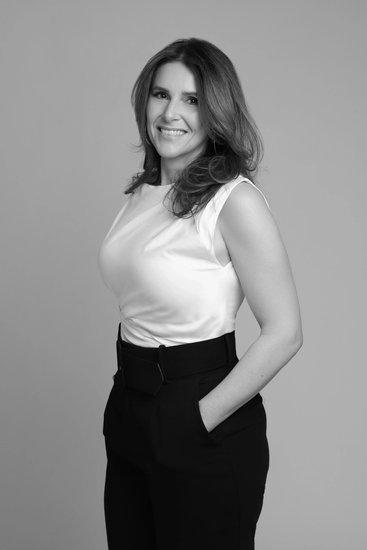
She trained at Tavistock Relationships in London, where she currently works as a Visiting Clinician and Tutor on the Psychodynamic Master’s programme (MSc). She holds a BSc in Social Psychology with Philosophy, a Certificate of Higher Education in Counselling and a Postgraduate Diploma in Couple and Individual Psychodynamic Counselling and Psychotherapy, accredited by the British Association for Counselling and Psychotherapy (BACP), as well as a Certificate in Emotionally Focused Therapy.
She is an accredited member of the BACP and a Graduate Member of the Tavistock Relationships Association of Psychotherapists and Counsellors, works in accordance with the BACP Ethical Framework and undertakes regular clinical supervision. Her continuing professional development includes a 25-hour programme in Anti-Oppressive Practice with Black Psychotherapy, as well as specialist workshops and training in couple relationships and relational work.
Research, a workbook and couples events
She has been involved in a European-led research project on intercultural couples, in collaboration with the London Intercultural Couples Centre and the University of Bergamo. With Dr. Reenee Singh and Valentina Lugli she co-authored a 2024 paper in the Journal of Family Therapy, a semantic analysis of the Social GRRRAAACCCEEESSS in intercultural couple therapy, and she is among the authors of a report on a study funded by the AFT David Campbell creative fund, which asks whether intercultural couples come from different semantic worlds. Her videos include a Sky News interview on whether people can have real relationships with ChatGPT.
She has also developed Seeing Me, Hearing Us: How to Have the Difficult Conversations About Race in Interracial and Intercultural Couples, a workbook for interracial couples who want to speak more honestly about race, identity, power and difference. Each chapter explores a theme that commonly arises in mixed-race relationships, from unacknowledged privilege to unspoken assumptions and racial microaggressions.
Her past and featured events include Surviving Christmas, a workshop for intercultural, interfaith and other couples on family expectations and divided loyalties. She is also on the team of the Intercultural Couples Retreat, alongside Dr Reenee Singh, founder of the London Intercultural Couples Centre, and other colleagues.
From a first conversation to weekly sessions
The process begins with a brief phone conversation of 10 to 15 minutes. If it feels appropriate, an initial consultation follows, in person or online, to explore concerns and whether psychodynamic therapy is the right path.
Sessions last 50 minutes and typically take place on the same day and at the same time each week. Therapy can be short term, with a pre-agreed number of sessions, or open-ended, and she is recognised by the health insurers Axa Health, Aviva Health and Vitality Health.
Between Camden, Bloomsbury Street, Faversham and online sessions, her practice offers couples and individuals a place to look at the patterns in their intimate relationships, with particular attention to culture, identity and difference.
Address: 152 Camden High Street, London NW1 0NE




More Stories
Canning Town Residents Evacuate as Housing Developer CEO Sells £720k Penthouse in Condemned Building
James Cleverly: The Conservatives’ Strongest Contender for London Since Boris Johnson
The family you can’t quite leave behind