
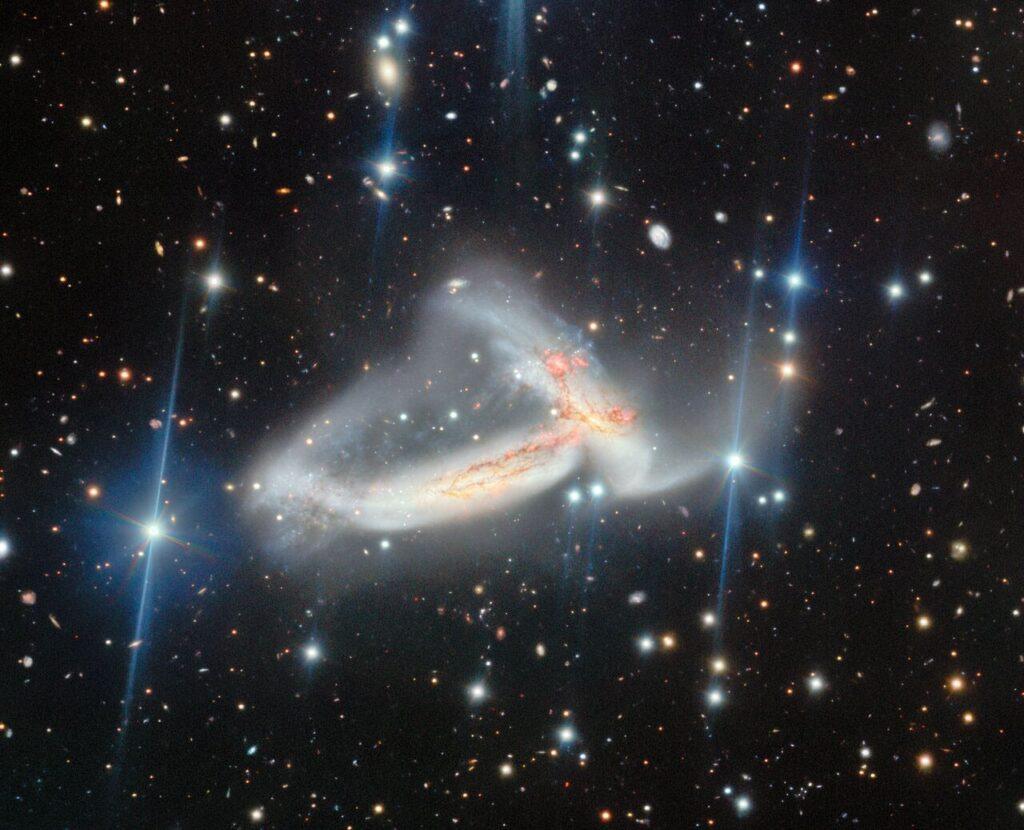
Each day, the Astronomy Picture of the Day (APOD) invites enthusiasts to journey through the cosmos with a captivating image or photograph that showcases the wonders of our universe. Accompanying the visuals is a concise explanation crafted by a professional astronomer, enriching the experience for viewers.
The Enchanting Twin Galaxies
In a stunning display of cosmic interaction, the image titled Nā ʻUhane Māhoe Huki Pū i ke Ola, meaning “The Twin Spirits Pulling Together Creating Life” in Hawaiian, depicts two spiral galaxies engaged in an intricate gravitational dance. Located approximately 200 million light-years away within the constellation Pegasus, this remarkable merger has been captured in exquisite detail by the 8.1-metre Gemini North telescope situated on Maunakea, Hawai‘i.
This pair of galaxies, identified as NGC 7253 and Arp 278, was selected as a research target by high school students participating in the collaborative Project Hōkūlani, a programme between the Gemini Observatory and the University of Hawaiʻi. The Hawaiian name bestowed upon these galaxies reflects both their cultural significance and the astronomical phenomena they represent. Galaxy collisions like this one ignite a cosmic frenzy of star formation, drawing from vast reservoirs of elemental materials essential for life.
These merging galaxies reside in a section of Pegasus known as Ka Lupe o Kawelo, a constellation used in traditional Hawaiian navigation. The name not only honours the local culture but also encapsulates the dynamic processes at play during such galactic encounters.
APOD’s Transition and Upcoming Features
In an administrative update, it has been announced that APOD’s main site will be relocating from apod.nasa.gov to science.nasa.gov/apod. This change aims to enhance accessibility and user experience for astronomy enthusiasts across the globe.
Looking ahead, tomorrow’s feature promises to be equally enthralling, as it will explore the theme of chasing shadows, inviting viewers to delve deeper into the intricate relationship between light and celestial bodies.
The current date is September 4, 2026, and the captivating image has garnered contributions from various esteemed professionals, including J. Miller & M. Rodriguez of the International Gemini Observatory, alongside T.A. Rector from the University of Alaska Anchorage. The editorial team includes Jerry Bonnell, Cecilia Chirenti, Robert Nemiroff, and Keighley Rockcliffe, all dedicated to bringing the wonders of space closer to the public.
Recent and Upcoming Highlights
The previous day’s image featured an intriguing exploration of “The Eclipse and the Stork,” showcasing the beauty and complexity of celestial phenomena. Meanwhile, the anticipation builds for another exciting image set to be unveiled on September 5, 2026, which will focus on the Moon’s shadow, promising to captivate and educate viewers further.




More Stories
Enhance Space Telescope Data Analysis with the Innovative Artifact InSPECtor Tool
NASA and SpaceX Crew-12 to Share Insights on Space Station Mission and Anticipated Return
NASA Welcomes Media to Djibouti for Historic Signing Ceremony of Artemis Accords