
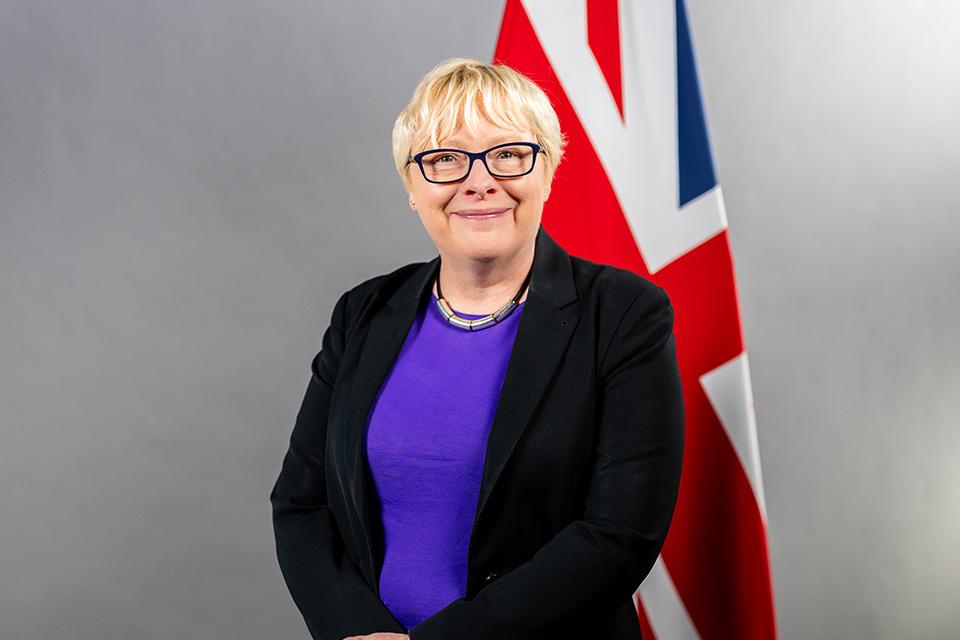
I would like to express my gratitude to Gavin and appreciate the warm introduction. It is a great pleasure to be here today, addressing you from this podium rather than sitting among the audience while listening to the Secretary of State. My tenure as Farming Minister provided me with a profound understanding of the challenges rural communities encounter. Therefore, I approach this role not by analysing the issues, but with a firm resolve to address them.
When Andy Burnham took office as Prime Minister this summer, he made a straightforward commitment: to foster good growth in every postcode. Just two weeks into his premiership, he illustrated the seriousness of this promise by visiting a family-run potato farm near Truro. During this visit, he emphasised the necessity for growth to reach every corner of our nation, including those postcodes where only a single house may be found. He engaged with local farmers around their kitchen table, listening to their concerns about the specific pressures faced in the southwest. This government’s strategy is grounded in place-based politics, a governance approach that acknowledges that different regions require tailored solutions. I believe this perspective closely aligns with the practices of the Country Land and Business Association.
Addressing Rural Challenges
Rural communities continue to grapple with challenges that are often overlooked, such as reliable transportation, affordable housing, access to healthcare, quality broadband, and essential public services that are more readily available in other parts of the country. These issues compound a significant concern for rural areas: the accessibility of skills and the availability of quality job opportunities for young people in the communities where they were raised. I concur with Gavin that we must attract young individuals to pursue careers in farming and rural sectors. Earlier this week, Alan Milburn published a pivotal report addressing the pressing social and economic challenge of over a million young people not engaged in education, employment, or training. This report outlines a vision aimed at ensuring that a new generation is not disregarded, as has occurred in previous years. The farming and land management sector harbours significant potential to contribute to this vision and to provide meaningful, fulfilling careers for young people, particularly for those who may not excel in conventional classroom environments. However, a notable barrier is that we have not effectively showcased what modern careers in agriculture can entail.
When asking someone unfamiliar with this field to envision a land-based job, what do they picture? Likely not someone utilising a drone to analyse field conditions or employing robotics within a glasshouse. They probably do not envision individuals restoring peatlands, creating habitats, or employing precision technology. I was particularly impressed to learn that Harper Adams has relocated its campus to the centre of Telford. By establishing a campus within an urban community, they are introducing this sector to individuals who might not otherwise encounter it. The government bears a responsibility here, but it cannot simply announce solutions to these problems. Everyone present today must also play a role in finding solutions. Could your next job vacancy be transformed into an apprenticeship? Might you collaborate with a local college to demonstrate the equipment, science, and skills associated with these roles? I acknowledge that some of you are already undertaking such initiatives. The CLA occupies a remarkable position: your members encompass farms, estates, forestry, tourism, renewable energy, property, and much more. If we do not articulate the evolving nature of this sector and promote the positive future it can offer, no one else will. By presenting an optimistic vision of careers in your sector, we can make significant strides in promoting the advantages of working in harmony with nature.
Promoting Good Growth in Rural Areas
This leads me to discuss what constitutes good growth for rural communities and how we can ensure that those who produce our food, care for our landscapes, and sustain our rural economy share in the growth they help to generate. We have already outlined the requirements for this. Defra’s ‘Future of Rural England’ report, released this summer, identified six key areas of focus to promote thriving rural communities, ranging from skills to connectivity. We are now working to implement these recommendations in both governmental decision-making and investment allocation. We are establishing a cross-government Rural Proofing Board to ensure that rural needs are considered early in the policy development process, rather than as an afterthought once decisions have already been made. This initiative will be complemented by annual reporting that clarifies how various departments are meeting the needs of rural England. Rural areas should have greater economic authority over their futures, and this government is taking steps to facilitate that.
The recent Budget announced the most significant transfer of financial power from the centre in a generation. By the end of the decade, regions will retain all the business rates collected locally, allowing for more revenue to be reinvested in the areas where it originates. Additionally, as rural responsibilities have now become part of the legal obligations for every strategic authority—something the CLA campaigned for—the countryside must also benefit from this increased autonomy, and I will ensure that it does. We are also addressing the practical costs and constraints that can impede rural economies, and this is where a comprehensive understanding of place is essential.
Understanding Rural Economic Dynamics
The cost of living and the expenses associated with doing business in rural areas differ significantly. Residents often travel further, farms rely on diesel, and numerous homes are not connected to the gas grid. Consequently, we have extended the fuel duty reduction, increased the tax-free approved mileage allowance for the initial 10,000 business miles, maintained lower red diesel duty rates, and eliminated tariffs on kerosene. The same principle applies to farmhouses; while they serve as homes, they are also integral to working farms. The newly introduced high-value property surcharge will acknowledge this reality rather than treating farmhouses like other high-value properties, thereby granting a full exemption for farmhouses valued over £2 million.
While rural economies are diverse, encompassing a range of industries from tourism to manufacturing to renewable energy, I wish to focus on enhancing growth in agriculture. Farming is currently the backbone of our countryside and our food security. We are all aware that, after generations of cultivating their land, farmers are finding it increasingly challenging to turn a profit due to rising costs, extreme weather conditions, limited access to financing, bureaucratic hurdles, and planning restrictions. Guided by our Farming Roadmap, we are striving to create an environment that allows farmers to adapt, invest, and, most importantly, thrive, while public investment remains crucial.
Unlocking Private Investment in Agriculture
As you recognise, Gavin, private finance plays an increasingly vital role in fostering sustainable rural economies. To that end, we have established the Farming Profitability and Private Finance Taskforce to identify practical opportunities for unlocking private investment, co-chaired by Defra and Lloyds Banking Group, with representation from the CLA.
In our recent publication, Growing Places, we have proposed principles for integrating environmental payments, making it easier to finance projects that generate multiple benefits through various funding streams. We invite your feedback to help shape these proposals. In response to Minette Batters’ Farming Profitability Review, we formed the Farming and Food Partnership Board to identify strategies for enhancing productivity, profitability, and food security across the food and farming sectors. The Board is currently developing growth plans for horticulture and poultry, addressing issues that inhibit growth, such as unfair supply chains, unnecessary regulations, and planning obstacles. These plans will be released next year, with additional plans to follow.
Expanding Export Opportunities
For rural businesses to thrive, they also require customers beyond our shores, which is why we have secured new or enhanced trading arrangements with the US, India, the Gulf, and South Korea. We are actively creating further opportunities for exceptional British food and drink to be exported. However, we must acknowledge that our most significant trading partner requires transparency. The Brexit arrangements inherited by this government have introduced substantial new challenges for farmers and food businesses selling to Europe. Products that previously crossed the Channel with ease are now subject to veterinary approvals, paperwork, and border procedures. Fresh produce cannot afford to languish in queues at Dover, as delays severely diminish value.
Since Brexit, food and drink exports from the UK have decreased by over a third. For some smaller exporters, the additional burden and uncertainty have rendered trade with Europe no longer viable. Producers of seed potatoes have been entirely excluded from the EU market. For a rural business, these statistics translate into real consequences—longstanding customers ceasing orders, and markets painstakingly cultivated over the years becoming more challenging to access. Our new SPS agreement with the European Union will alleviate much of the bureaucracy, inspection burdens, uncertainty, and costs that have hindered British producers from reaching their largest agri-food market.
New Opportunities for Agri-Food Exports
This agreement, which is expected to be signed tomorrow, will simplify and reduce the costs associated with selling into Europe, enabling small and medium-sized enterprises to resume exporting to the EU. Unfortunately, I must leave immediately after my speech to travel to Brussels and participate in the final stages of this process.
Every region stands to gain from this new agreement. We will establish new agri-food export advisors, organise regional roadshows, and collaborate with mayors, strategic authorities, and other partners to assist businesses throughout the country in realising their export potential. Whether through domestic investment or international opportunities, our goal is clear: to create the conditions under which farming businesses and their surrounding communities can flourish.
Building Resilience in Rural Communities
Moreover, sustainable growth cannot exist without resilience. Rural communities and businesses must possess the strength to endure current challenges if they are to invest in


More Stories
PM Holds Key Meeting with Dutch Prime Minister Jetten on 21 November 2026
UK’s Ambitious NATO Space Launch Initiative Aims for the Stars
UK Condemns Damage to Diplomatic Premises Amid Russian Assaults on Ukraine: Key OSCE Statement