
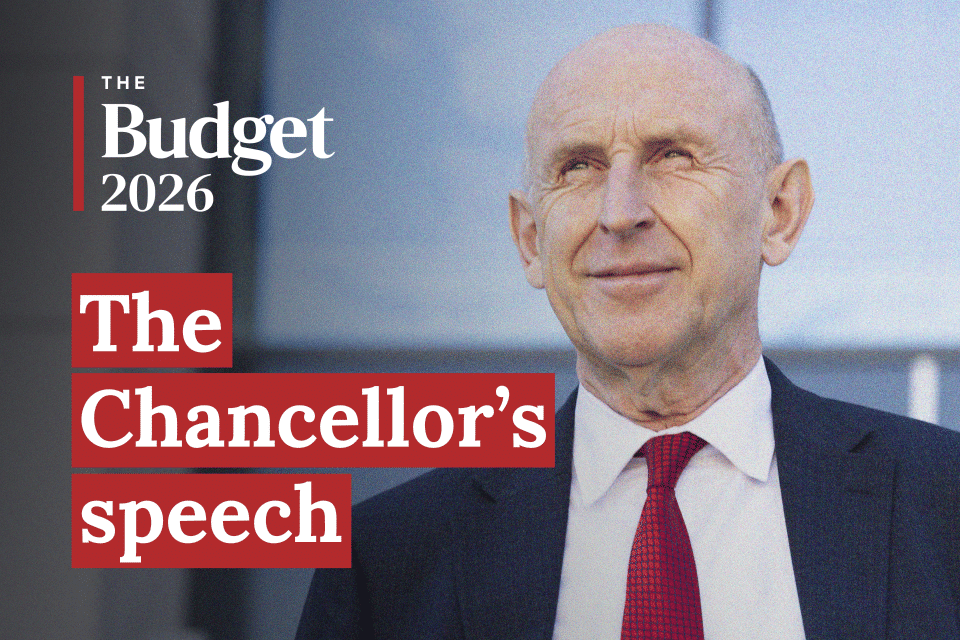
Madame Deputy Speaker, thank you for this opportunity to address the House.
This Budget has been crafted with the working people of Britain in mind, aiming to support both large and small businesses during a time of significant global uncertainty that is impacting lives here at home.
It is a Budget founded on fiscal discipline, designed to provide immediate action while charting a clear path for the future. Our objectives are threefold: to alleviate the cost of living and the expenses faced by businesses; to foster British enterprise and stimulate innovation and growth across all regions; and to confront pressing issues in energy, national security, public service procurement and transformation, as well as housing.
A New Approach for a New Era
In this Budget, I will outline the fresh approach taken by this administration, guided by the vision of our new Prime Minister. This vision has been evident in our first 100 days and is reflected in today’s Budget, which is part of a comprehensive 10-Year Plan for Britain, along with the upcoming Spending Review next year.
Our aim is to navigate through the turbulent global economic landscape, to forge a new direction for Britain in the years to come, and to instil renewed hope for the future.
It is a privilege to stand here as Chancellor of the Exchequer, delivering my inaugural Budget. I had anticipated being the focus of attention this week, until the Prime Minister made a guest appearance on Gogglebox.
At the outset, I wish to acknowledge my predecessor, the Right Honourable Member for Leeds West and Pudsey, who made history as Britain’s first female Chancellor after 800 years. She instilled fiscal discipline in this country, making critical decisions that have boosted investment, reduced NHS waiting lists, and lifted half a million children out of poverty.
Facing Global Economic Challenges
I extend my gratitude to my exceptional team of Treasury Ministers and officials for their efforts in preparing this Budget, as well as to the Office for Budget Responsibility for their forecasts.
Analysts often refer to economic headwinds; however, we are currently contending with global economic storms. Trade tensions are impeding growth, and the illegal invasion of Ukraine by Russia is now approaching its fifth year. The OBR has identified the conflict in the Middle East as a significant factor influencing their forecasts.
This government remains steadfast in its collaboration with allies to bring an end to the conflict and to restore the flow of shipping through the Strait of Hormuz.
We did not desire this war, yet it has inevitably resulted in rising costs for British families and businesses. Inflation, which was anticipated to decrease to the 2% target earlier this year, has instead risen, primarily due to escalating oil and gas prices. Oil prices have surged from around $70 per barrel to over $100, while gas prices have nearly tripled since February.
Commitment to Fiscal Discipline
For families, this translates to increased prices at the petrol pump, soaring energy bills, and higher mortgage costs. Businesses are similarly affected, facing heightened operational costs and more expensive loans. The repercussions are also evident in public finances, where government borrowing costs across the G7 are reaching levels not seen for decades. The OBR predicts an additional £14 billion will be spent on debt interest this year alone.
These are the storms we must navigate; we cannot simply wish them away. We must decisively choose our course. Fiscal discipline is my primary commitment as Chancellor and serves as the foundation for every promise this government makes to the British people.
In this Budget, I am adhering to the fiscal rules: ensuring day-to-day spending is covered by tax receipts and that government debt, defined as public sector net financial liabilities, is declining as a percentage of GDP. This year, for the first time, I am required to meet these rules in the third year of the forecast, and I affirm that I do so.
My plans will continue to reduce government borrowing, allowing us to allocate less towards debt interest and more towards the priorities of the British people. In this Budget, I have chosen to utilise some of the headroom established last year to absorb the impacts of the conflict, protecting the economy and family budgets.
Supporting Families and Businesses
My decisions in this Budget honour the commitment made not to raise taxes on working individuals and reject broad-based tax increases or cuts to public services, acknowledging that families and businesses require this breathing space.
The OBR confirms today that the headroom against the stability rule stands at £15 billion in 2029/30, which will rise to £22 billion in 2030/31. This buffer exists for a reason: to be utilised when necessary and replenished when feasible.
Despite the global challenges we face, this Budget sets us on a path to eliminate the current budget deficit and restore Britain’s finances to a surplus within three years. Last year, our government successfully reduced borrowing to its lowest level in six years, from 5.1% to 4.4% of GDP. I continue this work today, with borrowing projected to fall to 4.2% this year, 3.4% next year, and progressively lower in subsequent years.
Investment in Growth and Innovation
Our debt as a percentage of GDP is forecasted to be 83.2% this year, with a gradual decline expected in the following years. The International Monetary Fund has acknowledged our decisive action to reduce the debt and deficit, projecting that the UK will have the lowest deficit in the G7 by 2029.
Despite predictions of a slowdown, the UK economy has proved resilient, emerging as the fastest-growing economy in the G7 during the first half of this year. This is a testament to the British people—our innovators, business leaders, and frontline workers. Government investment, business investment, productivity, and real wages have all risen, demonstrating signs of resilience.
Three months ago, the Bank of England revised its forecasts for UK growth upwards, followed by similar upgrades from the IMF and today’s OBR forecast, which now estimates growth at 1.2% this year.
Addressing Immediate Economic Pressures
While there are genuine challenges ahead, I firmly believe that with the actions I am taking today, Britain can exceed these forecasts once again. I understand that despite our economic resilience, many people are still feeling the pressure.
Too many individuals feel that this country is not working in their favour, especially as households and businesses contend with rising energy costs directly linked to the ongoing conflict in the Middle East. My response in this Budget is to provide families and businesses with immediate relief while initiating radical reforms in the energy sector to help lower bills in the future.
Last week, my Right Honourable Friend, the Energy Secretary, approved the Jackdaw gas field, bolstering our energy security and protecting hundreds of jobs while contributing an estimated £2.9 billion to the UK economy. This pragmatic and sensible decision is just the start.
Transforming the Energy Sector
Today, I am setting a new course on energy, with the aim of aligning UK energy costs with those in Europe. Our government’s top priority is to ensure cheaper energy, with a commitment to clean power as key to achieving this objective. We remain steadfast in our commitment to Net Zero by 2050, which will necessitate profound reforms in our energy system.
The past administrations have placed policy costs on household bills through levies; today, I am putting an end to that practice. We will introduce a new Cost Control Framework aimed at reducing all aspects of energy bills, cancelling the upcoming Gas Shipper’s Obligation levy and instead directly funding hydrogen projects from government resources.
Further significant changes will be implemented to lower bills in the long term. The government will only purchase and build new projects that lower bills and can connect to the grid. Additionally, we will reduce the influence of international gas prices by transitioning more of our legacy renewable contracts to fixed-price agreements.
Immediate Relief for Families and Businesses
Recognising that these changes will take time, I am also announcing immediate actions to provide families and businesses with breathing space. In the first week of our new government, we removed VAT on electricity for 29 million households, and today, I am extending that VAT cut through the winter and spring until July, saving households £50 on their annual energy costs.
For businesses, our new British Industrial Competitiveness Scheme will reduce electricity bills by 25% for 10,000 firms at the core of British industry, launching in April with backdated payments for energy costs incurred this year.
Next year, in collaboration with my Right Honourable Friend, the Energy Secretary, we will take further steps to ensure fairer bills. The standing charges for gas, which cost households over £100 annually regardless of usage, will be eradicated through Ofgem, with similar reforms planned for electricity bills.
Supporting Households During Challenging Times
To families at home, I acknowledge that rising energy bills amidst the Middle Eastern conflict are a significant concern. People look to their government not to resolve every issue but to provide a measure of relief. Therefore, I am announcing an additional £100 energy payment for 20 million households in council tax bands A-D this winter



More Stories
Government Agency Welcomes New Chief Operating Officers to Drive Strategic Change
Secretary of State Expands Transitional Provisions for Enhanced Support
HM Land Registry Releases New Data on Avoidable Requisitions to Reduce Delays