
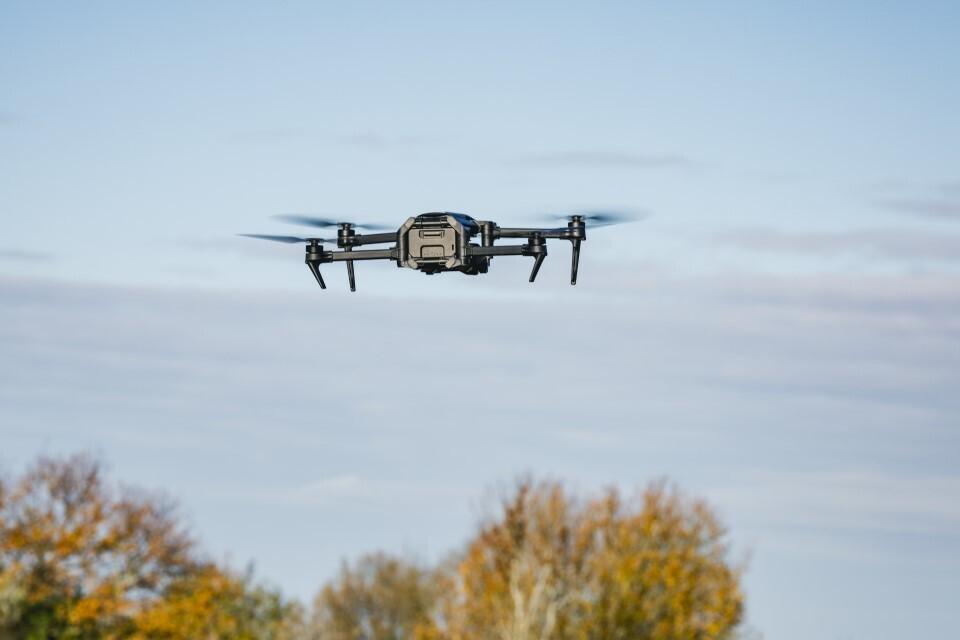
Modern battlefields are undergoing significant transformation, with a prominent challenge arising from uncrewed aerial systems, commonly known as drones. These technologies can disrupt military operations and pose a threat to ground forces, as evidenced by recent conflicts in Ukraine.
Scientists at the Defence Science and Technology Laboratory (Dstl) are collaborating closely with the British Army, industry partners, and international allies to explore and test cutting-edge drone technologies. Their aim is to develop artificial intelligence (AI)-enabled capabilities tailored for modern combat scenarios.
Project VANAHEIM: A Strategic Approach to Counter Drone Threats
One of the pivotal initiatives in this endeavour is Project VANAHEIM, a collaborative effort between the UK and the US focused on countering drone threats and enhancing troop protection. Spearheaded by the Army’s RAPSTONE initiative, VANAHEIM involves a series of experiments that integrate counter-drone technologies with light infantry units. These trials assess the technology’s performance under realistic operational conditions.
The project not only identifies effective strategies but also highlights shortcomings, facilitating the swift adoption of successful technologies across the British Army. Insights gained from VANAHEIM aim to inform tactical decisions, training methodologies, and equipment choices.
Dstl has partnered with 13 industry suppliers, the Army Trials Unit, the Joint Effects Trials and Development Group, Soldierworks, and US collaborators to carry out these tests. Initial trials were conducted in Germany and Poland during the summer of 2025, yielding valuable operational data. Further assessments are scheduled for Lithuania in the summer of 2026, as part of the US-led Project FLYTRAP.
Project ANVIL: Enhancing Target Identification through AI
In a separate yet equally significant initiative, Dstl has collaborated with the British Army to implement Project ANVIL, which focuses on the soldier-led development of Computer Vision Models. This project aims to enhance drones’ capabilities in locating and identifying targets, ensuring a balance between flexibility and precise target recognition. By employing computer vision technology, these systems can interpret images and videos through the application of AI and machine learning techniques.
ANVIL operates in conjunction with the FALLING INSTRUMENTS Ground Control Station (FIGS) as part of an Initial Experimentation Systems (IES) framework. This system is designed to identify new targets and adapt to shifting conditions during search and reconnaissance missions within a 24-hour timeframe. Such rapid adaptability significantly streamlines model retraining and deployment, thereby minimising cognitive load on operators and saving valuable time.
Building upon innovations from the AUKUS Resilient Autonomy and AI Technologies (RAAIT) initiative, ANVIL has evolved from its initial concept into a robust and deployable system. Currently, IES is being rolled out with three Army units to enhance familiarity with computer vision technology on the battlefield, marking it as a crucial component in the UK’s strategy to develop swarming uncrewed aerial system (UAS) capabilities.




More Stories
Andy Lord Takes the Helm as Interim Chair of NAD Group Advisory Board
Creating an Inclusive Energy System for Everyone
Exciting Announcement: New Regius Professorship of Medicine to be Established at the University of Oxford on 14 October 2026