

From her practice in Hampstead and online across the UK, BACP-registered psychotherapist Adina Comorasu works with anxiety, low self-esteem and the wounds of childhood. Her work combines an integrative, person-centred approach with body-mind psychotherapy and trauma-informed care.
Training and a transformative journey
Adina Comorasu Psychotherapy offers counselling and psychotherapy in Hampstead, North West London, as well as online. It was her own transformative journey that inspired Adina Comorasu to provide a safe, nurturing space for healing and growth, and she brings to that work both knowledge and a passion for continuous exploration. Her training includes a BSc in Psychology, an MSc in Clinical Psychology and Psychotherapy and an MSc in Integrative Psychotherapy, and she is an MBACP-registered therapist.
She works as a trauma-informed psychotherapist and has developed her skills through intensive study and personal development to create a therapeutic environment that is both supportive and empowering. It is meant for people who may be living with unexplained anxiety, symptoms of PTSD or low self-esteem, or who feel stuck in the same scenarios for years on end. The work allows each person to process at their own pace.
An integrative, person-centred approach
As an integrative psychotherapist, she can draw on a variety of therapeutic techniques to address the particular needs of each client. Her work typically follows a person-centred approach, built on the premise that clients already possess all the internal resources they need and that the therapist’s task is to guide them in uncovering those resources. She is also comfortable using psychodynamic and cognitive behavioural approaches in the search for the most effective therapy for each person. The starting point is unconditional acceptance and a safe, nurturing space in which to explore and integrate inner wounds.
Three ideas run through the practice. Counselling is a safe space to speak one’s truth, however ugly or unattractive it may seem, because that truth deserves to be listened to. Emotional healing, like the healing of the physical body, takes time and can become challenging, so trusting the process calls for patience, care and nurture. Embracing integration means compassion, love and patience towards oneself and others, and feeling comfortable in one’s own skin.

Anxiety and the inner child
At the heart of the practice is work on anxiety through the healing of inner child wounds. It is the kind of anxiety that takes over a person’s life without permission, stealing sleep, disturbing eating patterns and bringing overthinking that is hard to stop, and that seems to grow worse the more someone tries to control it. It can isolate people from those dear to them and hold them back from applying for a job or speaking up for themselves.
The practice also works with loneliness that persists however many people are around, with difficulty trusting others or recognising one’s own emotions and needs, and with the struggle to find pleasure in life despite having achieved almost everything one wanted. Behind the approach lies the idea that when the inner child is suffering, adult life can feel miserable. The work therefore aims to replace bitter self-criticism with listening to one’s own emotions and body, and to build self-love, kindness towards oneself and healthier ways of managing emotions, for people seeking a sense of inner peace and more joy in their lives.
Low self-esteem and boundaries
People come to her with a wide range of issues, among them low self-worth, relationship problems, feeling stuck, fear of abandonment or rejection, difficulty with boundaries, people-pleasing, and overwhelming shame or guilt. Therapy works on expressing one’s truth, first to oneself and then, slowly, to the world, and she guides clients gently towards it through compassionate questions and somatic awareness, combining body-mind psychotherapy, inner-child healing and trauma-informed care.
In her London practice she often meets people who know, logically, that they should set boundaries, yet something inside resists, and that something is often fear of losing connection, of being judged or of no longer being loved. Those fears are treated not as weakness but as survival memories. With clients she works through four stages, awareness, communication, negotiation and implementation, starting with body signals such as a tightening in the chest or a lump in the throat, which act as an inner compass. Boundaries are approached as invitations to mutual respect rather than walls, and the aim of this trauma-informed work is learning to calm the nervous system, express needs and stay connected without guilt or fear.
The wound of children left behind
Her choice to work with people who have experienced childhood trauma has a personal root: she was one of them, having lived through rejection at school, emotional abandonment within her family and a lack of support. Many of the children around her had one or both parents working in another country. Her own parents left to work abroad, and she was cared for by her grandparents.
As a therapist, she has heard many stories of parents who left and never returned, and she approaches that wound of abandonment as a generational trauma. Her perspective is not one of blame. As a trauma survivor herself, she honours both the children left behind and the parents who left out of love and survival.
Nurture to Grow, an online community
Alongside her counselling work, the practice runs Nurture to Grow, a therapeutically informed community for safety, self-discovery and growth. It is designed for people who have experienced childhood trauma and who, in adult life, often struggle with overwhelming anxiety and a lack of a sense of self. Using body-based techniques designed to regulate the nervous system, it works on teaching the body to feel safe again and to hold new, positive emotions, and on discovering what each member wants, who they are and what they like.
The community meets monthly for psychoeducation and Q&A and weekly for practical exercises and body-based interventions, with simple daily practices in between. Meetings take place live, online, on Zoom, and there are no quick fixes: the emphasis is on practice. Guided by therapeutic knowledge and trauma awareness and held with professional care, Nurture to Grow is neither a therapy space nor an emergency service, and it is also aimed at people already in individual therapy who need more resources and support between sessions.
Sessions in Hampstead and online
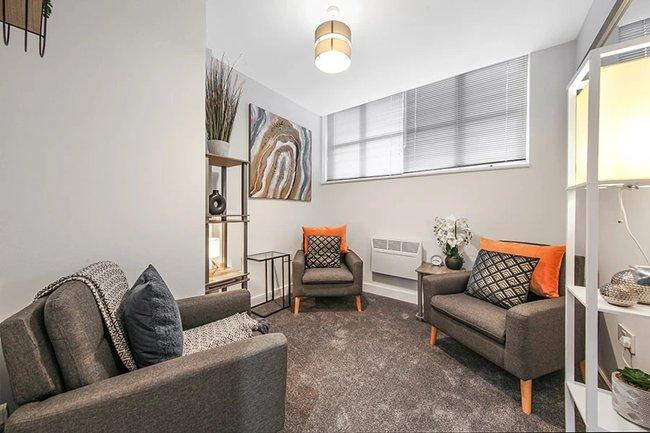
Face-to-face therapy takes place in a comfortable ground-floor room at Hampstead West, on Iverson Road, in London NW6, and she also offers online counselling via Zoom and Skype across the UK. Sessions last 50 minutes. The first appointment is an initial assessment, used to discuss why a person is thinking of coming to counselling, whether it could be helpful and whether she is the right therapist to help. All contact is strictly confidential and uses secure phone and email services.
In a room in Hampstead or on a screen anywhere in the UK, the work of Adina Comorasu rests on unconditional acceptance, patience and the conviction that each person already holds the resources they need. It offers a space to move, at one’s own pace, towards a calmer and more grounded way of being.
Address: 8 Hampstead West, 224 Iverson Road, London NW6 2HL


More Stories
“Exploring the Harry Potter Store on Oxford Street: A £10 Adventure That Wasn’t Easy”
Counsellors in London
Elation Massage, mobile massage at home in North London