
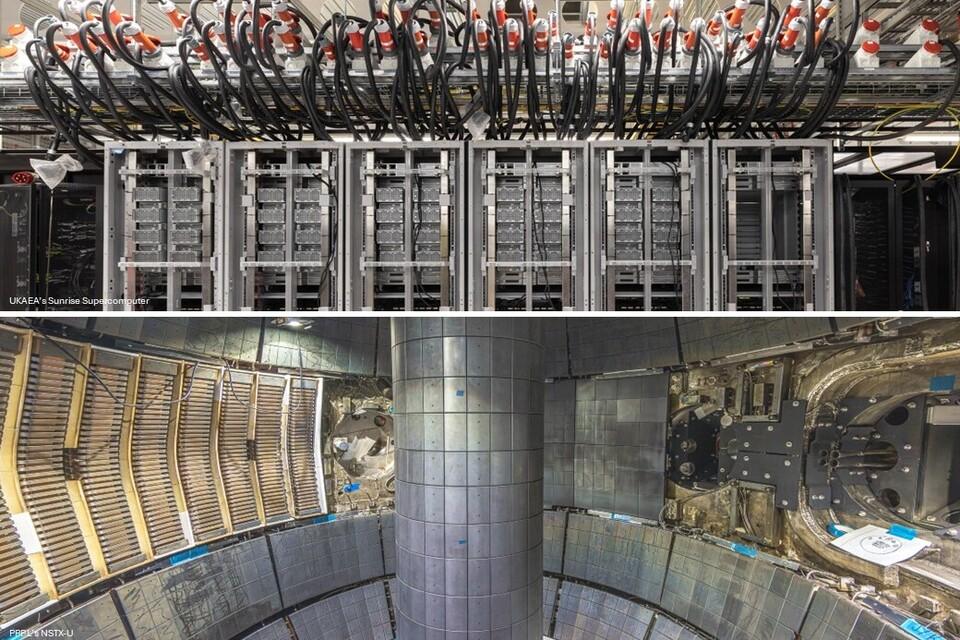
In a significant advancement for fusion energy research, the United Kingdom Atomic Energy Authority (UKAEA) has partnered with the United States Department of Energy’s Princeton Plasma Physics Laboratory (PPPL) to enhance their fusion supercomputing capabilities through the integration of artificial intelligence. This collaboration was announced during the Global Fusion Policy Summit held in London.
Strengthening Transatlantic Collaboration
At the summit, UKAEA and PPPL formalised their partnership by signing a Joint Declaration of Intent to connect their sophisticated AI supercomputing platforms. The initiative, known as the SUNRISE–STELLAR-AI Federation, will link UKAEA’s SUNRISE supercomputer, which focuses on fusion missions, with PPPL’s STELLAR-AI platform. This coalition aims to harness the strengths of both facilities to bolster research and accelerate the development of fusion energy technology.
The Global Fusion Policy Summit serves as a platform to facilitate regulatory harmonisation, which is essential for ensuring the safe and secure implementation of fusion energy. This regulatory framework aims to provide clarity for developers and investors involved in the burgeoning field of fusion energy.
Enhanced Research Capabilities
The collaboration will allow researchers from both the UK and the US to train AI models using data generated from their respective laboratories, thus creating advanced AI tools for future fusion power plants. The insights gained from experiments conducted at UKAEA’s MAST Upgrade facility in Oxfordshire and PPPL’s NSTX-U facility in New Jersey will be integral to this endeavour.
By leveraging the combined capabilities of these high-performance computing systems, the federation seeks to streamline the design process for future fusion power plants and optimise the use of existing experimental data. Moreover, it aims to provide a collaborative platform for the next generation of fusion scientists across both nations.
Joe Milnes, Executive Director for Engineering and Computing at UKAEA, emphasised the necessity of partnerships in tackling the challenges associated with fusion energy, stating, “The US and UK are two global leaders in fusion research, and the federation of SUNRISE and STELLAR-AI would build on a long history of transatlantic cooperation.”
Harnessing Computational Power for Innovation
Jonathan Menard, Chief Scientist at PPPL, highlighted the complexity of designing a fusion power plant and the collaborative nature required to achieve this monumental task. He asserted that by federating their computing platforms, both organisations could expedite the development of a compact fusion power plant through shared data and resources.
This initiative builds on a memorandum of understanding signed earlier this year which established a framework for collaborative work between the two institutions. Both MAST Upgrade and NSTX-U are compact spherical tokamaks with compatible designs, making them ideal candidates for collaborative AI training and model development.
When data from different facilities is integrated, researchers can create more robust machine-learning models that accurately reflect the underlying physics of fusion processes, thereby accelerating various fusion initiatives such as the UK’s Spherical Tokamak for Energy Production (STEP Fusion) and the US’s Spherical Tokamak Advanced Reactor (STAR).
Developing Future Experts in Fusion and AI
The federation also aims to cultivate the next generation of fusion and artificial intelligence experts through training programs, workshops, and international research collaborations. Rob Akers, Director of Computing Programmes and Senior Fellow at UKAEA, remarked on the potential to create digital twins of both machines, which would support future power plant designs by simulating experiments and predicting outcomes before physical trials.
He stated, “The real power will come from working as one team. Together, we can learn faster and learn more, extracting maximum insight.” This collaborative effort is expected to significantly enhance the transition from experimental research to practical fusion power generation.
Future Steps and Digital Twins
Following the summit, UKAEA and PPPL have outlined potential next steps for the federation, including the exploration of digital twins—detailed virtual replicas of real fusion machines. These digital models will be continuously updated with data from fusion experiments, allowing researchers to test modifications and predict operational behaviours before actual implementation.
Furthermore, the collaboration will focus on optimising the movement of computing tasks between different platforms, ensuring researchers can select the most suitable supercomputing resources for their specific challenges. This innovative approach will facilitate the seamless exchange of knowledge and enhance the overall efficiency of fusion research.
To view the official announcement of the SUNRISE–STELLAR-AI Federation, a video is available on YouTube, showcasing the collaboration’s potential to revolutionise fusion energy development.


More Stories
Approval Granted for Morgan and Morecambe Offshore Wind Farms Transmission Assets Development
UK Army Base Welcomes Innovative Passive Drone Detection Technology for Enhanced Security
UK and US Join Forces to Propel Fusion Energy Innovations for a Greener Future