
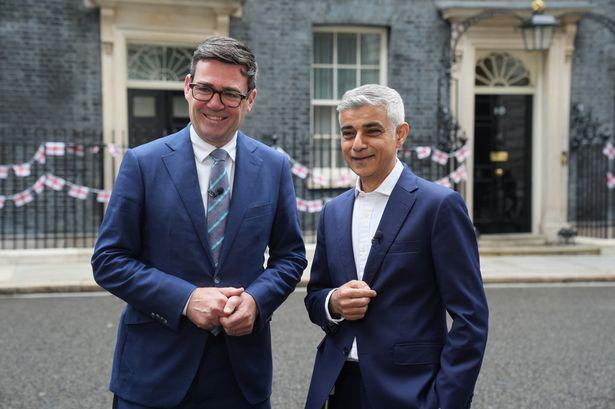
English mayors are set to gain the authority to retain a portion of the taxes collected within their jurisdictions, as outlined by Andy Burnham. The Prime Minister has indicated that by allowing mayors to keep a share of income tax and business rates, he aims to fulfil his commitment to “take power out of Westminster and carry it into every postcode in the country”. Detailed plans for this reform are anticipated in a white paper, which will be released during Chancellor John Healey’s inaugural budget presentation in the autumn.
Empowering Local Leaders
Burnham, who has served as the mayor of Greater Manchester for nearly nine years, emphasised that this policy is crafted to ensure that “every local leader will have the power and resources to enhance public transport, construct homes, and generate employment”. Sir Sadiq Khan, the Mayor of London, has endorsed the initiative, asserting that the new Prime Minister is “walking the walk” after years of local leaders pleading with Whitehall for financial support.
At present, a staggering 95 per cent of all tax revenues generated in England are directed to central government, leaving local authorities with a mere five per cent. A comparative analysis reveals that London retains only about six per cent of the tax generated in the capital, in stark contrast to New York, which retains 50 per cent, and Tokyo, which retains 70 per cent. The Government has clarified that the rate of income tax faced by billpayers will remain unchanged as a direct result of these reforms. Additionally, ministers will maintain an equalisation system to ensure that areas generating less tax continue to receive essential financial support.
A Commitment to Local Communities
Burnham stated, “I said we’d take power out of Westminster and carry it into every postcode in the country. Today, we make good on that promise. Under our plans, more of the taxes raised in a community will stay in that community. Soon, every local leader will have the power and resources to improve public transport, build homes and create jobs.” He reflected on his experiences of being overlooked by Westminster politicians, vowing not to repeat that mistake in his role as Prime Minister. “The whole of Government will now pull together behind the people and places that desperately need our support. This is how we’ll bring back hope and bring power home to you.”
Expanding Mayoral Powers Nationwide
Several regions in England currently have an elected mayor, including Greater Manchester, the Liverpool City Region, Cambridgeshire and Peterborough, and South Yorkshire, encompassing Rotherham and Sheffield. These mayors possess authority over critical issues such as transport, skills, and infrastructure planning. Burnham met with various local leaders at his inaugural No 10 North meeting in Manchester, where he expressed his vision for a united UK, stating, “What I’m trying to do here is make the UK one team where we’re all pulling behind you because your place is where growth happens or it doesn’t happen.”
In the coming years, voters in additional regions, including Greater Essex and Hampshire and the Solent, will have the opportunity to elect mayors for the first time. Chancellor Healey remarked, “The people who best understand what skills employers want, what transport an area needs, and where investment can make the biggest difference are those who live there. For the first time, we’re giving mayors a share of income tax so communities directly benefit when their economy grows – passing power out of Westminster and driving growth in every postcode.”
Local Leaders Demand New Tools for Change
Angela Rayner, Secretary of State for Housing, Communities, and Local Government, asserted that this initiative will put an end to the “begging-bowl culture of the past”, equipping locally elected leaders with “the tools they need to drive the change that communities have been crying out for”. Reports suggest that some mayors are contemplating the implementation of tax reliefs, including Conservative Tees Valley mayor Lord Houchen and Reform UK’s Greater Lincolnshire mayor Dame Andrea Jenkyns.
However, concerns have been raised regarding the potential effectiveness of these tax reforms in fostering growth across all regions of England. Shadow local government secretary Sir James Cleverly expressed doubts, stating, “Andy Burnham is right to want to encourage growth in all communities. But his top-down Manchesterism will lead to higher taxes, with no guarantee of better outcomes for local people.” He cautioned that devolution must be a collaborative effort with local communities, and that Labour’s regionalist approach risks sidelining local councils and neglecting local identities.
Calls for Comprehensive Devolution
Reform UK’s home affairs spokesperson Zia Yusuf insisted that the Prime Minister should fully devolve powers to prevent the housing of illegal migrants in local communities by the Home Office. He remarked, “Andy Burnham says he wants to devolve power and actually listen to local people. If he was listening, he would know that they do not want unvetted illegal migrants dumped in their areas.”
The think tank IPPR has welcomed Burnham’s announcement, deeming it “extraordinarily bold” and potentially the most significant shift in England’s funding landscape in a generation. Mirte Boot, head of IPPR North, stated, “Local leaders know what their places need to drive ‘growth in every postcode’ – but until now they didn’t have the powers to make it happen. However, fiscal devolution must pass two tests: mayors need the freedom to borrow against future revenues to fund long-term infrastructure, as London did with the Elizabeth line, and some of the proceeds must also be shared with slower-growing areas.”




More Stories
The Reset Rooms puts Pilates, yoga and recovery under one roof in Crouch End
Yoga studios in London
Weddings by Anita: documentary-style wedding photography in London