
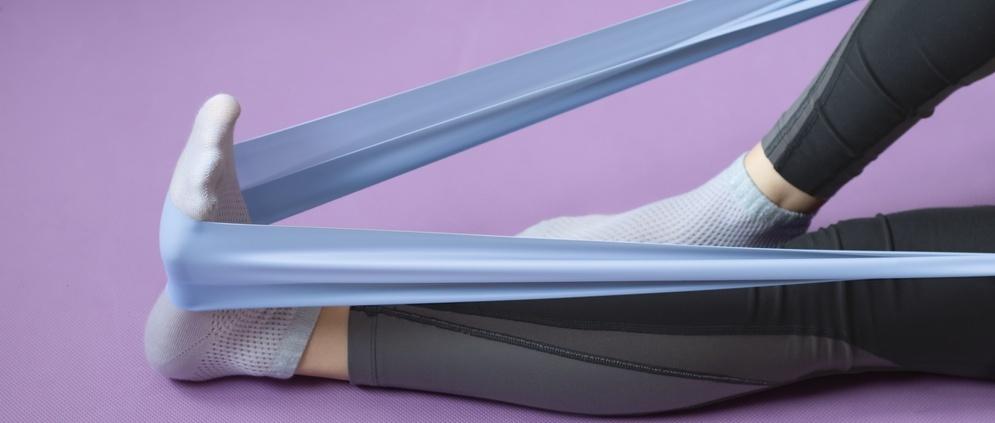
Resistance bands present an excellent opportunity to enhance your strength training and muscle-building regimen. Their versatility allows them to be seamlessly integrated into a wide variety of exercises, providing an additional challenge to your workouts.
Despite being compact, lightweight, and cost-effective, many individuals hesitate to incorporate resistance bands into their fitness routines. This reluctance may stem from their adaptability, which can leave users unsure of how to begin. Additionally, some scepticism about the efficacy of resistance bands for muscle development persists, even though they can be as effective as traditional free weights or weight machines.
Understanding Resistance Bands and Their Functionality
As the name implies, resistance bands are flat, elastic bands that can be wrapped around various parts of the body, such as the legs or arms, to create additional resistance as you move these limbs apart. Penny Weston, the owner of the wellness centre MADE, highlights that resistance bands compel your muscles to engage more rigorously in order to stabilise and execute each exercise.
“They are quick and straightforward to use,” she notes. “Their minimal storage requirements make them suitable for use at home or while travelling, as they can easily fit into a bag.” Fitness expert Laura Williams further elaborates that both speed and tension are crucial for maximising the effectiveness of your exercises. The tension provided by a resistance band remains consistent throughout the movement, meaning that performing reps at a slower pace necessitates greater muscle effort.
“Resistance bands come with varying levels of resistance, allowing you to adjust the intensity of your workouts effortlessly,” she states. “Switching between high and low intensity by using different bands for various exercises will help you optimise your training.” This can involve both compound exercises, which engage multiple muscle groups, and isolation movements that focus on single muscle groups.
Building Muscle with Consistency
Weston advises that while resistance bands are a valuable tool for muscle building, they are not a miracle solution, and regular exercise is essential. The frequency of muscle-building workouts incorporating resistance bands will depend on individual fitness levels and goals. However, it is generally recommended to aim for at least two to three sessions per week to achieve significant results.
It is entirely normal to experience some instability when first starting a resistance band workout routine. It may take time to adjust to the tension of the bands and develop sufficient strength to perform the exercises without shaking. Nevertheless, with consistent training, you will notice improvements in both your strength and form over time.
Incorporating Resistance Bands into Your Routine
The benefits of resistance band workouts extend beyond mere muscle building. They can effectively target neglected areas that are often overworked with standard weights. For instance, the lateral raise exercise may initially prove challenging, but it is excellent for strengthening the upper back muscles and enhancing overall range of motion. Using a resistance band elevates this exercise, making it particularly effective for toning the abdomen and achieving a slimmer waistline.
Moreover, resistance bands can aid in developing the chest, triceps, and shoulder muscles simultaneously. Incorporating them into push-ups not only intensifies the workout but also provides a safer alternative to adding traditional weights.
The Importance of Strength Training
When contemplating fitness, many envision activities like walking, running, or other cardiovascular exercises. While these are beneficial for overall health, strength training deserves equal attention due to its myriad health advantages. As an award-winning journalist with a focus on women’s health and mental wellbeing, Lydia Smith emphasises the significance of incorporating strength training into one’s fitness routine.
Interestingly, the martial art of Tai Chi, which has been practised for centuries, continues to gain traction today. Originally developed for self-defence, its current application lies in promoting overall health and wellbeing. A contemporary adaptation known as Tai Chi Walking has emerged, particularly popular on digital platforms, making the practice more accessible to a wider audience.
Victoria, a content writer with a keen interest in mental wellbeing and societal trends, highlights the impact of technology on health, demonstrating how age-old practices like Tai Chi can find new life in modern wellness discussions.




More Stories
Transforming Flood Defences: Building Resilience and Confidence in a Changing Climate
Optimal Meat Consumption: How Much Should You Really Be Eating?
Understanding the New Five-Day Limit: How Long Should You Safely Use a Decongestant Nasal Spray?