
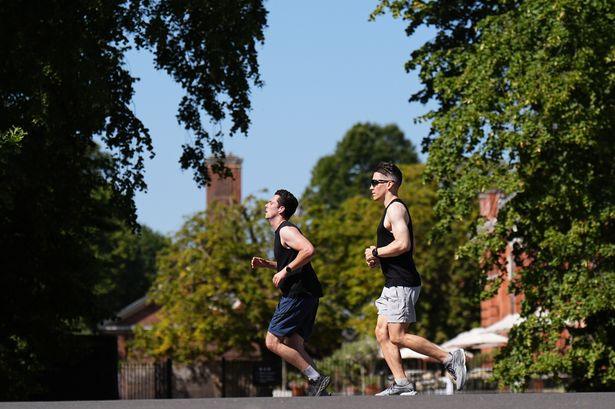
A flash drought has been officially declared across London, attributed to a combination of exceptionally low rainfall and soaring temperatures during the ongoing fourth heatwave of the year, according to the Environment Agency. This government body has also indicated that approximately half of England, encompassing seven areas in central, eastern, and southern regions, is currently experiencing drought conditions.
Extent of the Drought in England
The affected areas include the entirety of London, East Anglia, Hertfordshire, the Thames Valley, Hampshire, the Isle of Wight, as well as Devon, Cornwall, the West Midlands, and Wessex, which covers Dorset, Somerset, Wiltshire, and Gloucestershire. The announcement coincides with forecasts predicting temperatures in London to exceed 33 degrees Celsius, with the majority of the capital currently under a hosepipe ban.
As July approaches its end, it is poised to potentially become the driest July on record, with England receiving only 7 per cent of its expected rainfall and southern England recording a mere 1 per cent. This rapid onset of drought comes in stark contrast to a very wet winter, highlighting the impact of dry conditions experienced throughout the spring and summer, compounded by a series of heatwaves that have strained water resources.
Consequences of the Heatwaves
The summer has already witnessed record-breaking heatwaves in May and June, with a third wave occurring earlier this month, significantly affecting agriculture, river systems, and the natural environment. These extreme weather conditions have led to widespread wildfires and imposed hosepipe bans on millions of residents. The Met Office has confirmed a new temperature record for June, reaching 38 degrees Celsius, surpassing the previously reported 37.7 degrees Celsius. This record was established at Lingwood in Norfolk, the same location that had provided the provisional reading.
Currently, nearly one-third of England, including regions in the South East, Midlands, and North West, is considered to be in a state of “prolonged dry weather.” Only the North East and Yorkshire continue to experience conditions that are deemed normal for this time of year. This marks the second consecutive year that parts of the country are grappling with drought, despite winter rains replenishing reservoirs and groundwater, which had previously mitigated the impacts of a dry spring.
Long-Term Implications and Government Response
Helen Wakeham, the director of water at the Environment Agency and chair of the National Drought Group, remarked, “The hot and dry weather means we are currently using water faster than nature can replenish it. A second consecutive summer drought is an exceptionally serious situation and one that will have long-lasting impacts on our environment, wildlife, and the economy.” She also emphasised the importance of conserving every drop of water to support nature and agriculture during this critical time.
Water minister Emma Hardy addressed the situation, stating, “Our climate is changing, droughts are becoming increasingly common, and we need to be prepared for this new normal. We’re delivering long-term change in the water industry and driving record investments in infrastructure, including nine new reservoirs.” Furthermore, she urged water companies to adhere to their drought plans and to intensify efforts to reduce leaks, ensuring that water supplies remain stable even in the driest conditions.
For those seeking further updates on this pressing issue and more from London, subscriptions to daily newsletters are available to keep residents informed.

More Stories
Weddings by Anita: documentary-style wedding photography in London
Wedding photographers in London
Meet Britain’s Strongest Schoolgirl: The Edgware Weightlifter Breaking Stereotypes