
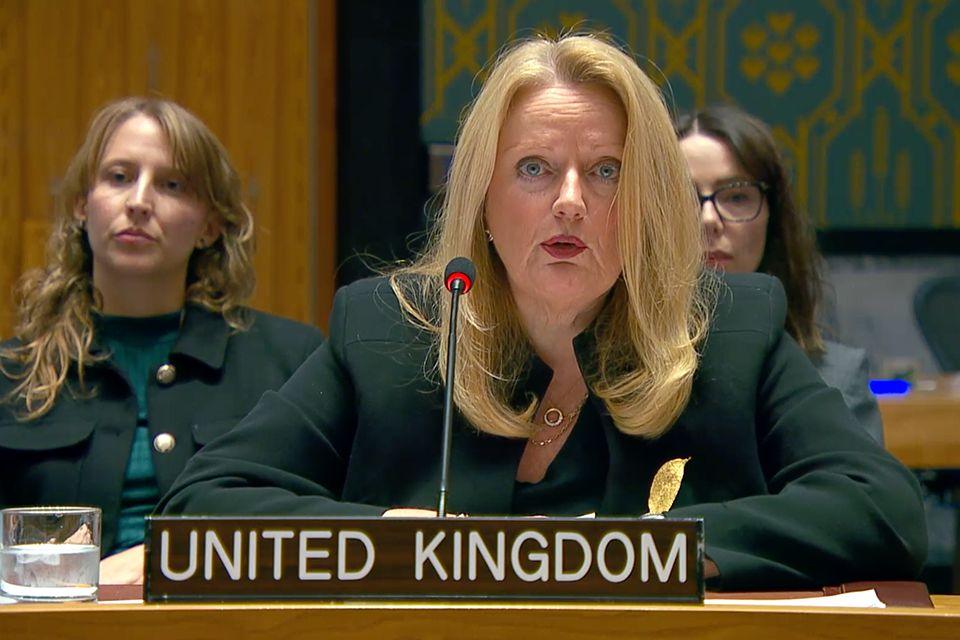
In recent weeks, significant voices from various nations have convened within the General Assembly and the Security Council, echoing a unified call for de-escalation and an immediate cessation of Russia’s military actions against Ukraine. The urgency of this matter has been underscored by the latest developments, as Russian aggression has escalated once more.
Just yesterday, British Foreign Secretary Ed Miliband visited Chernihiv, where he witnessed firsthand the devastating impact of what he described as Russia’s “barbaric war of terror” against the Ukrainian populace. The gravity of the situation was starkly highlighted by a Russian glide bomb that tragically claimed the lives of at least 33 civilians who were travelling by bus in Kramatorsk. This followed a harrowing week during which airstrikes resulted in the deaths of at least 30 individuals, including five children, when a cruise missile demolished a residential building in Chernihiv. Additionally, two Ukrainian Red Cross workers sustained injuries while attempting to assist victims of Russian assaults in the Zaporizhzhia region. These incidents represent just a fraction of the 1,688 days since the onset of Russia’s full-scale invasion.
Ongoing Threats to Global Security
The ramifications of Russia’s military actions extend beyond Ukraine’s borders, jeopardising global food supplies due to strikes on Black Sea ports and merchant vessels. In Kyiv, Russian drones have brazenly targeted civilian bridges in daylight, while the ongoing barrage of missiles and drones relentlessly assaults Ukraine’s electricity and heating infrastructure. Reports indicate that thousands of civilians remain trapped in Russian-occupied areas like Oleshky, facing dire shortages of food, water, and medical assistance, all while being deprived of essential services. Even the Kremlin has acknowledged the severity of this situation, labelling it as ‘critical’.
Under International Humanitarian Law, an occupying power is mandated to ensure the provision of adequate food, medical supplies, and healthcare to those under its control. Where these standards are not met, it must facilitate the swift and unrestricted passage of humanitarian aid. However, as winter approaches, the Russian Ministry of Defence has alarmingly suggested that Ukrainians would “freeze” in the cold months ahead. Furthermore, in a blatant disregard for humanitarian considerations, the Kremlin has dismissed calls for an energy ceasefire, characterising Ukraine’s energy infrastructure as its “Achilles heel.” Directly targeting civilian infrastructure in such a manner may constitute a war crime.
The Call for Accountability and Action
The United Kingdom strongly urges Russia to uphold its obligations under international law. The consequences of these aggressive actions extend far beyond the destruction of homes and infrastructure; nearly five years after the initial invasion, Russia seems intent on normalising the unacceptable. Nonetheless, the increasing frequency of assaults cannot diminish the urgency of our response.
Russia holds the power to end this conflict at any moment, yet it chooses instead to escalate its offensive. This compels us to respond with measures that curtail Russia’s capacity to sustain its military operations. This week, the United Kingdom took a significant step by announcing 38 new designations targeting those supplying critical resources to the Russian military.
Support for Ukraine’s Right to Peace
Moreover, there is a pressing need to compel Russia to accept an immediate and unconditional ceasefire. President Zelenskyy has consistently expressed Ukraine’s readiness to engage in peace talks, yet President Putin has rebuffed these overtures, opting instead to intensify military actions. Such decisions highlight a stark contrast between rhetoric and reality, where actions speak far louder than any claims of a desire for peace.
As Foreign Secretary Miliband reaffirmed during his visit to Kyiv, the United Kingdom stands firmly alongside the people of Ukraine. Until Russia chooses the path of peace, our commitment to supporting Ukraine and upholding our shared values will remain unwavering.


More Stories
£10 Theatre Tickets and Engaging School Workshops Set to Enchant 100,000 Young People
Joint Leaders’ Declaration on Migration: Key Takeaways from the European Political Community Summit
Royal Navy Secures Export Deal for New Mine-Hunting Motherships, Enhancing UK Growth and Security