
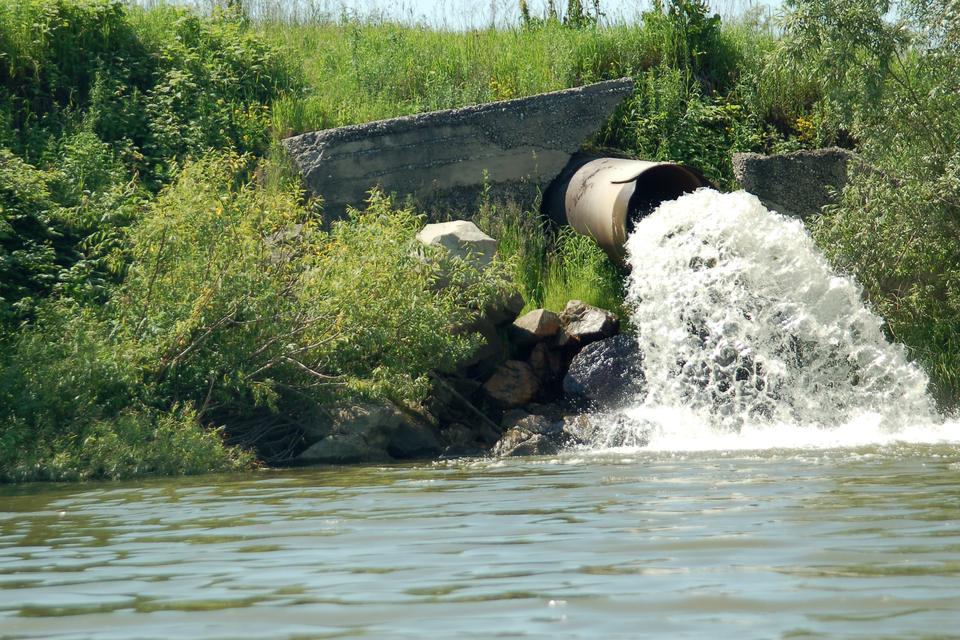
Water companies that disregard environmental regulations will now encounter expedited penalties of up to £500,000, as part of a significant reform initiative aimed at enhancing the quality of the nation’s waterways.
Enhanced Regulatory Powers for the Environment Agency
In a landmark overhaul of the water management system, the Environment Agency is set to receive expanded and strengthened powers. Previously, the agency’s capacity to impose financial penalties for recurrent minor and moderate infringements—such as violations of licences or permits—was constrained. This was due to the requirement of meeting the high legal standards typically associated with criminal court proceedings, which often rendered the pursuit of penalties too costly and protracted.
With the new reforms, the Environment Agency will be able to operate under a lower civil standard of proof, facilitating the imposition of financial penalties more promptly. This shift ensures that violators of environmental regulations face swift and decisive consequences.
These reforms are part of a broader strategy implemented over the past two years aimed at addressing pollution, simplifying regulatory processes, safeguarding customers, and securing sustainable investment within the water sector.
Government Commitment to Accountability
Environment Secretary Emma Reynolds has emphasised the government’s commitment to holding water companies accountable for pollution. She stated, “This government has been clear that polluting water companies and bosses will face the consequences of their actions. The introduction of automatic penalties will give the Environment Agency the teeth it needs to deliver cleaner rivers, lakes, and seas.”
Among the significant measures being introduced are a more robust water regulator, unannounced inspections, rigorous checks of water company infrastructures, and a prohibition on bonuses for executives whose companies are found to be polluting.
The new civil penalties framework was made possible through the Water (Special Measures) Act, which required public consultation prior to obtaining Parliamentary approval. A cap of £500,000 will now apply to variable monetary penalties that can be established under the civil standard of proof, alongside the introduction of automatic penalties for clearly defined breaches. For instance, a company failing to comply with specific regulations could incur an initial penalty of £10,000, which would double if payment is not made within 28 days.
Striking a Balance Between Accountability and Investment
The revised framework will complement existing enforcement tools, including unlimited financial penalties—known as Variable Monetary Penalties—where violations are proven to a criminal standard. The Environment Agency will persist in pursuing criminal prosecutions for the most egregious offences.
The magnitude of penalties will be determined by the size of the water company, ensuring that these costs cannot simply be absorbed as a routine part of business operations. Alan Lovell, Chair of the Environment Agency, affirmed the agency’s dedication to safeguarding waterways, stating, “We care deeply about protecting our waterways and welcome measures that will deter pollution incidents and other harmful permit breaches.”
Modelling based on historical performance data suggests that these changes could cost the water sector between £50 million and £67 million annually. However, there is an expectation that these adjustments will drive improved performance among water companies, leading to enhancements in asset management and data collection, ultimately reducing costs over time.
Comprehensive Reforms for a Sustainable Future
It is imperative to note that the financial penalties imposed on water companies cannot be transferred to customer bills. These recent changes are part of a series of advancements made over the past two years, reflecting the government’s priority of reforming the water management system.
The Water (Special Measures) Act introduces the most stringent enforcement powers seen in a decade, including provisions for criminal liability for executives who conceal illegal sewage discharges, as well as the authority to ban unjustified bonuses. In 2025, this legislation successfully blocked £4 million in bonuses across six water companies.
Additional measures include ensuring that investments made by water companies are dedicated to infrastructure improvements—such as repairing pipes, reducing sewage discharges, and enhancing water quality—rather than being diverted to dividends or bonuses for executives. Furthermore, transparency is being improved through the implementation of real-time monitoring systems at every emergency overflow, allowing the public to stay informed about local water conditions.
Investing in Infrastructure and Customer Protection
Customer protections have also been bolstered, with compensation levels doubling in instances of service failures, and enhanced accessibility for vulnerable households seeking assistance with their bills. A significant step has also been taken to combat plastic pollution, culminating in a ban on the sale of plastic wet wipes.
The government’s White Paper outlines a comprehensive vision for future reforms, which includes the establishment of a new single water regulator that will ensure stricter oversight and accountability. The introduction of a Chief Engineer role aims to reinstate hands-on checks of water infrastructure, while long-term systematic reforms will ensure that assets are adequately maintained and that potential issues are identified before they result in water shortages.
Furthermore, the rollout of smart metering and mandatory efficiency labels will empower households to monitor their water usage more effectively. Stronger inspection powers will be granted to the new regulator, who will be able to undertake unannounced inspections.
These transformative measures are supported by over £104 billion in private investment, which aims to upgrade water infrastructure over the next five years—the largest programme of its kind since privatisation—creating jobs, facilitating new housing developments, and reducing pollution.




More Stories
Ofsted Launches Pilot Scheme for New Independent Complaints Review Service
CMA Initiates Action to Enhance Choice in Business Software Solutions
Surge in Octopus Population Off South West Triggers Collaboration Between Fishermen and Scientists