
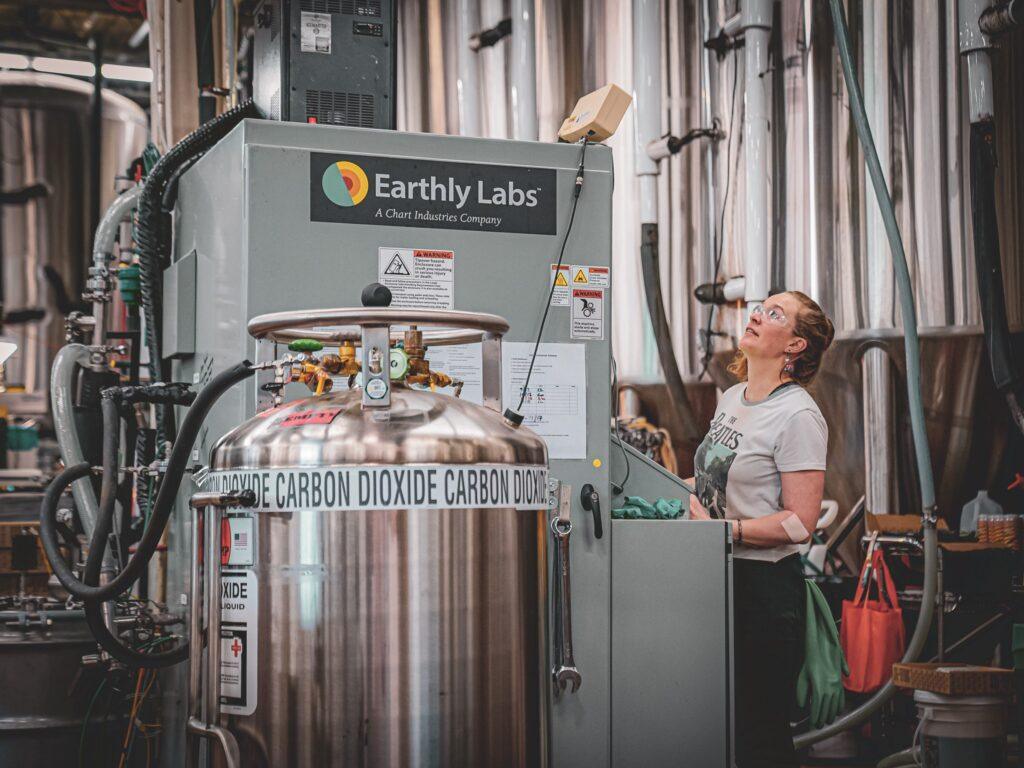
In 2021, Maine Beer Company faced a significant challenge when their carbon dioxide supplier encountered a shortage of the essential gas. Dave Love, the brewery’s sustainability manager, expressed concerns about the potential impact on their production, stating, “There was potential for our beer to go stale in the tanks. We wouldn’t be able to use CO2 for any of our bottling, kegging, or centrifuge operations.”
Innovative Solutions Inspired by Space Exploration
The solution to Maine Beer Company’s dilemma surprisingly drew inspiration from NASA’s ambitious plans for resource utilisation on Mars. This innovative approach not only addresses the brewery’s needs but also presents a cost-effective and environmentally friendly option for various industries, including wineries, distilleries, power companies, and helium producers.
The journey began in the 1990s when Pioneer Astronautics, a company that secured multiple Small Business Innovation Research (SBIR) contracts from Johnson Space Center in Houston, developed systems capable of generating vital resources on Mars. These systems were designed to capture carbon dioxide from the Martian atmosphere and combine it with hydrogen to produce water for life support and methane for rocket fuel. While similar technologies had existed, Pioneer’s designs were notable for their compactness, efficiency, and automation.
Under the vision of founder Robert Zubrin, Pioneer Astronautics later established Pioneer Energy, which repurposed these subsystems for the oil and gas sector. Zubrin soon realised that the technology developed for Martian applications could effectively capture and purify carbon dioxide in breweries, allowing brewers to reuse CO2 produced during the fermentation process for carbonation. By 2015, the Craft Brewery Recovery System was in production, although the company eventually opted to license the technology.
Earthly Labs and the Rise of Small-Scale Carbon Capture
Amy George founded Earthly Labs in Austin, Texas, in 2016, with the aim of advancing small-scale carbon capture solutions. Upon discovering the Craft Brewery Recovery System, she secured an exclusive license to develop the technology further. Since the onset of the pandemic, the carbon dioxide market has witnessed significant fluctuations and shortages, leading to increased interest in Earthly Labs’ innovative solutions.
However, the benefits of this technology extend beyond the brewing industry. Following its initial success with breweries, Earthly Labs expanded its focus to include wineries and distilleries, uncovering new potential markets. Energy companies, which often produce carbon dioxide as a by-product, have recognised the opportunity to capture and sell this gas, leading to several new customer relationships.
Expanding Applications Beyond Brewing
Another promising application of the technology is in helium production. Helium, essential for various high-tech industries such as microchip and fibre-optic cable manufacturing, is typically found in underground deposits where it occurs alongside other gases, including methane and carbon dioxide. Earthly Labs’ carbon capture technology can facilitate the efficient separation of these gases, creating additional business opportunities.
In a significant development, Earthly Labs was acquired by Chart Industries Inc. in 2021. This company, renowned for its expertise in cryogenic equipment engineering, has played a crucial role in scaling up the technology for broader applications, including power generation facilities. This acquisition marks a pivotal moment in the evolution of carbon capture technologies, potentially transforming the way various industries manage their carbon emissions.




More Stories
Intense Pacific Storms Persist: What You Need to Know
Discover the Intriguing Arp 78: A Unique Galaxy in Aries – Astronomy Picture of the Day for 30th September 2026
Crew-13 Rocket and Spacecraft Ready for Launch at Pad: Countdown Begins!