
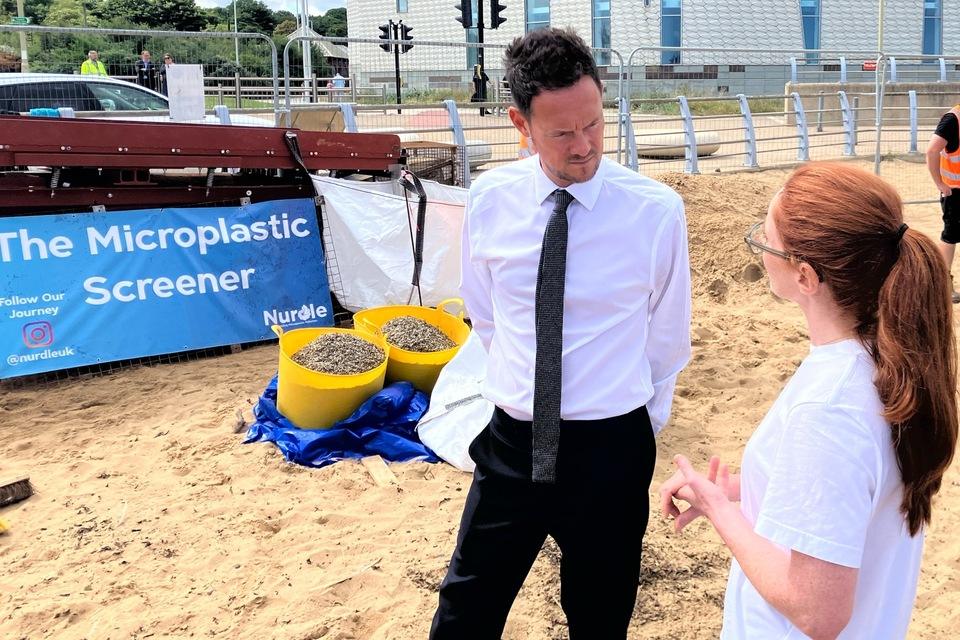
Marine Minister Stephen Morgan visited the Port of Tyne today to engage with representatives from the Port, local authorities, the Environment Agency, and various organisations involved in the ongoing clean-up operation following the pollution incident involving plastic pellets, commonly referred to as nurdles.
Accompanied by Alan Lovell, Chair of the Environment Agency, the Minister received firsthand insights from the Port of Tyne team regarding the measures being implemented to safeguard the environment and rehabilitate affected coastal regions.
Engagement with Local Communities
While at Littlehaven Beach, Minister Morgan met with community groups and volunteers actively participating in the recovery efforts, expressing gratitude for their unwavering commitment to restoring the impacted beaches.
The clean-up operations, which were initiated following the release of approximately 17 tonnes of these small plastic pellets due to a collision between two vessels at the Port of Tyne on 19 July, are being spearheaded by the Port of Tyne in collaboration with local authorities. Defra and the Environment Agency are providing essential support by working closely with partners to assist in the recovery process.
In his remarks, Minister Morgan stated, “People in the North East rightly expect a strong, coordinated response to this incident. That’s why the government and the Environment Agency have been collaborating with local partners since this serious pollution occurred.”
Support for Recovery Efforts
He further acknowledged the efforts of volunteers on the ground, who dedicate their time daily to clearing the beaches, and commended local leaders for their initiatives in uniting organisations to take the necessary actions. “Meeting those at the forefront of the recovery effort is vital for understanding the challenges they face and ensuring that the clean-up progresses as swiftly and effectively as possible,” he added.
The government, alongside the Environment Agency, is committed to assisting local partners such as the Port of Tyne in various capacities. This includes deploying additional boats, monitoring efforts, supplying resources from other parts of the country, and ensuring accountability within the plastics industry.
Coordinated Response and Future Prevention
This visit follows a discussion led by Minister Morgan and Ports Minister Keir Mather on 7 August with key stakeholders, elected mayors, and leading response organisations to assess recovery progress and pinpoint areas where additional government support may be beneficial for local initiatives.
During his visit, the Minister observed the Environment Agency’s efforts to mobilise extra drone surveys, vessels, and specialist response teams aimed at enhancing monitoring and supporting targeted recovery operations. He was also informed that Community Officers are prepared for immediate deployment to assist affected communities with guidance and information.
Defra is collaborating closely with marine science experts at the Centre for Environment, Fisheries and Aquaculture Science (Cefas) to bolster environmental monitoring and analysis. This cooperative effort aims to develop a clearer understanding of the incident’s impacts and inform long-term recovery strategies.
Additionally, the government is actively working to fortify regulations surrounding the transportation of plastic pellets such as nurdles, aiming to minimise the likelihood of similar incidents occurring in the future.




More Stories
Government Launches Ambitious Initiative to Restore Churches and Revitalise Heritage Buildings Across England
UK Government Allocates Funds for Vital Repairs to Chornobyl Nuclear Power Plant Following Russian Drone Strike
Great British Railways Unveils New Headquarters and Apprenticeship Programme