
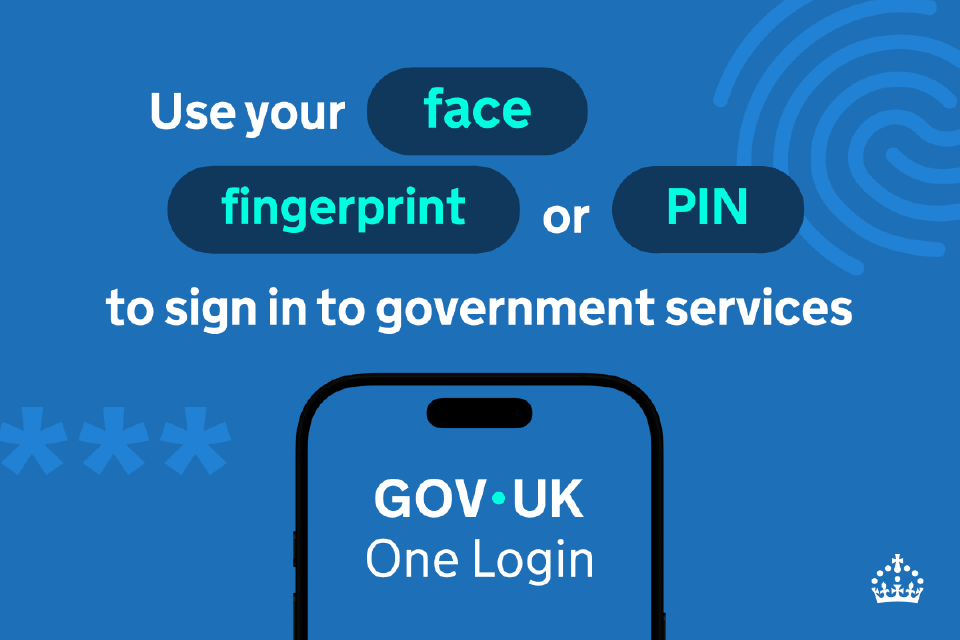
In an effort to enhance security and streamline access, passkeys are being introduced across GOV.UK One Login. This initiative aims to provide over 23 million users with a quicker and more secure method of accessing various government services, including childcare assistance and driver’s licence renewals.
Efficient and Secure Access
A passkey allows users to log in securely using biometric methods such as fingerprints, Face ID, or a PIN, eliminating the need to remember or enter complex passwords. This innovative approach to authentication is reported to be up to eight times faster than traditional sign-ins that require a username, password, and a two-step verification code.
In the initial trial phase, over 300,000 users successfully transitioned to using passkeys. Following this successful pilot, the technology is now being rolled out to millions more users of GOV.UK One Login. Notably, nearly 10% of daily sign-ins to GOV.UK One Login now utilise passkeys, resulting in an estimated saving of nearly £600 per day in SMS costs for the British taxpayer.
Enhanced Protection Against Cyber Threats
In addition to improving user experience, passkeys also bolster security against phishing and other cyber threats. Since passkeys are linked to specific devices and websites, they are inherently more secure; they cannot be guessed or reused, and there is no password for cybercriminals to steal via phishing scams or counterfeit websites.
Importantly, the biometric information or PIN used to unlock a passkey is retained solely on the user’s device, ensuring that GOV.UK One Login does not have access to this sensitive data.
Government Commitment to User Convenience
Digital Government Minister Stephanie Peacock commented on the initiative, stating, “Nobody enjoys hunting for a forgotten password or waiting for a text message code just to check their tax return or renew a document. Passkeys mean people can access the services they rely on in seconds, using the same fingerprint or face scan they already use to unlock their phone.”
This advancement is part of a broader commitment to simplify and secure government services, while also providing stronger protection against fraud targeting passwords.
Growing Range of Services Accessible Through Passkeys
GOV.UK One Login is continually expanding its array of government services, which now includes options for checking a State Pension, managing tax affairs, and accessing childcare support.
The National Cyber Security Centre (NCSC) has endorsed the use of passkeys as a more secure alternative to traditional passwords, citing that they cannot be intercepted, reused, or stolen.
Encouraging Adoption of Passkeys
Jonathon Ellison, NCSC Director for National Resilience, expressed enthusiasm for the transition, stating, “The introduction of passkeys for GOV.UK One Login will give users a faster, simpler, and more secure way to sign in to many public-facing government services while leaving password headaches behind.”
He further highlighted that cybercriminals often target login details, making traditional passwords a frequent vulnerability. “But passkeys offer a highly phishing-resistant alternative to passwords, frustrating attackers and saving the public time,” he added.
The NCSC strongly encourages users to set up a passkey for GOV.UK One Login and to adopt this technology wherever available across digital services. By making this small but significant change, users can enhance their online security and contribute to the overall resilience of the UK’s digital infrastructure.
Optional Use of Passkeys
It is important to note that passkeys are optional, allowing individuals to continue using passwords if they prefer. However, those who opt to set up a passkey can take advantage of their device’s existing security features to access GOV.UK One Login quickly and securely.
Further Information on Passkey Technology
Passkeys leverage device-based security measures, such as Face ID, fingerprints, or PINs, in place of traditional passwords. This technology is recommended by the National Cyber Security Centre as a more secure and user-friendly alternative to passwords.
For further details on how passkeys function, users are encouraged to consult the guidance available on GOV.UK and the information provided on the NCSC website.




More Stories
Defence Sector and Industry Join Forces with Launch of New Collaboration Hub at RAF Wyton
UK and US to Connect Fusion Supercomputers Across the Atlantic for Groundbreaking Research
Approval Granted for Morgan and Morecambe Offshore Wind Farms Transmission Assets Development