
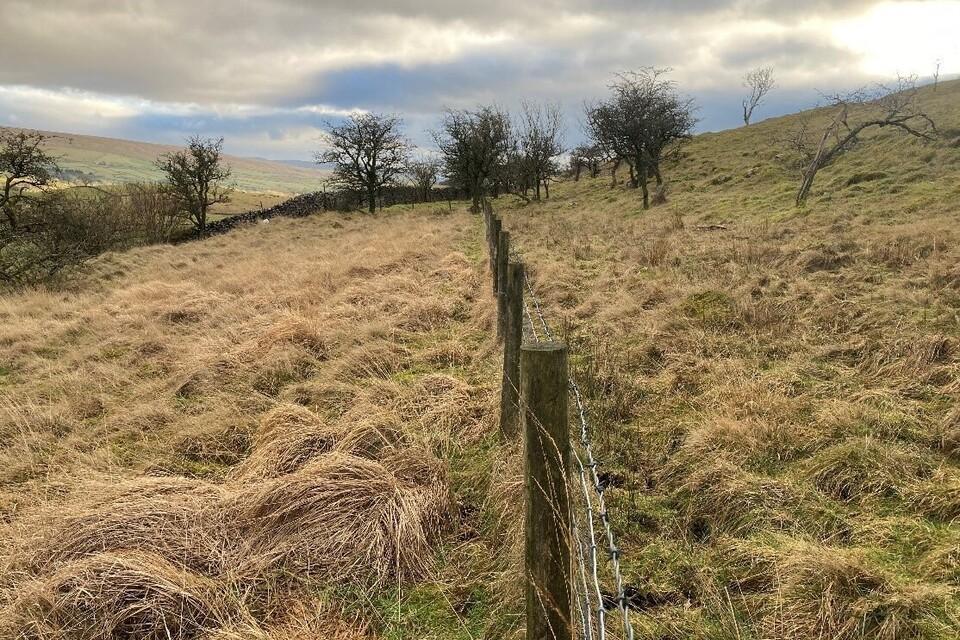
Ingleborough Nature Reserve, located in the Yorkshire Dales National Park, encompasses an impressive 1,186 hectares and rises to an elevation of 650 metres. This site is of considerable national and international significance, designated as both a site of special scientific interest and a special area of conservation. It boasts a diverse range of upland habitats, including ancient ash woodlands, limestone pastures, limestone pavements, and blanket bogs.
Protection of Biodiversity
The management of Ingleborough NNR is overseen by Natural England and the Yorkshire Wildlife Trust. Their primary goal is to safeguard the area’s rich biodiversity and geodiversity while facilitating scientific research and offering visitors the opportunity to experience and learn about this distinctive landscape.
Located within the reserve, Scar Close represents one of the bare limestone areas, showcasing the unique geological features of the site.
Enhancing Woodland Regeneration
Historically, sheep grazing was prevalent in Ingleborough, regulated through long-term agreements with local graziers. However, this practice hindered the natural establishment of woodlands. In recent years, a strategic shift towards cattle grazing has fostered more suitable conditions for natural regeneration, allowing woodland areas to develop and expand over time.
The reserve now hosts a mixed-age herd of Red Poll cattle, which are well-adapted to woodland environments. These animals are maintained at low stocking densities—approximately one cow per five hectares. By leaving internal gates open, they are afforded the freedom to roam across extensive compartments, promoting a more natural and low-impact grazing system. Importantly, the cattle are kept away from ancient woodlands situated on internationally significant limestone pavements that have traditionally been enclosed.
Frank Morgan, a Natural England Ranger at Ingleborough NNR, shares insights from their management practices: “We’ve conducted experimental plots with cattle on one side and no grazing on the other. The results indicate a significantly higher establishment of young trees in areas grazed by cattle. Although they do browse, their activity in breaking up the ground creates favourable seeding niches, leading to a greater number of trees taking root. We have concluded that the net benefit of cows is a positive influence on tree growth.”
Managing Deer Populations
Initially, the deer population density within Ingleborough NNR was approximately 3.7 individuals per square kilometre, which posed a considerable threat to young trees through browsing pressure. A targeted deer culling programme has successfully reduced this figure to around 1.4 individuals per square kilometre, facilitating the successful establishment of more trees, particularly from palatable species such as downy birch and rowan.
While European rabbits and grey squirrels are present in the reserve, the management team does not perceive them as significant threats.
Promoting Natural Regeneration
The reserve prioritises natural regeneration in areas adjacent to existing woodlands. However, in regions further removed from seed sources, tree planting has been essential to initiate woodland establishment, particularly given the slow growth rates typical of this upland environment.
As part of the Wild Ingleborough project, which commenced in 2021 through a collaboration between Natural England, Yorkshire Wildlife Trust, WWF UK, University of Leeds, United Bank of Carbon, and Woodland Trust, approximately 150,000 trees are set to be planted between 2021 and 2025 to bolster regeneration efforts.
Over this four-year period, various physical tree protection strategies have been trialled, including the use of 1.2-metre Tubex guards, 60-centimetre spiral guards, and 15-centimetre vole guards, alongside unprotected planting.
Evaluating Tree Protection Strategies
Researchers from the University of Leeds have monitored some of the newly planted trees. Preliminary findings indicate that while tree guards can initially enhance survival rates by preventing browsing, they also increase susceptibility to wind snap both at the height of the guard and after its removal. Furthermore, the use of guards appears to diminish overall survival rates after three to five years, likely due to the high winds characteristic of the upland location.
Consequently, the reserve has adopted a strategy of bare planting—planting without tubes or guards—at double the desired stocking density. This method has resulted in a tree survival rate exceeding 50%, surpassing that of trees previously protected by guards and proving resilient to occasional incursions by neighbouring sheep.
Transitioning to Bare Planting
One area of the reserve along the Yorkshire Three Peaks walk has undergone planting that initially employed tree guards. However, due to high footfall, maintaining these guards for aesthetic purposes required considerable time and resources. In contrast, bare planting facilitates a more gradual integration into the landscape, avoiding the abrupt visual impact of tree guards.
To date, nearly 80% of the tree guards have been collected by staff and volunteers for donation to neighbouring planting initiatives. The process of collecting guards can be time-consuming and represents an additional commitment beyond the initial planting, which should be taken into account when considering methods to protect young trees.
Through the careful reduction of sheep grazing pressure, targeted deer management, and a shift towards more effective planting strategies, Ingleborough NNR has created optimal conditions for young trees to establish and flourish across the reserve.
Further Resources
For those seeking more information, the following resources may prove beneficial:
- Wild Ingleborough – details on the Wild Ingleborough project and its commitment to nature recovery in Yorkshire.
- Ecological Solutions and Evidence research paper – findings on natural colonisation rates in UK upland landscapes following various conservation management approaches.
- Grey squirrel and deer damage to trees: visual guide – a guide to identifying damage caused by deer.
- Small mammal, beaver and domestic grazing species damage to trees: visual guide – guidance on identifying damage from grazing species.



More Stories
Free Rail Travel for Bereaved Veteran Families This Remembrance Weekend: A Tribute to Their Sacrifice
Funding Acquired to Uncover Hidden Treasures of Bronze Age Flag Fen Excavation
Suffragan Bishop of Warwick Appointment Set for 11th September 2026