
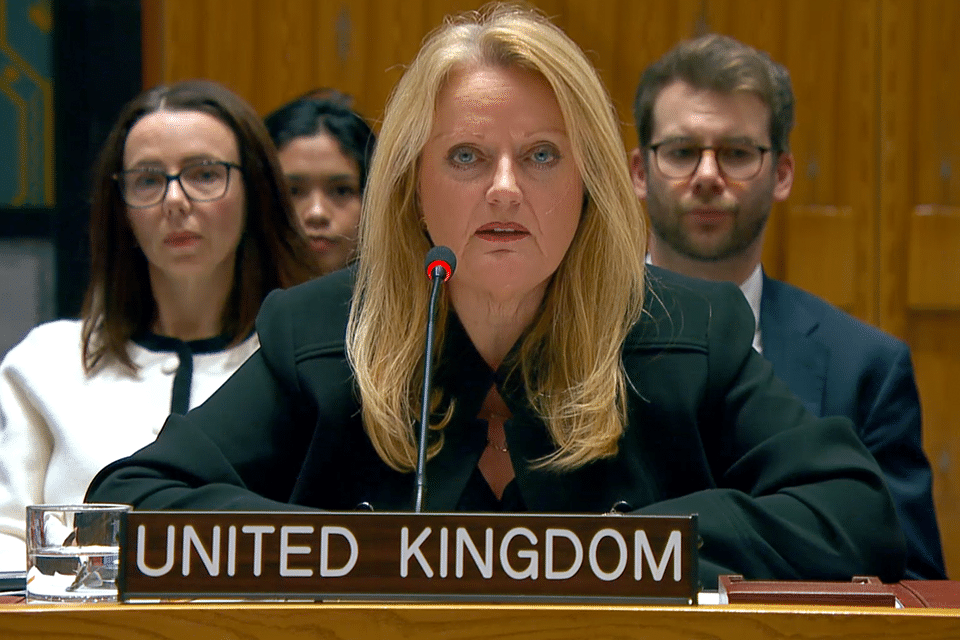
Rapid advancements in technology, particularly in artificial intelligence, are increasingly prominent in discussions within this Council, often examined through the lens of the potential risks they pose to security and stability. This morning, we have heard descriptions of various risks and their consequences, which are significant issues of global importance and warrant our ongoing focus.
Regardless of the technology employed, it is imperative that all parties engaged in armed conflict adhere to international law and humanitarian law, ensuring the protection of civilians, especially when it comes to lethal autonomous weapons systems. This necessitates appropriate oversight and human judgment throughout the design and deployment of such technologies. Human accountability cannot be relinquished to machines.
The United Kingdom welcomes the recent agreement in Geneva aimed at developing a framework for lethal autonomous weapons systems. However, today, Mr. President, you have encouraged us to consider how advanced technologies can contribute positively to peace. We recognise several opportunities throughout the conflict cycle.
Preventing Conflict with Technology
Firstly, advanced technologies can play a pivotal role in conflict prevention. Enhanced data analysis can facilitate early warning systems by recognising patterns of escalation and promoting proactive measures. Artificial intelligence can assist in detecting misinformation and the harmful manipulation of social media, allowing for a better understanding of public sentiment and opinion as it evolves.
Secondly, in mediation, advanced technologies can aid mediators in grasping conflict dynamics and engaging with communities affected by conflict. Funding from the United Kingdom will support policymakers and practitioners in testing and disseminating the findings of Accord 31 on Digital Peacemaking, which is expected in February. This initiative will explore how peacemakers can responsibly incorporate data and AI into their practices.
Enhancing Peace Operations
Thirdly, in the realm of peace operations, research conducted in the United Kingdom identifies opportunities in three key areas. Firstly, situational awareness and early warning can be enhanced through AI-enabled analysis of satellite and drone imagery, enabling monitoring over vast areas that cannot be covered by personnel alone. This technology can track force movements, population shifts, and the establishment of new bases or camps, as well as support peacekeeper safety by identifying unusual activities around UN bases.
Secondly, understanding and engaging with local communities is essential. Peace operations rely on the consent of host nations, and their success is contingent upon local support. Gaining insights into public opinion and sentiment via social media can help operations address narratives that threaten stability or undermine peace efforts. AI can facilitate this engagement by enabling peacekeepers to communicate with local communities in their native languages.
Lastly, advancements in planning and logistics are crucial. Mission planning must be a cohesive and adaptable process. AI can transform daily field reports and historical data from past missions into quicker, more informed decision-making. Predictive tools can forecast supply demands and help identify inefficiencies, ultimately aiding missions in fulfilling their mandates more safely and effectively while enhancing civilian protection.
Challenges and Ethical Considerations
However, none of these applications is free from challenges, including issues surrounding data ownership and management, particularly concerning sensitive information, the potential for model drift, the necessity for new partnerships, and ethical considerations. Addressing these challenges will require deliberate and collaborative efforts.
Technology achieves its greatest potential for peace when applied thoughtfully and managed effectively, reinforcing human judgment rather than being viewed as a solution in itself. Mr. President, while technology will not create peace on its own, if utilised properly, it can aid us in constructing, safeguarding, and promoting peace.
The United Kingdom remains committed to collaborating with partners towards this goal. In closing, we extend our gratitude to Latvia and Greece for establishing the informal Expert Group on Technology and Peace and Security. The United Kingdom is honoured to be a founding member. The inaugural meeting held last week demonstrated the value of an informal setting where this Council can engage with experts and exchange practical experiences. As new technologies develop, our understanding must evolve in tandem, and this group will be instrumental in facilitating that process.




More Stories
Daniel E. Pinto Joins Bank of England’s Financial Policy Committee
Prime Minister to Hold Key Meeting with His Royal Highness The Prince of Wales on 24 November 2026
Inspiring Keynote Address at the Society of Motor Manufacturers and Traders Event