
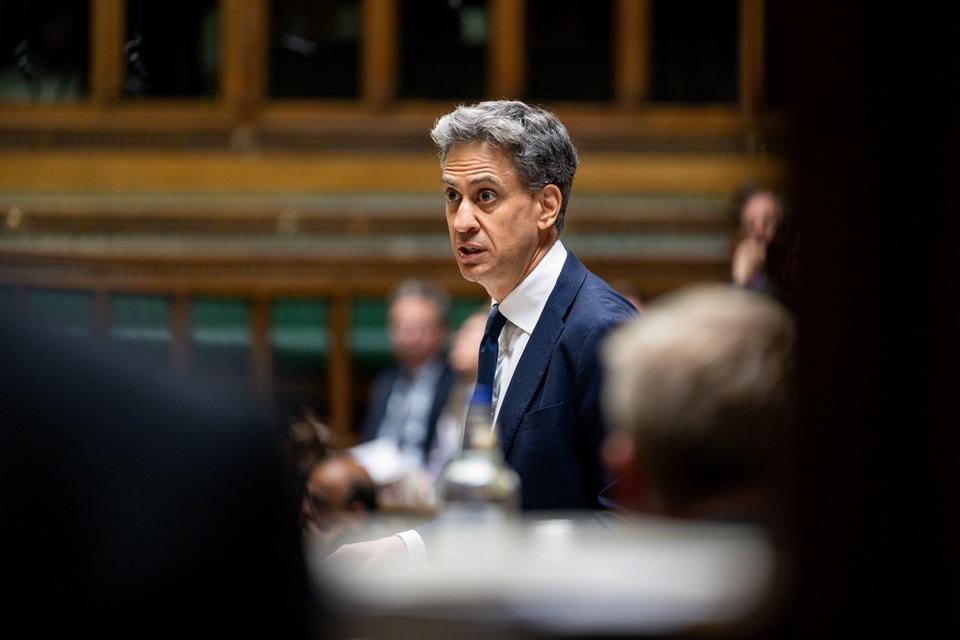
With permission, I will make a statement regarding the situation in Myanmar.
On 19 November, the International Court of Justice determined that the regime in Myanmar had committed genocide against the Rohingya people. This verdict marks the first instance of state responsibility for genocide since the 1948 Convention on the Prevention and Punishment of the Crime of Genocide, revealing the extent of the Myanmar regime’s actions, which included indiscriminate and targeted killings of civilians, summary executions, widespread sexual violence, and the incineration of individuals and properties.
The court concluded that “the only reasonable inference that can explain Myanmar’s actions is an intention to destroy a substantial part of the protected group, namely the Rohingya population in northern Rakhine State.”
The United Kingdom has a long-standing position that any determination of genocide must follow a thorough judgement from a competent national or international court, following a credible judicial process. With the ICJ’s ruling, that criterion has now been fulfilled, and I can confirm that the United Kingdom formally acknowledges the genocide committed against the Rohingya.
For this Government, and I would argue for the entire international community, our response to a crime as profoundly shocking as genocide must reflect our core values and be matched by decisive action.
We must also remain aware that the horrific targeting of civilians by the Myanmar regime continues unabated, as does the discrimination and persecution of Rohingya and other communities. Airstrikes are occurring regularly across the country, affecting schools, hospitals, markets, and places of worship. Additionally, ongoing violence from the Arakan Army also warrants condemnation.
This morning, I met with brave Rohingya campaigners who expressed the importance they place on recognition of the atrocities they have faced, highlighting their feeling of being overlooked by the international community for far too long.
Today, I am outlining a package of measures aimed at holding the Myanmar military accountable, supporting the Rohingya and the people of Myanmar, and increasing international pressure on the regime to alleviate their suffering.
Action Against Myanmar’s Military
Let me first address measures against the Myanmar military. On Thursday, we ordered the expulsion of Myanmar’s defence attaché, as we cannot accept a serving representative of Myanmar’s military remaining in position on UK soil.
Moreover, I am announcing today that we have imposed sanctions on four Majors General and a Brigadier General—senior military officials who oversaw the troops responsible for egregious civilian killings and the oppression of the population throughout Myanmar.
It is evident that the Myanmar military has systematically employed lethal air power against its own citizens. I do not believe that the British public supports any UK companies having connections to such practices, and thus we will introduce new legislation in the coming months to prohibit the export and supply of aviation fuel to Myanmar, which is utilised in these abhorrent attacks.
These initial steps will be complemented by a thorough examination of all major companies operating in Myanmar, particularly those associated with the military regime, and we will impose further sanctions where necessary to deter or disrupt violations of international law and to combat impunity.
Diplomatic Efforts for Accountability
Secondly, as the United Nations Security Council penholder on Myanmar, the United Kingdom will leverage its diplomatic influence to enhance international pressure for accountability and to address the humanitarian crisis. We will raise this matter as an urgent issue at the Security Council this week and have scheduled a dedicated meeting in two weeks’ time to bolster momentum for action.
We recognise that the Security Council has often been divided on Myanmar, but such division should not serve as an excuse for inaction by the UN. The Association of Southeast Asian Nations (ASEAN) also plays a vital role, and we have consistently welcomed and supported its commitment to achieving peace in Myanmar.
We aim to collaborate with ASEAN partners to ensure that its five-point consensus effectively ends the violence, facilitates humanitarian access, and fosters inclusive dialogue. We urge solidarity among ASEAN countries to ensure compliance with the ICJ’s ruling, and I have already engaged with my ASEAN counterparts in recent days.
Additionally, we will work with other nations that have supported this ICJ case, including the Organisation of Islamic Cooperation, whose 57 member states have strongly welcomed the ICJ judgment.
Pursuing Justice for Victims
Thirdly, we will pursue accountability and justice. While the ICJ judgment addresses Myanmar’s state responsibility, individual criminal accountability is also crucial. Those responsible must understand that neither their rank nor the passage of time will shield them from accountability, and we will enhance support for survivors in their quest for justice.
Today, I am announcing a £3 million package to aid victims and survivors of human rights violations across Myanmar, which will assist in this pursuit, alongside a doubling of our support for the UN’s international investigative mechanism for Myanmar, which has provided essential evidence supporting the ICJ’s ruling, as well as support for the organisation Legal Action Worldwide to ensure that survivor voices are amplified.
Support for the Rohingya Community
Fourthly, we will stand with the Rohingya, not only in their quest for justice but also in their daily struggle for safety, dignity, and hope. The court has made it clear that Myanmar must cease ongoing violations, investigate, prosecute, and punish perpetrators, and prevent such atrocities from occurring in the future.
The court also states that reparation and restitution must be pursued, which includes enabling Rohingya individuals to return and reunite with their families, accompanied by appropriate compensation.
We concur with this and, together with Canada and various international partners, have issued a joint statement demanding Myanmar’s full compliance with the ICJ judgment. As a nation, we will also contribute by providing an additional £5 million in humanitarian assistance to support approximately 350,000 individuals from both Rohingya and Rakhine communities.
This funding will enhance the protection of women and girls, support maternal healthcare, supply food and clean water, and provide treatment for acutely malnourished children. This assistance builds on the UK’s role as one of the largest humanitarian donors to Myanmar, having already provided more than £55 million annually in lifesaving support.
It is important to note that we will continue to collaborate with the Government of Bangladesh, which is currently hosting over 1.2 million refugees from Myanmar who have fled the violence.
A Path Towards Peace
Finally, we must establish a political path towards enduring peace—an imperative that I discussed earlier today with the UN Special Envoy on Myanmar. This entails an immediate cessation of hostilities to facilitate humanitarian aid delivery, a halt to airstrikes on civilians, and the release of political prisoners, alongside dialogue aimed at achieving an inclusive political resolution.
I assure the House that in the weeks and months ahead, the UK will do everything within its power to reinvigorate political and diplomatic efforts to secure a just and lasting resolution to this horrific conflict.
Let me conclude by acknowledging the relentless efforts of numerous individuals across our society who have kept the pursuit of justice for the Rohingya alive, including Members of this House. I extend particular gratitude to the work of the all-party parliamentary group on Burma and its chairs, as well as the all-party parliamentary group on Rohingya.
Above all, I commend the resilience of Rohingya survivors, including those residing in the UK. Many have recounted their traumatic experiences to ensure that the truth is documented and justice is sought, refusing to allow the world to turn a blind eye.
Our message today is unequivocal. We recognise the acts committed as genocide. We endorse the demand for justice. We will not avert our gaze. We will take action.
The genocide convention embodies a grave commitment established in the aftermath of humanity’s darkest crimes. This promise holds significance only if judgments are upheld and the most severe violations carry consequences.
At a time when international law faces considerable challenges, the United Kingdom remains resolute in its defence of these principles, as this Government is determined to contribute to constructing a world founded on the values of humanity, dignity, and self-determination for all.
I commend this statement to the House.



More Stories
Government-Funded 4G Upgrades: 50 New Solutions to Keep Dog Walkers Safe from Cattle
New Chief Appointed to Streamline Regulations and Reduce Bureaucratic Burden
Joint Statement on the International Court of Justice’s Ruling Regarding Myanmar